Email inboxes overflow. Social media algorithms shift without warning. Paid ad costs keep climbing. Yet there’s one channel that lands directly in a customer’s hand and gets read within minutes: text messaging. For online retailers fighting for attention, SMS for ecommerce stores has become one of the most reliable ways to drive sales and build lasting customer relationships.
Text messages boast an average open rate of 98%, and most recipients read them within three minutes of delivery. Compare that to the roughly 20% open rate of marketing emails, and the appeal becomes obvious. When you launch a flash sale or need to recover an abandoned cart, SMS reaches shoppers while they can still act.
This guide breaks down everything you need to launch and grow an effective SMS program. You’ll learn what ecommerce SMS marketing is, why it works, how to stay compliant, which campaigns deliver the best results, and how to measure your return. By the end, you’ll have a clear roadmap to turn text messaging into a measurable revenue engine.
What is SMS marketing for ecommerce stores?
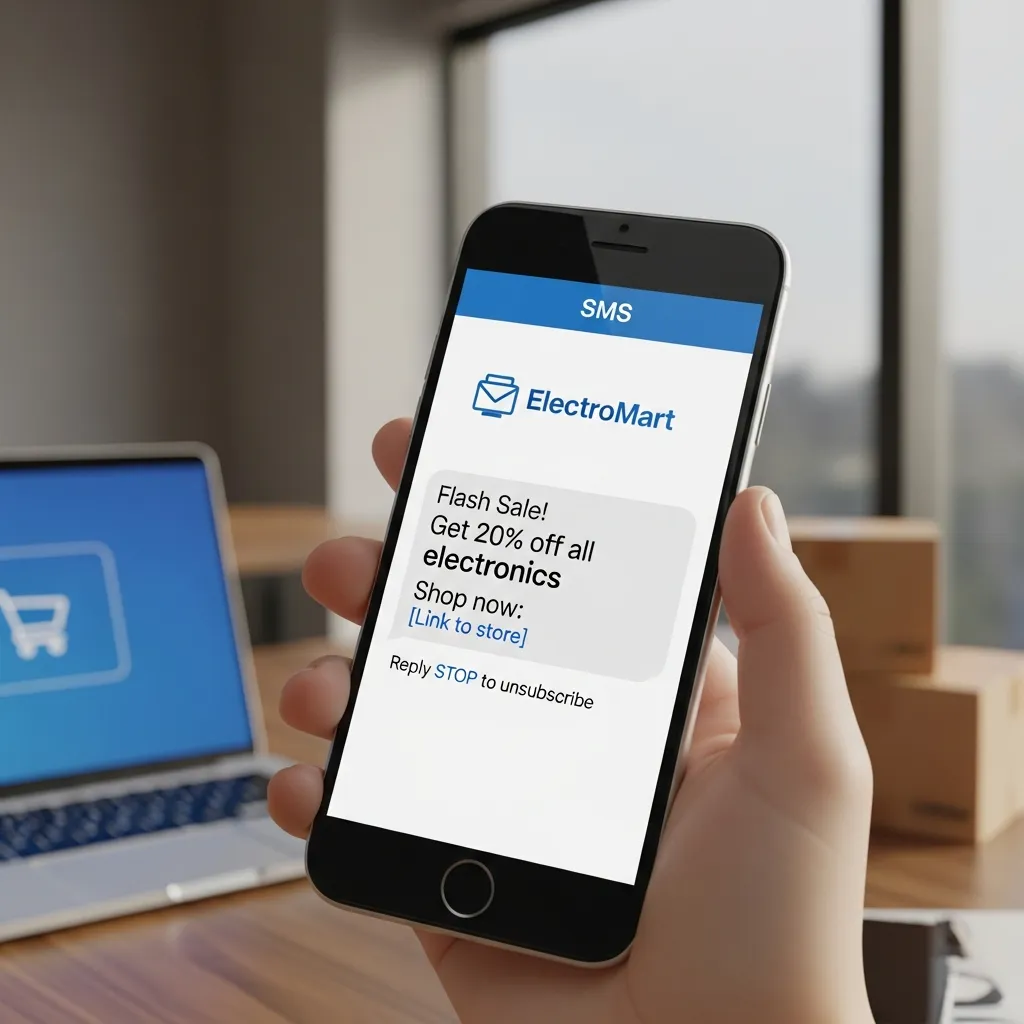 SMS marketing for ecommerce stores is the practice of sending automated and broadcast text messages to subscribed customers. These messages cover everything from order confirmations and shipping updates to promotional offers and abandoned cart reminders. The goal is simple: deliver timely, relevant information directly to a shopper’s mobile device.
Unlike email, which often filters into spam or promotions folders, SMS lands in the same inbox people use to text friends and family. This personal placement is exactly why text messaging cuts through the noise so effectively. Customers who opt in actually want brief, valuable updates from the brands they trust.
How does SMS differ from email and social media marketing?
Each channel serves a distinct purpose. Email works best for long-form content, detailed product guides, and high-resolution images. Social media builds brand awareness and community. SMS, by contrast, excels at urgent, short-form communication.
A text message is limited to 160 characters, so it forces clarity. There’s no room for fluff—just your brand name, the offer, and a link. This brevity, combined with near-instant delivery, makes SMS ideal for time-sensitive alerts that demand immediate action. The smartest retailers use all three channels together rather than choosing one. For a deeper look at coordinating channels, see this guide to ecommerce SMS notifications.
Why is SMS marketing essential for ecommerce stores?
The case for adding text messaging to your marketing mix rests on a few hard advantages. Understanding these benefits helps justify the investment in an SMS marketing platform.
How do high open rates affect sales?
Text messages reach a 98% open rate, and recipients typically read them within three minutes. When you launch a 24-hour flash sale, an email might sit unread for two days. An SMS notification ensures your audience sees the offer while they still have time to buy. This immediacy drives faster traffic spikes and higher daily sales volume.
How does SMS scale personalization?
Generic broadcasts underperform across every channel. SMS for ecommerce stores lets brands scale personalization through dynamic data insertion. An SMS marketing platform can automatically pull a customer’s first name, reference their last purchase, and suggest a complementary product. This level of detail makes shoppers feel understood, which lifts repeat purchase rates.
How does SMS reduce cart abandonment?
According to the Baymard Institute (2023), the average documented cart abandonment rate sits at nearly 70%. Distractions happen constantly—a customer adds an item, gets a phone call, and forgets to check out. A well-timed text pulls high-intent shoppers back to the payment page. Automated reminders are one of the highest-ROI tactics in all of ecommerce.
Is SMS cost-effective compared to other channels?
Yes. SMS requires no expensive creative production, no ad-bidding wars, and no algorithm to fight. You pay for software and per-message fees, and in return you reach an audience that already opted in. Because behaviorally targeted messaging converts so well, the return per dollar spent often outpaces email and paid social.
How do you build a compliant SMS strategy for your store?
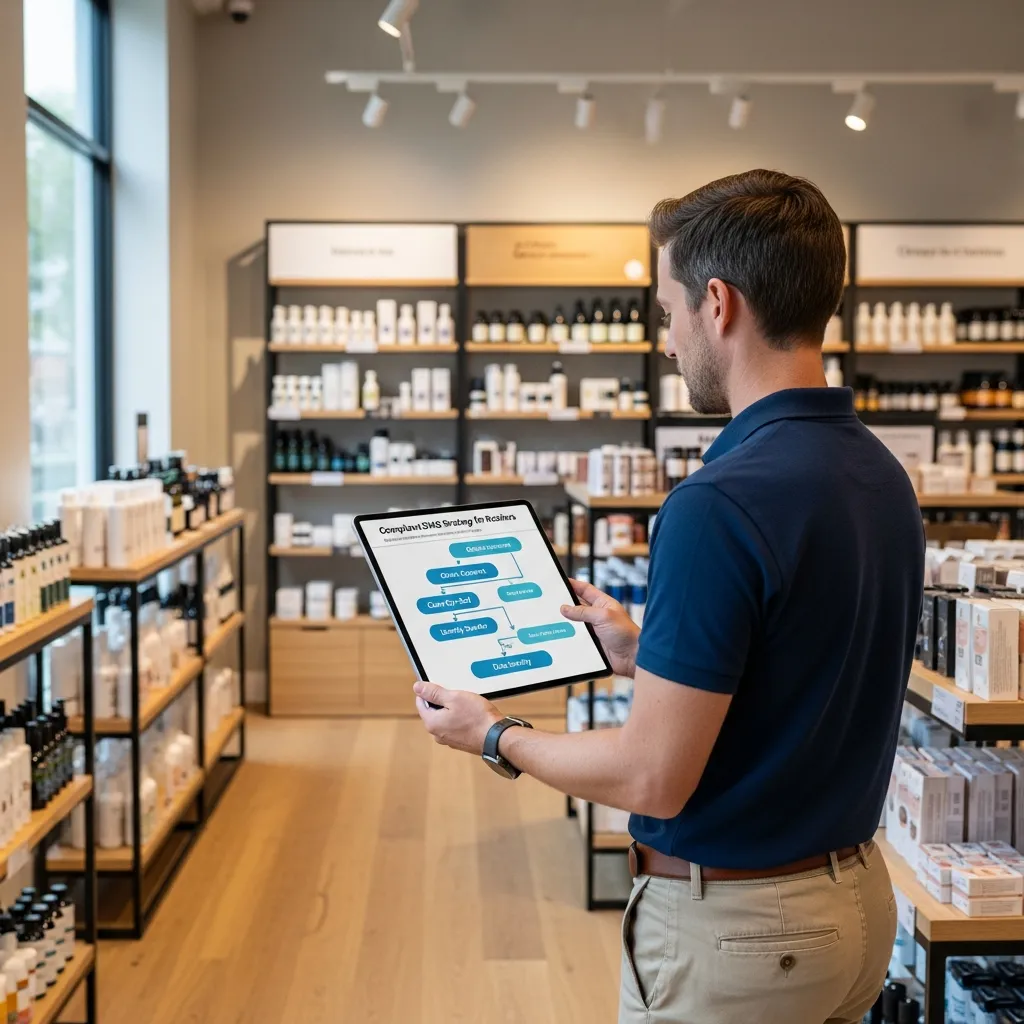 A strong SMS program starts with legal compliance and respect for your audience. Skip this foundation, and you risk fines and a damaged brand reputation.
How do you stay compliant with TCPA, GDPR, and CTIA rules?
You cannot legally send commercial texts to anyone who hasn’t explicitly opted in. In the United States, the Telephone Consumer Protection Act (TCPA) regulates mobile marketing. In Europe, the General Data Protection Regulation (GDPR) governs how you collect and use data. Industry group guidelines from the CTIA add further standards.
To stay compliant, follow these rules:
- Use double opt-in. Confirm consent twice so there’s a clear record that the subscriber wanted to join.
- Disclose clearly. State what types of messages subscribers will receive and how often at the point of opt-in.
- Make opting out easy. Include a clear command like “Reply STOP to cancel” in every message.
- Honor consent instantly. Your platform must process STOP requests automatically and remove users from active sequences.
How do you segment your audience for better results?
Segmentation means dividing your subscriber list into smaller groups based on shared traits. Create segments for frequent buyers, dormant customers, and specific product interests. Sending a targeted offer—like texting a running-socks promo only to customers who previously bought running shoes—dramatically outperforms generic blasts.
How do you write compelling SMS content?
You have 160 characters, so every word counts. Identify your brand immediately so the customer knows who’s texting. Lead with your discount or main value proposition. Use strong, active verbs and a single, clear call to action. Add a shortened, mobile-friendly link straight to the relevant product page. Use emojis sparingly—one well-placed emoji adds personality, but a string of them looks like spam.
When is the best time to send SMS messages?
Timing heavily influences engagement. Never send promotional texts during quiet hours. Restrict your sending windows to between 9:00 AM and 8:00 PM in the recipient’s local time zone. If you target working professionals, mid-afternoon and early evening sends usually earn the highest click-through rates. Event-triggered messages, like shipping updates, can send the moment the action occurs.
Which SMS campaigns drive the most sales for ecommerce stores?
Not every text serves the same purpose. The most successful SMS programs blend transactional and promotional messages across a handful of proven campaign types.
How does a welcome series create a strong first impression?
The moment someone subscribes is when they’re most engaged with your brand. Send your first text immediately, delivering whatever you promised at opt-in—often a 10% discount code. Follow up a few days later with a message introducing your best-selling products or core values. This automated sequence turns curious subscribers into confident first-time buyers.
How do abandoned cart reminders recover lost sales?
Cart recovery is the single highest-impact SMS campaign for most stores. Send the first reminder 30 to 60 minutes after abandonment, reminding the shopper of the specific items left behind and including a direct link back to their cart. If they don’t convert, send a second message 24 hours later with a small incentive like a free shipping code. Keep the sequence to three messages maximum over 72 hours. For a full breakdown, study this abandoned cart SMS strategy guide.
How do you automate and integrate your SMS program?
Manually texting thousands of customers is impossible. Automation and smart integrations turn SMS into a hands-off revenue driver.
Why should you integrate SMS with your ecommerce platform and CRM?
Operating your texting software in isolation creates data silos. Integrating your SMS platform with your Customer Relationship Management (CRM) system keeps all customer data synchronized, giving your sales and support teams full visibility. Platforms like Shopify, WooCommerce, and BigCommerce offer native integrations that feed real-time cart and order data to your messaging software. Tools like Klaviyo SMS integration let your text campaigns tap directly into existing customer data.
How do automated workflows save time and boost ROI?
Automation guarantees the right message reaches the right person at the right moment. A welcome text goes out the second someone subscribes. A shipping update sends as soon as the package leaves the warehouse. A cart reminder triggers 45 minutes after abandonment—no manual effort required. To scale these workflows effectively, master proven SMS marketing automation strategies built around behavioral triggers.
How can you combine SMS with email for an omnichannel approach?
SMS and email should complement, not compete. Use email for detailed announcements and rich visuals; use SMS for urgent reminders. For example, send a detailed email announcing a weekend sale on Friday morning, then follow up with an urgent text four hours before the sale ends on Sunday. This layered approach captures buyers across their preferred channels.
How do you measure and optimize SMS performance?
Sending texts is only half the job. Tracking what happens after you hit send is where real growth comes from.
Which metrics should you track?
Monitor a mix of delivery, engagement, and financial metrics:
- Delivery rate: Confirms your list is clean and active.
- Click-through rate (CTR): Shows whether your offer and call to action resonate.
- Conversion rate: Reveals how many clicks turn into purchases.
- Opt-out rate: Signals whether you’re sending too often or pushing irrelevant offers.
- Return on investment (ROI): Ties revenue directly to campaign cost.
To connect link clicks to actual sales, dedicated SMS ROI tracking tools remove the guesswork from your reporting.
How does A/B testing improve campaigns?
Never rely on assumptions. A/B testing sends two variations of a message to a small audience segment to see which performs better. Test a 15% discount against a flat $10 off. Test a Tuesday morning send against a Thursday afternoon. Send the winning version to the rest of your list. Make testing a permanent habit, and small improvements compound into major gains.
What role do AI and predictive analytics play?
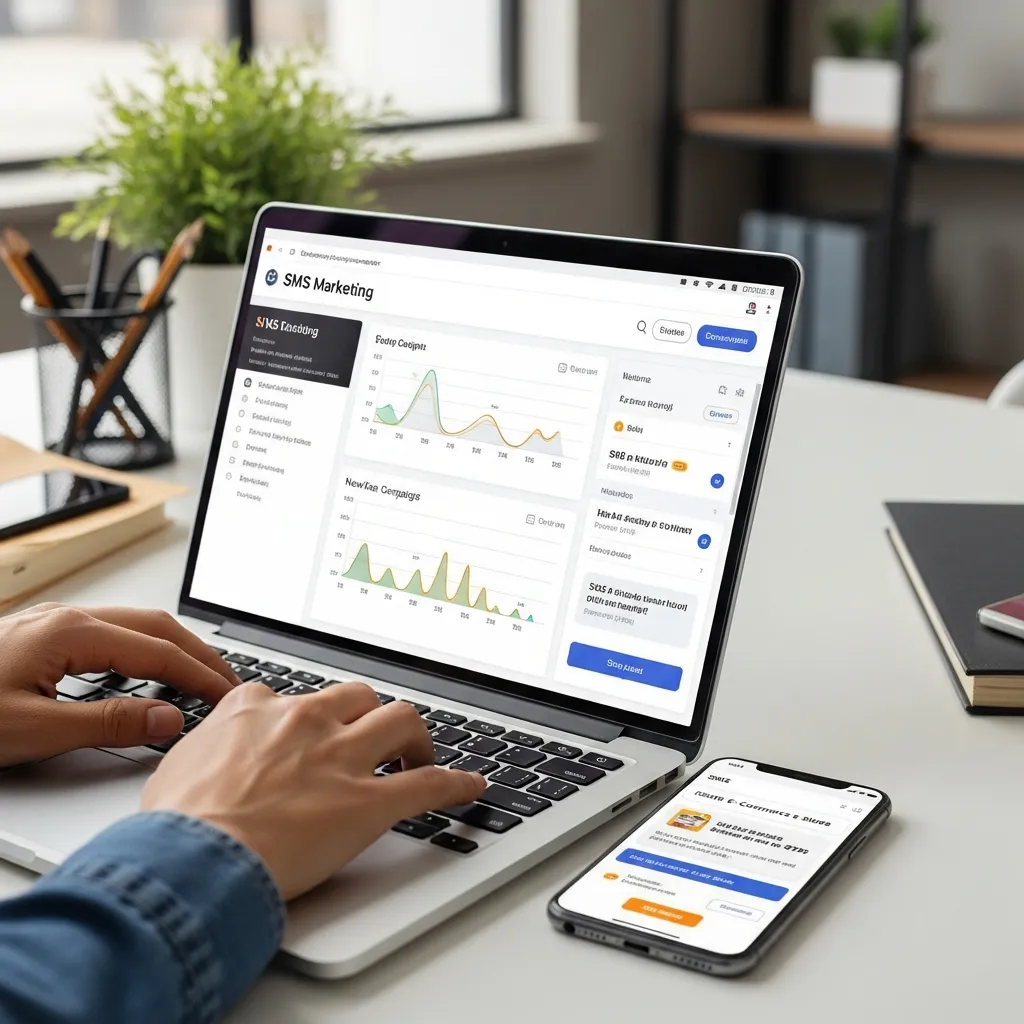
Modern SMS platforms use artificial intelligence to analyze behavioral data and predict the exact minute a shopper is most likely to click. Machine learning will increasingly automate segmentation and send-time optimization, allowing hyper-personalized messaging at scale. Pairing strong SMS marketing analytics with AI tools positions your store for sustainable, data-driven growth.
 Text messaging gives online retailers a direct, high-converting line to their customers—one that bypasses crowded inboxes and unpredictable algorithms. The retailers winning with SMS share a common approach: they build compliant lists, deliver genuine value, automate the heavy lifting, and let data guide every decision. This is why SMS for ecommerce stores has become one of the most effective modern marketing channels for driving consistent sales and customer retention.