
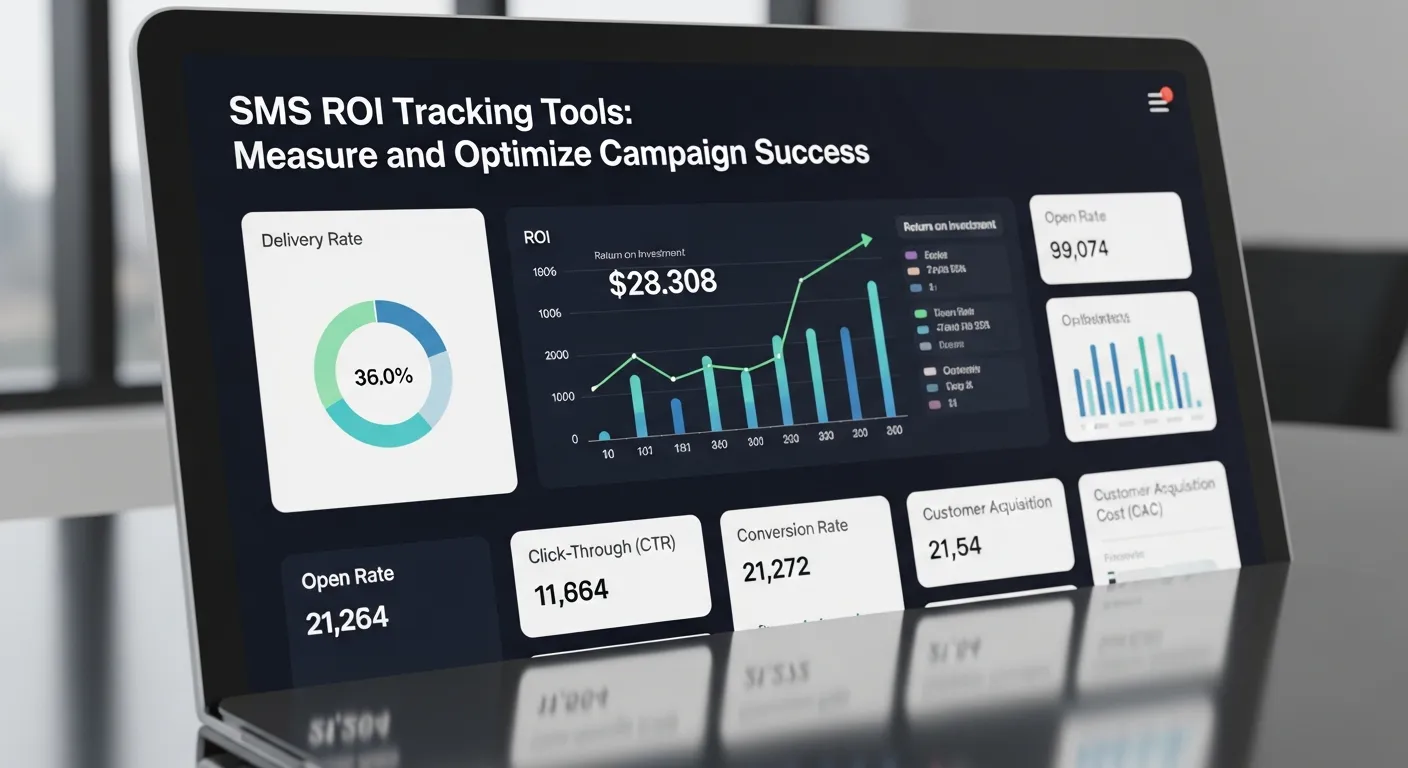
SMS ROI tracking tools help businesses accurately measure the performance of their SMS marketing campaigns by analyzing conversions, engagement, and revenue impact. These tools provide insights into customer behavior, campaign effectiveness, and return on investment, enabling marketers to optimize strategies, improve targeting, and maximize results from every SMS sent.
Text messaging has rapidly evolved from a simple peer-to-peer communication method into a dominant force in modern marketing. Consumers check their phones constantly, giving text messages an unmatched open rate compared to crowded email inboxes and algorithm-heavy social media feeds. This direct line to the consumer allows brands to deliver highly visible, urgent communications.
Sending texts is only half the battle. Knowing exactly what happens after you hit send is where true marketing success lies. Without a clear understanding of how campaigns perform financially, businesses risk wasting their marketing budgets on messages that fail to convert. Tracking return on investment guarantees that every dollar spent on messaging directly contributes to business growth.
This is where SMS ROI tracking tools become an absolute necessity for marketing teams. These specialized platforms provide a clear, data-driven window into how audiences interact with mobile campaigns. By capturing detailed metrics and transforming them into actionable insights, SMS ROI tracking tools empower you to measure success accurately and optimize future campaigns for maximum profitability.
Key Metrics for Measuring SMS Campaign Performance
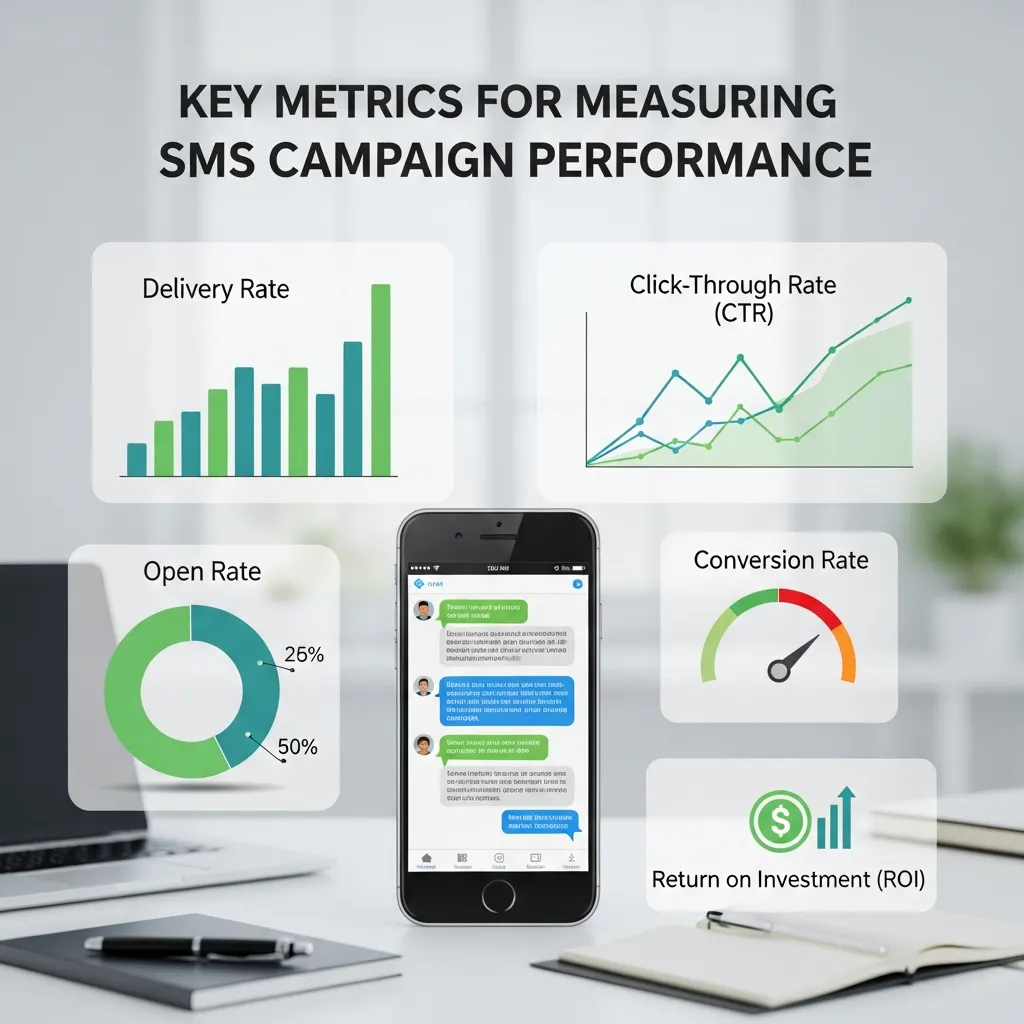 To truly understand how your campaigns perform, you must look beyond basic engagement. Monitoring a combination of delivery, interaction, and financial metrics gives you a complete picture of your success.
Delivery Rate and Open Rate
The delivery rate measures the percentage of messages that successfully reach a user’s mobile carrier. A high delivery rate means your contact list is clean and active. Messages bounce when numbers are disconnected or blocked by carrier filters. Once the message lands, the open rate tracks how many people actually view it. Texts naturally boast incredibly high open rates, but tracking this metric helps you verify that your sender ID is recognizable and trusted.
Click-Through Rate (CTR)
Open rates show visibility, but the click-through rate demonstrates genuine interest. CTR measures how many subscribers tapped the link included in your text. A low CTR often signals that your offer lacked appeal or that your call-to-action was confusing. Testing different variations of your copy is a reliable way to boost this number over time.
Conversion Rate
The ultimate goal of almost any campaign is to drive a specific action. Your conversion rate measures the percentage of users who completed that action after clicking your link. This could mean completing a purchase, filling out a form, or signing up for an event. Linking your messaging data directly to sales is the most effective way to prove the financial impact of your text campaigns.
Opt-Out Rate
Monitoring how fast your subscriber list shrinks helps you gauge overall brand sentiment. If your opt-out rate suddenly spikes after a particular text blast, you likely annoyed your audience. High unsubscribe rates frequently stem from sending messages too often or pushing irrelevant promotions.
Customer Lifetime Value (CLV)
Customer lifetime value estimates the total revenue a business can expect from a single customer over their entire relationship. By applying analytics to your messaging efforts, you can determine if SMS subscribers spend more money over time compared to non-subscribers. Mobile marketing is highly effective at nurturing long-term loyalty and increasing overall CLV.
Return on Investment (ROI)
ROI sits at the top of the metrics hierarchy. It calculates the actual profit generated from your campaigns compared to the cost of running them.
Calculating ROI for SMS campaigns
To calculate your return, subtract the cost of the campaign from the revenue it generated, divide that number by the total cost, and multiply by 100. Campaign costs should include your software subscription, per-message sending fees, and labor. To fully understand and track SMS marketing metrics and ROI, consistent measurement is mandatory.
Benchmarking your ROI
You need to establish clear baselines to know if your ROI is actually good. Compare your current numbers against historical campaign data and industry averages. Setting strict benchmarks helps you set realistic goals for future growth.
Essential Features of Effective SMS ROI Tracking Tools
Not all software is created equal. The most powerful SMS ROI tracking tools share specific features designed to provide deep visibility into your performance.
Real-time Analytics and Dashboards
Marketing moves quickly, and you cannot afford to wait days for a performance report. Effective SMS ROI tracking tools offer live dashboards that display delivery rates, clicks, and conversions the moment a campaign launches. Immediate data allows you to catch errors early and capitalize on winning strategies instantly.
Segmentation and Personalization Capabilities
Generic blasts rarely generate high returns. The best platforms allow you to segment your audience based on behavior, purchase history, and demographics. Advanced SMS ROI tracking tools also support dynamic fields, automatically inserting a user’s name or past purchase details into the text for higher engagement.
A/B Testing Functionality
Never rely on assumptions. Robust platforms feature built-in A/B testing, enabling you to send two variations of a text to a small audience segment. The software tracks which version performs better, allowing you to send the winning message to the remainder of your list automatically.
Integration with CRM and other Marketing Platforms
Your messaging software must communicate with your broader tech stack. Integrating your CRM with text messaging ensures sales and support teams see every interaction. Seamless data flow between platforms prevents data silos and provides a unified view of the customer.
Attribution Modeling
Determining which marketing channel deserves credit for a sale is complex. Sophisticated SMS ROI tracking tools use advanced attribution models to connect your text links to final sales on your e-commerce platform, ensuring SMS gets the proper credit it deserves for driving revenue.
Reporting and Visualization
Raw numbers are difficult to interpret without proper context. High-quality tools automatically generate visual reports, charts, and graphs. These visual aids make it easier to share campaign results with stakeholders and justify your marketing spend.
How to Choose the Right SMS ROI Tracking Tool
 Selecting the correct platform requires careful consideration of your specific business environment.
Assessing your business needs and budget
Start by identifying what you actually need to accomplish. A small local boutique requires different features than a global e-commerce enterprise. Establish a firm budget, factoring in both the monthly software subscription and the per-message sending costs.
Evaluating integration capabilities
Review your existing software stack. Your chosen SMS ROI tracking tool must connect seamlessly with your e-commerce storefront, email provider, and analytics software. Lack of integration leads to manual data entry, which is both tedious and prone to human error.
User-friendliness and support
A powerful tool is useless if your team cannot figure out how to use it. Look for platforms with intuitive interfaces and visual workflow builders. Additionally, evaluate the provider’s customer support. When a campaign breaks down during a major holiday sale, you need immediate, reliable assistance.
Scalability and future-proofing
Choose a platform that can grow with you. As your subscriber list expands, your software must handle increased message volume without crashing. Look for providers that consistently update their features to stay ahead of industry trends.
Optimizing Your SMS Campaigns Based on ROI Data
Gathering data is only the first step. You must use the insights provided by SMS ROI tracking tools to make tangible improvements to your strategy.
Refining your audience segmentation
Use your performance data to create tighter audience groupings. If the data shows a specific segment responds incredibly well to weekend flash sales, create a dedicated workflow just for them. Highly targeted messaging always outperforms broad broadcasts.
Crafting compelling call-to-actions
Analyze which messages drove the highest click-through rates. You will likely find that clear, action-oriented verbs perform best. If your CTA is weak, use your platform’s insights to rewrite it for clarity and urgency.
Timing your messages effectively
Your analytics will reveal exactly when your audience is most active on their phones. Some brands see massive success on weekday afternoons, while others thrive on Saturday mornings. Adjust your sending schedule to match these proven behavioral patterns.
Personalizing content for higher engagement
Implement advanced personalization strategies based on the purchase data captured by your tracking tools. Recommending a product that complements a customer’s previous purchase makes the message feel helpful rather than intrusive.
A/B testing for continuous improvement
Make testing a permanent part of your workflow. Continuously test different discount structures, copy lengths, and send times. Consistent, incremental improvements compound over time, leading to massive gains in overall ROI.
Case Studies: Successful SMS ROI Tracking in Action
Real-world application demonstrates the true power of dedicated tracking tools.
Example from a retail brand
A national clothing retailer noticed a drop in foot traffic at their physical stores. By utilizing SMS ROI tracking tools, they tested localized text campaigns offering an in-store only discount. The platform’s attribution modeling proved that the texts directly resulted in a 22% increase in weekend foot traffic and a 15% lift in regional sales.
Example from an e-commerce business
An online cosmetics company struggled with abandoned digital shopping carts. They implemented an SMS tool to send automated reminders 45 minutes after abandonment. By closely monitoring the data, they discovered that adding a free shipping code to the text increased cart recovery by 30%, generating thousands in previously lost revenue.
Example from a service-based company
A regional dental clinic faced high no-show rates for routine cleanings. They set up automated appointment reminders via text. Their tracking tools showed a massive reduction in cancellations, ultimately saving the clinic significant administrative costs and protecting their daily revenue targets.
Best Practices for Maximizing SMS ROI
Achieving a high return on investment requires discipline and adherence to industry standards.
Compliance with regulations
Respecting consumer privacy is legally mandated. You must obtain clear, explicit consent before texting anyone. Familiarize yourself with the TCPA guidelines in the United States or the GDPR rules in Europe to protect your business from massive fines.
Maintaining a clean subscriber list
Routinely purge your database. Remove inactive numbers and users who never click your links. Sending messages to dead numbers drains your budget and lowers your overall ROI metrics.
Offering clear value to subscribers
Consumers will quickly opt out if your messages waste their time. Ensure every text offers genuine value. Exclusive discounts, early access to new products, and helpful shipping updates keep your audience engaged and subscribed.
Integrating SMS with other marketing channels
Coordinate your mobile campaigns with your email and social media efforts. Utilizing SMS marketing analytics alongside your email data helps create a seamless, unified brand experience that guides customers smoothly toward a purchase.
The Future of SMS ROI Tracking
 The technology powering mobile communications continues to advance rapidly, offering marketers even deeper insights.
AI and machine learning in predictive analytics
Artificial intelligence is transforming tracking software. Predictive models can now review historical data to suggest the exact hour a specific user is most likely to make a purchase, removing the guesswork from campaign scheduling.
Enhanced personalization through advanced data analysis
Machine learning algorithms will soon automate the segmentation process entirely. Platforms will instantly group users based on complex behavioral micro-patterns, allowing for hyper-personalized messaging at an unprecedented scale.
Evolving regulatory landscape
As consumer privacy remains a global focus, regulations will become stricter. Future SMS ROI tracking tools will place an even heavier emphasis on automated compliance management, ensuring businesses maintain flawless consent records effortlessly.
Turn Data Into Sustainable Growth
SMS ROI tracking tools are no longer optional for serious marketers. They provide the essential visibility needed to measure performance, test new ideas, and prove the financial value of your mobile campaigns. By actively monitoring delivery rates, click-throughs, and conversions, you transform text messaging from a shot in the dark into a reliable, revenue-generating engine.
Take the time to evaluate your current software stack and ensure you have the right tools in place. Commit to testing your messaging, personalizing your content, and respecting your audience’s preferences. When you let accurate data drive your marketing decisions, you position your business for scalable, long-term success.
Conclusion
SMS ROI tracking tools play a crucial role in modern digital marketing by providing clear insights into campaign performance and customer behavior. By leveraging these tools, businesses can make data-driven decisions, optimize messaging strategies, and maximize return on investment. As SMS marketing continues to grow, effective tracking and analysis will remain essential for achieving sustainable marketing success.