

Sending a text message to your audience is incredibly easy. Knowing exactly what happens after you hit send requires a bit more effort. Without the right data, you are essentially shooting in the dark, hoping your messages resonate with your subscribers. This is exactly where SMS marketing analytics become a fundamental part of your overall marketing strategy.
SMS marketing analytics provide a clear window into how your audience interacts with your text messages. By tracking specific metrics, you can understand which campaigns drive revenue and which ones fall flat. This visibility allows marketing teams to stop guessing and start making data-backed decisions that improve engagement and increase overall profitability.
When you track the right performance indicators, you gain the ability to optimize every aspect of your messaging. From adjusting the time of day you send a promotion to tweaking the specific call to action, data drives continuous improvement. A strong analytical approach ensures that your marketing budget yields the highest possible return on investment.
This comprehensive guide will cover everything you need to know about SMS marketing analytics. We will explore the core metrics every marketer should monitor, the tools required to gather accurate data, and practical strategies for optimizing your campaigns based on real-time insights.
Key SMS Marketing Metrics to Track
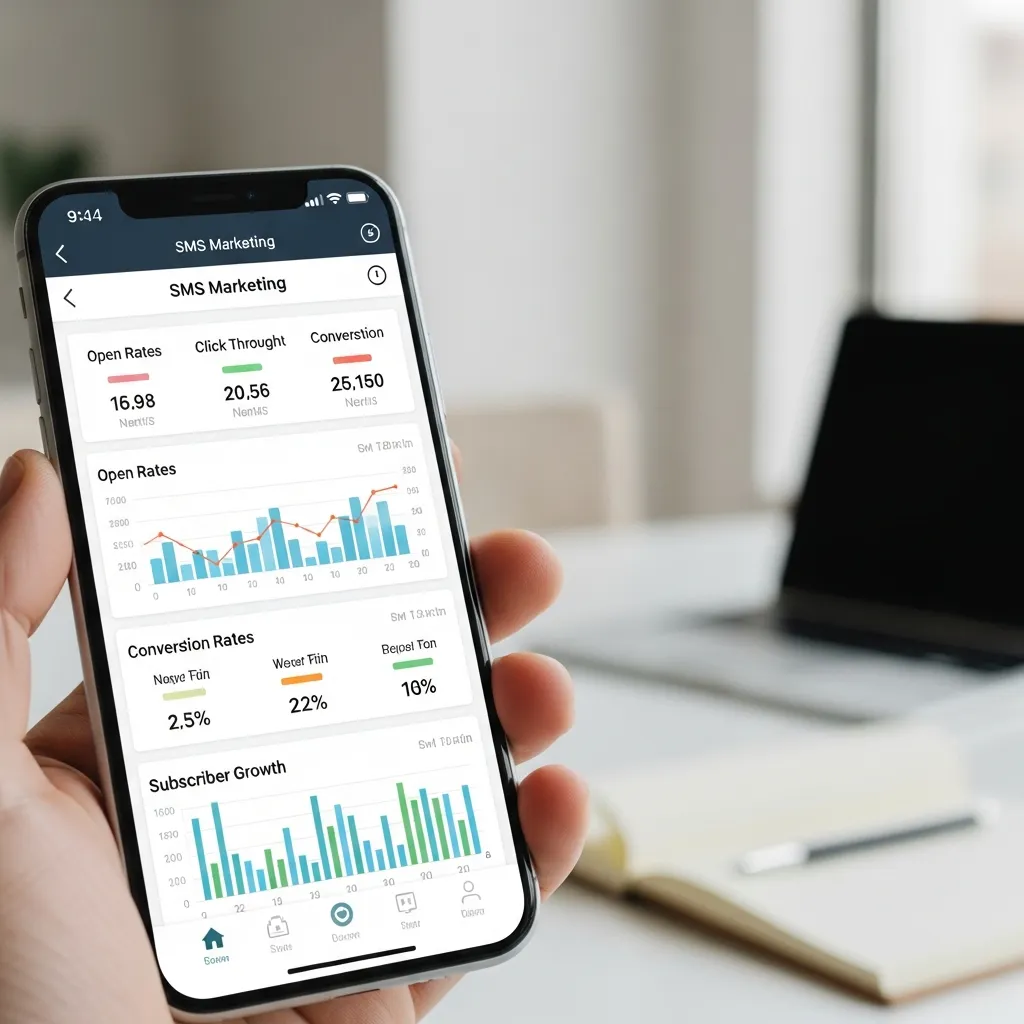 To understand the health of your campaigns, you must monitor several critical performance indicators. Each metric provides a different piece of the puzzle, showing you exactly how subscribers react to your messages.
Delivery Rate and Bounce Rate
Your delivery rate measures the percentage of messages that successfully reach a user’s mobile device. A high delivery rate indicates that your subscriber list is clean and active. Conversely, your bounce rate highlights messages that failed to deliver. Hard bounces typically occur when a phone number is disconnected or invalid. Monitoring these numbers closely ensures you do not waste money sending texts to dead numbers.
Open Rate
The open rate tracks how many recipients actually look at your text. Text messages naturally enjoy incredibly high open rates compared to email. However, keeping an eye on this metric remains important. If you notice a sudden drop, you may be sending messages at inconvenient times, or your sender ID might not be recognizable to your audience.
Click-Through Rate (CTR)
Open rates show visibility, but the click-through rate demonstrates genuine interest. The CTR measures how many subscribers tapped the link included in your message. A low CTR usually indicates that your offer was not compelling enough or that your call to action was confusing. Testing different variations of your copy can significantly improve this metric.
Conversion Rate
The ultimate goal of most campaigns is to drive action. Your conversion rate measures the percentage of people who completed a specific goal after clicking your link. This could be completing a purchase, filling out a lead form, or registering for a webinar. Connecting your SMS marketing analytics to your sales data proves the direct financial impact of your text campaigns.
Opt-In and Opt-Out Rates
Understanding how your audience grows and shrinks helps you gauge overall brand sentiment. A steady opt-in rate shows that your lead generation efforts are working. However, if your opt-out rate suddenly spikes after a specific campaign, you likely annoyed your audience. High opt-out rates often stem from sending messages too frequently or pushing irrelevant offers.
Customer Lifetime Value (CLV) via SMS
Customer lifetime value estimates the total revenue a business can expect from a single customer over the duration of their relationship. By applying SMS marketing analytics, you can determine if subscribers on your text list spend more money over time compared to non-subscribers. Cultivating long-term relationships through mobile messaging frequently leads to a higher overall CLV.
Tools and Platforms for SMS Marketing Analytics
Gathering accurate data requires the right technological infrastructure. You cannot effectively track performance without software designed to capture and report on customer interactions.
Built-in Analytics Features
Most modern text marketing platforms include native analytics dashboards. These built-in tools provide real-time reporting on delivery rates, clicks, and opt-outs. They offer a convenient, centralized location for your marketing team to review the immediate results of a text blast without needing to export data to external spreadsheets.
Integrating with CRM and Marketing Tools
To get a holistic view of your customer journey, your text messaging data needs to sync with your customer relationship management software. Integrating SMS with your primary database allows your sales and support teams to see every text a customer has received. Utilizing tools like Salesforce SMS Messaging creates a unified system where all customer interactions are logged, enabling more personalized and context-aware communication.
Advanced Analytics Platforms
For enterprise organizations, built-in dashboards might not offer enough depth. Advanced analytics platforms can aggregate data across all your marketing channels. This allows you to compare the performance of your text campaigns directly against your email marketing, social media ads, and paid search efforts, giving you a comprehensive view of your entire marketing ecosystem.
Utilizing AI in SMS Marketing
Artificial intelligence is rapidly changing how we analyze data. Predictive analytics powered by AI can review your past campaign performance and suggest the optimal times to send future messages. To explore how machine learning can automate your optimizations, consider adopting a Harness AI SMS marketing strategy. These advanced models take the manual guesswork out of campaign planning.
Optimizing SMS Campaign Performance Through Analytics
 Data is only valuable if you use it to make tangible improvements. SMS marketing analytics should directly inform how you build and execute your messaging workflows.
A/B Testing
Never rely on assumptions when designing your campaigns. A/B testing involves sending two slightly different versions of a text to a small segment of your audience to see which performs better. You might test a percentage discount against a specific dollar amount off. By analyzing the CTR and conversion rates of both variations, you can send the winning message to the remainder of your list with confidence.
Segmentation and Personalization
Sending identical messages to your entire database rarely yields optimal results. Use your analytics to divide your audience into smaller, targeted segments based on their past behavior. If your data shows a group of customers frequently buys athletic shoes, you can send them a highly personalized text when a new running shoe drops. Targeted campaigns consistently outperform generic blasts.
Timing and Frequency
Your SMS marketing analytics will reveal exactly when your audience is most active. Some brands see massive engagement on weekend mornings, while others find success during weekday lunch hours. Analyze your click data to pinpoint the best sending windows. Furthermore, monitor your opt-out rates to ensure you are not overwhelming your subscribers with too many messages.
Analyzing Customer Journeys and Workflows
Automated text sequences play a huge role in modern marketing. You should regularly review the analytics associated with your automated workflows, such as abandoned cart reminders or welcome series. If users consistently drop off at the third message of a sequence, you know exactly where you need to rewrite your copy or improve your offer.
Practical Strategies for Improving SMS Marketing ROI
Generating a positive return on investment requires discipline and a commitment to continuous improvement.
Setting Clear Goals and KPIs
Before you send a campaign, you must define what success looks like. Establish clear benchmarks for your open rates, click-through rates, and overall revenue targets. For a deeper dive into establishing these baselines, review our guide on SMS Marketing Metrics, KPIs, Maximize Your ROI. Clear goals provide a roadmap for your entire strategy.
Regular Reporting and Performance Reviews
Do not wait until the end of the quarter to look at your data. Schedule weekly or bi-weekly review sessions with your marketing team. Frequent reporting allows you to catch underperforming campaigns early and double down on the strategies that are driving revenue.
Learning from Successful Campaigns
When a campaign exceeds expectations, dissect the data to understand why it worked. Did a specific word in your call to action drive more clicks? Was the offer particularly compelling? Document these wins and apply the lessons to your future marketing efforts. Studying the public strategies of successful competitors can also inspire new approaches.
Focusing on Customer Loyalty
Acquiring new customers costs significantly more than retaining existing ones. Use your SMS marketing analytics to identify your most loyal buyers and reward them. Sending exclusive VIP discounts or early access to new products via text builds tremendous brand affinity. Structuring a formal program can be highly beneficial, as detailed in this SMS Customer Loyalty Programs Guide to Retention.
Challenges and Solutions in SMS Marketing Analytics
 While the benefits are immense, tracking text message performance does come with specific hurdles that marketers must navigate carefully.
Data Privacy and Compliance
Handling consumer data requires strict adherence to privacy laws. Regulations like the General Data Protection Regulation (GDPR) in Europe and the Telephone Consumer Protection Act in the United States dictate how you can collect and use phone numbers. Your analytics platforms must be configured to respect user consent, ensuring you process opt-outs instantly and maintain a fully compliant subscriber list.
Attribution Modeling
Determining which marketing channel deserves credit for a sale is notoriously difficult. If a customer receives an email, sees a Facebook ad, and then clicks a text message link to buy a product, how do you attribute that revenue? Implementing robust tracking parameters (like UTM codes) on your SMS links helps you connect your text campaigns to actual sales within your primary analytics software, allowing for more accurate attribution. For more information on understanding your actual returns, you can consult resources on Return on Investment (ROI).
Overcoming Data Silos
Marketing teams often use different software for different tasks, leading to fragmented data. If your SMS metrics live in one platform and your sales data lives in another, getting a clear picture of performance becomes frustrating. The solution is integrating your software stack so data flows seamlessly between your messaging platform, your CRM, and your e-commerce storefront.
Turn Data Into Actionable Growth
The true power of SMS marketing analytics lies in execution. Gathering data is an excellent first step, but applying those insights to your daily operations changes the trajectory of your business. By carefully monitoring your delivery rates, click-throughs, and conversions, you remove the guesswork from your mobile strategy.
As technology advances, incorporating AI and deeper CRM integrations will make tracking even more precise. Marketing teams that commit to understanding their data today will build stronger, more profitable relationships with their customers tomorrow. Commit to testing your assumptions, respecting your audience’s preferences, and letting your analytics guide your path to continuous optimization and sustainable success.