
Salesforce SMS Messaging helps businesses connect with customers through instant text messages for promotions, alerts, reminders, and personalized communication. It improves engagement, customer support, and marketing efficiency by integrating SMS campaigns directly within the Salesforce platform.
Why Salesforce SMS Messaging is Crucial for Businesses
Modern consumers expect brands to communicate with them efficiently and relevantly. Relying solely on traditional channels can result in missed opportunities and lower engagement rates.
Direct and Instant Communication
An email might sit in a promotional folder for days. A text message buzzes in a customer’s pocket and demands immediate attention. This makes SMS the ideal channel for time-sensitive information like flash sales, appointment reminders, and urgent account alerts.
High Open Rates and Engagement
Studies consistently show that SMS open rates hover around 98%. Contrast this with email open rates, which generally sit between 15% and 25%. People read their texts, and they read them quickly. When you use salesforce sms messaging, you ensure that your carefully crafted content actually gets seen by the people who matter most to your business.
Personalization at Scale
Sending a generic blast to thousands of people rarely yields good results. Customers want to feel understood. Because Salesforce holds a wealth of data about your customers, you can use that data to tailor your SMS campaigns. You can address the customer by name, reference their recent purchases, or send them a discount code for their birthday.
Key Features of Salesforce SMS Messaging
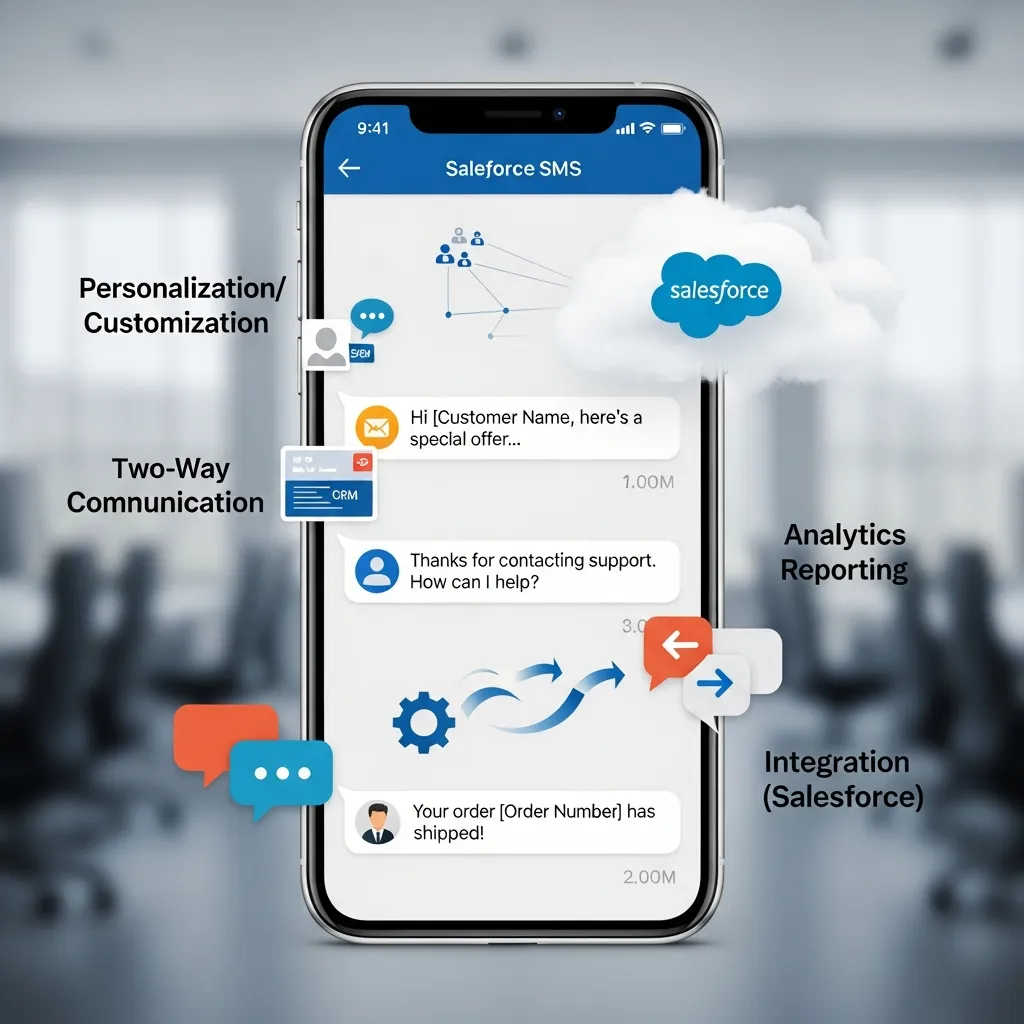 Salesforce provides a powerful set of tools for managing text-based customer communication at scale. These features turn basic SMS into personalized, real-time interactions that improve engagement, customer satisfaction, and business efficiency. Whether used for marketing, support, or service updates, Salesforce SMS Messaging helps brands stay connected with customers on the channels they use most.
Two-Way Messaging
Modern communication should never be one-sided. Customers often need to ask questions, confirm details, request support, or reschedule appointments after receiving a message. Salesforce enables two-way messaging, allowing businesses to create real conversations through SMS.
Support agents can respond directly from the Salesforce platform, keeping all conversations organized in one place. Automated chatbots can also handle common inquiries instantly, such as appointment confirmations, order tracking, business hours, or frequently asked questions.
This feature improves response times, increases customer convenience, and creates a more engaging experience. Instead of waiting on email replies or long phone calls, customers can simply send a text and get quick assistance.
Automation Capabilities
Manual outreach is time-consuming and prone to error. You can automate your SMS strategy using tools like Journey Builder. For example, if you want to learn more about setting up complex automated workflows, checking out our guide on Salesforce Marketing Cloud is a great place to start. You can trigger a welcome text when a user signs up, followed by a special offer a few days later, all without manual intervention.
Segmentation and Targeting
One of the biggest advantages of Salesforce SMS Messaging is the ability to send the right message to the right audience at the right time. Not every customer should receive the same text. Salesforce allows businesses to segment contacts based on demographics, purchase history, location, customer lifecycle stage, and previous engagement behavior.
For example, you can send exclusive VIP promotions to loyal high-spending customers, discount reminders to abandoned cart users, or re-engagement campaigns to customers who have not purchased in the last six months. You can also personalize messages based on customer interests, making campaigns more relevant and effective.
Smart segmentation improves open rates, click-through rates, and conversions because customers receive messages that match their needs and behaviors. With Salesforce SMS Messaging, targeted communication becomes easier and more profitable.
Compliance and Opt-in Management
Legal compliance is essential when using business text messaging. Salesforce SMS Messaging includes built-in tools that help businesses stay compliant with SMS regulations while protecting customer trust.
The platform manages customer consent records, ensuring messages are only sent to users who have explicitly opted in to receive communications. It also automatically processes opt-out requests, such as when a customer replies with keywords like “STOP,” “UNSUBSCRIBE,” or similar commands.
By automating opt-in and opt-out management, Salesforce keeps your subscriber list clean, reduces legal risk, and ensures your campaigns follow messaging best practices. This allows businesses to scale SMS marketing confidently while maintaining a positive customer experience.
Use Cases for Salesforce SMS Messaging
How you apply this technology depends on your specific business goals. Here are a few ways organizations are currently using SMS to drive results.
Marketing Campaigns
Retailers and ecommerce brands use SMS to announce new product drops, send limited-time discount codes, and invite local customers to in-store events. Because the channel is so immediate, it works exceptionally well for generating quick bursts of traffic and revenue.
Customer Service
Providing support via text is incredibly convenient for the consumer. They don’t have to wait on hold or check their email for a response. By connecting SMS to your support console, agents can resolve tickets faster. You can learn more about optimizing your support workflows by visiting our Salesforce Service Cloud product page.
Operational Alerts
Service-based businesses rely heavily on SMS for operational efficiency. Sending an automated text reminder for a doctor’s appointment, a haircut, or a home repair visit dramatically reduces no-show rates. Logistics companies also use texts to provide real-time shipping updates and delivery confirmations.
Internal Communications
SMS isn’t just for external customers. Large organizations use salesforce sms messaging to communicate with their own employees. This is particularly useful for reaching remote workers, field staff, or warehouse employees who don’t spend their day sitting in front of a computer.
Setting Up Salesforce SMS Messaging
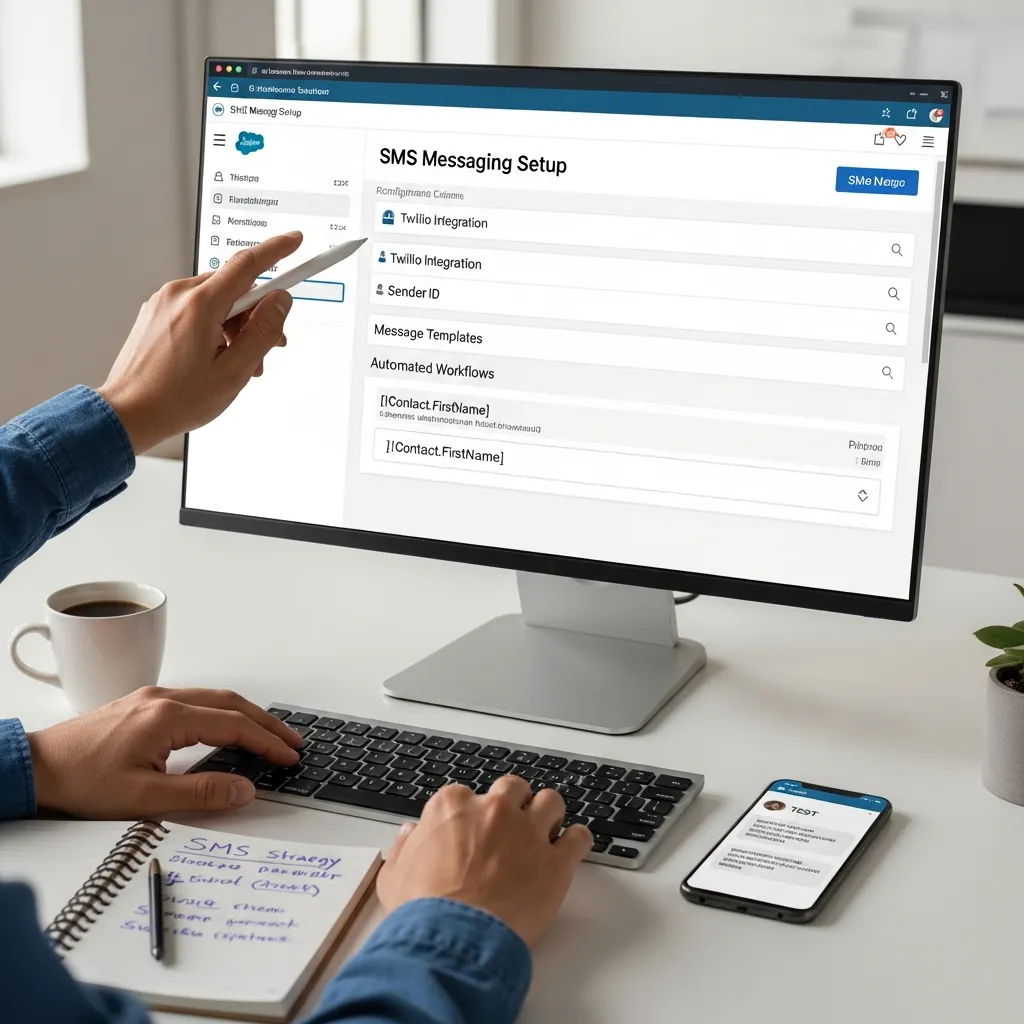 Getting started requires a few strategic decisions and some technical configuration, but the process is highly documented and supported.
Overview of the Process
First, you need to choose an SMS provider or gateway that integrates with Salesforce. Depending on your specific Salesforce product (like Marketing Cloud or Service Cloud), you will configure the connection, acquire a dedicated short code or long code (your sending phone number), and set up your keyword responses. For detailed technical instructions, you can review the Salesforce official documentation on SMS.
Best Practices for Implementation
Start small. Before rolling out SMS to your entire database, test your workflows with a small segment of highly engaged users. Ensure your data is clean and that your phone number fields are properly formatted. Clearly define the purpose of your SMS channel so your customers know exactly what kind of messages they will receive.
Maximizing ROI with Salesforce SMS Messaging
Using Salesforce SMS Messaging effectively means more than simply sending promotional texts. To achieve strong returns, businesses must consistently track performance, optimize campaigns, and improve customer engagement over time. With the right strategy, SMS can become one of the highest-performing communication channels for sales, support, and retention.
Analytics and Reporting
A major benefit of Salesforce SMS Messaging is access to detailed analytics and reporting tools. Salesforce provides dashboards that help businesses monitor key performance metrics such as message delivery rates, open rates, click-through rates, response rates, and conversions.
These insights help you understand what is working and what needs improvement. For example, if a campaign has low engagement, the issue may be poor timing, weak copy, or an offer that does not appeal to your audience. If one customer segment responds better than another, you can adjust future campaigns accordingly.
By reviewing performance data regularly, businesses can make smarter decisions, reduce wasted spend, and improve the overall success of their Salesforce SMS Messaging strategy.
A/B Testing Messages
Successful SMS campaigns rely on testing, not guessing. Salesforce SMS Messaging allows marketers to experiment with different message variations to identify what drives the best results.
You can test versions with and without emojis, compare short copy versus longer copy, try different calls to action, or measure how discount percentages affect response rates. You can also test sending times, audience segments, and personalization styles.
A/B testing gives businesses real data on customer preferences, helping refine campaigns over time. Even small changes in wording or timing can significantly increase clicks, replies, and conversions. With continuous testing, Salesforce SMS Messaging becomes more efficient and profitable with every campaign.
Integration with Other Salesforce Clouds
SMS operates best as part of an omnichannel strategy. Connect your text campaigns with your email marketing and social media efforts. For a detailed look at how connected clouds improve results, read this case study on customer engagement. When all your channels work together, the customer experiences a cohesive and unified brand journey.
Compliance and Best Practices for SMS Marketing
Respecting your customers’ privacy and adhering to legal regulations protects your brand reputation and prevents costly fines.
Regulatory Guidelines
Depending on your region, you must comply with strict laws. In the United States, the Telephone Consumer Protection Act (TCPA) governs how businesses can use SMS. In Europe, the General Data Protection Regulation (GDPR) applies. Additionally, industry associations provide mandatory frameworks. We highly recommend reviewing the CTIA Messaging Principles and Best Practices to ensure full alignment with carrier expectations.
Opt-in and Opt-out Strategies
Never buy a list of phone numbers. Always build your audience organically by offering something of value in exchange for their phone number, such as a discount or access to exclusive content. Clearly state that standard message and data rates may apply. Always include simple instructions on how to unsubscribe from future messages.
Message Content Best Practices
Keep your messages concise. You typically have 160 characters to make your point. Be clear about who is sending the message and include a strong, unambiguous call to action. Avoid sending messages too early in the morning or too late at night, respecting your recipient’s local time zone.
 Mastering Salesforce SMS Messaging gives you a clear competitive advantage in today’s fast-moving digital marketplace. By using timely, personalized, and compliant text communication, businesses can strengthen customer relationships, increase engagement, and drive measurable growth across marketing, sales, and support operations.