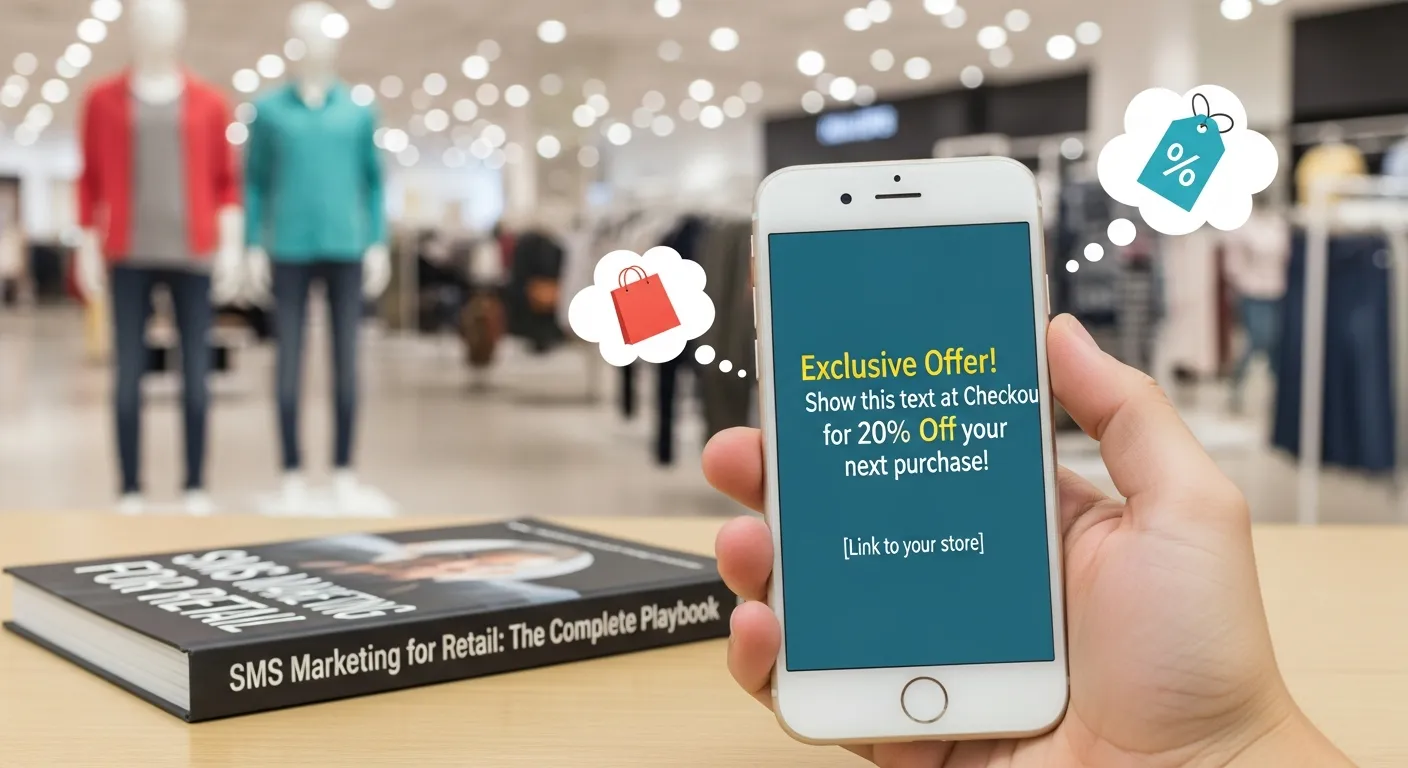
Retail competition has never been fiercer. Shoppers ignore emails, scroll past social ads, and tune out the constant noise fighting for their attention. Yet one channel still lands directly in a customer’s hand and gets read within minutes: text messaging.
SMS marketing for retail has become one of the most dependable ways to drive store traffic, recover lost sales, and build lasting customer relationships. Text messages reach a 98% open rate, while marketing emails hover around 20%. When a phone buzzes, people check it almost instantly—and that behavior makes SMS perfect for time-sensitive retail offers.
This guide walks you through everything you need to launch and grow an effective SMS program. You’ll learn what SMS marketing for retail is, why it works so well, how to stay compliant, which campaigns deliver the strongest results, and how to measure your return. By the end, you’ll have a clear roadmap to turn text messaging into a measurable revenue engine for your store.
What is SMS marketing for retail?
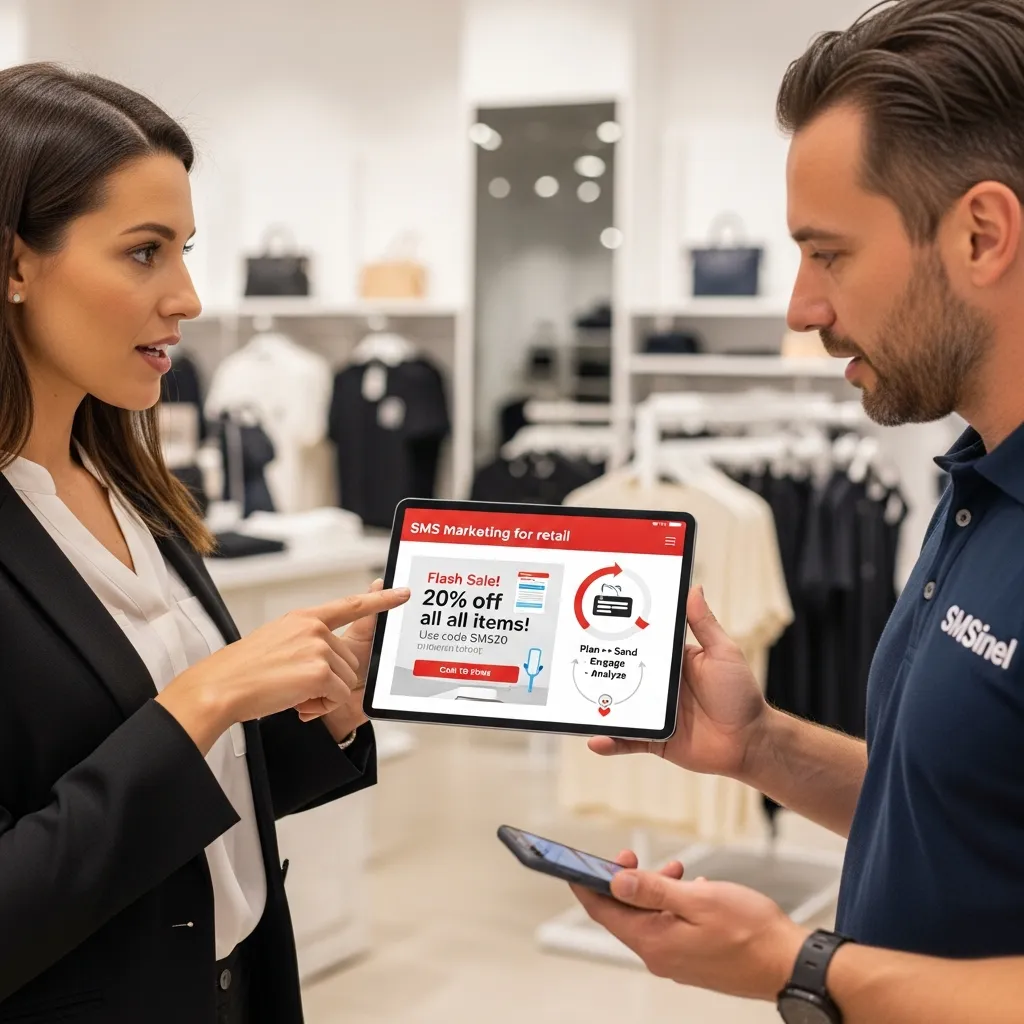 SMS marketing for retail is the practice of sending automated and broadcast text messages to customers who have opted in to receive them. These messages cover everything from flash-sale alerts and new-product launches to order confirmations and abandoned-cart reminders. The goal stays simple: deliver timely, relevant information directly to a shopper’s mobile device.
Unlike email, which often filters into spam or promotions folders, SMS lands in the same inbox people use to text family and friends. That personal placement is exactly why text messaging cuts through the clutter so effectively. Customers who opt in genuinely want brief, valuable updates from the retailers they trust.
Why is SMS marketing crucial for retailers today?
Foot traffic patterns have shifted, and online competition keeps climbing. Retailers need a channel that delivers immediate results without expensive ad-bidding wars. SMS marketing for retail fills that gap. A single text can fill a slow Tuesday afternoon, clear seasonal inventory, or announce a doorbuster sale—all within minutes of hitting send.
What are the key benefits of SMS marketing for retail?
The case for adding text messaging to your retail strategy rests on a handful of hard advantages. Understanding these benefits helps justify the investment in an SMS marketing platform.
How do high open rates drive more retail sales?
Text messages reach a 98% open rate, and recipients typically read them within three minutes. Launch a 24-hour flash sale by email, and it might sit unread for two days. An SMS alert ensures your audience sees the offer while they still have time to act. This immediacy creates faster traffic spikes and higher daily sales volume.
How does SMS deliver instant reach?
Customers carry their phones everywhere. A text reaches them whether they’re at home, commuting, or standing inside a competitor’s store. No other channel matches this combination of speed and presence.
Is SMS marketing for retail cost-effective?
Yes. SMS requires no expensive creative production, no algorithm to fight, and no bidding battles. You pay for software and per-message fees, then reach an audience that already opted in. Because behaviorally targeted messaging converts so well, the return per dollar spent often outpaces both email and paid social.
How does SMS scale personalization?
Generic broadcasts underperform on every channel. SMS marketing for retail lets brands scale personalization through dynamic data insertion. Your platform can automatically pull a customer’s first name, reference their last purchase, and suggest a complementary product. That level of detail makes shoppers feel understood, which lifts repeat-purchase rates.
How does SMS compare to email and social media?
Each channel serves a distinct purpose. Email works best for long-form content, detailed product guides, and high-resolution images. Social media builds brand awareness and community. SMS, by contrast, excels at urgent, short-form communication. The smartest retailers use all three together rather than choosing one. For a deeper look at coordinating channels, study this guide to SMS for ecommerce stores.
How do you build an SMS marketing strategy for retail?
 A strong program starts with clear goals and a solid legal foundation. Skip these steps, and you risk wasted spend, fines, and a damaged brand reputation.
How do you define your SMS marketing goals?
Decide what you want before you send a single text. Common retail goals include driving immediate sales, increasing in-store foot traffic, boosting customer loyalty, and recovering abandoned carts. Each goal shapes the type of campaign you run and the metrics you track.
How do you identify your target audience?
Group your subscribers based on shared traits. Create segments for frequent buyers, dormant customers, local shoppers near a specific store, and customers interested in particular product categories. Targeted messages dramatically outperform generic blasts.
How do you choose the right SMS platform?
Pick software that offers visual workflow builders, two-way messaging, robust reporting dashboards, and built-in compliance tools. Your platform must also integrate with your existing systems, including your point-of-sale, ecommerce store, and customer database. Connecting these tools keeps customer data synchronized and lets you trigger messages based on real shopping behavior. A well-connected CRM with text messaging gives your team a complete view of every customer.
How do you stay compliant with TCPA, GDPR, and CTIA rules?
You cannot legally send commercial texts to anyone who hasn’t explicitly opted in. In the United States, the Telephone Consumer Protection Act (TCPA) regulates mobile marketing. In Europe, the General Data Protection Regulation (GDPR) governs how you collect and use data. Industry guidelines from the CTIA add further standards.
Follow these rules to stay compliant:
- Use double opt-in. Confirm consent twice so you have a clear record that the subscriber wanted to join.
- Disclose clearly. State what types of messages subscribers will receive and how often at the point of opt-in.
- Make opting out easy. Include a clear command like “Reply STOP to cancel” in every message.
- Honor consent instantly. Your platform must process STOP requests automatically and remove users from active sequences.
Which SMS campaigns work best for retailers?
Not every text serves the same purpose. The strongest retail programs blend promotional, transactional, and engagement messages across several proven campaign types.
How do promotional campaigns drive urgency?
Reserve promotional blasts for high-value moments—flash sales, new product launches, and seasonal promotions. Because text creates urgency, limit these offers to short windows of 24 to 48 hours. The tight deadline forces an immediate purchasing decision. Avoid over-sending; two to four promotional texts per month keeps your list healthy.
Why do transactional SMS messages matter?
Transactional texts build trust. Trigger an order confirmation immediately after purchase, then send a shipping update the moment the package leaves the warehouse with a direct tracking link. Delivery notifications and clear returns or refund alerts reduce customer anxiety and cut down on “where’s my order?” support tickets. Reliable communication fosters deep brand loyalty.
How do you build customer engagement and loyalty through SMS?
Engagement campaigns turn one-time buyers into repeat customers:
- Welcome series: Send your first text the moment someone subscribes, delivering whatever you promised at opt-in—often a 10% discount code.
- Loyalty program updates: Notify members of point balances, rewards, and exclusive perks.
- Birthday and anniversary messages: Collect birth dates at opt-in and automate a special greeting with a treat.
- Customer feedback and surveys: Send a short survey after a purchase to gather reviews and improve your offering.
How do abandoned cart reminders recover lost sales?
Cart recovery is the single highest-impact SMS campaign for most stores. Send the first reminder 30 to 60 minutes after abandonment, reminding the shopper of the specific items left behind and including a direct link back to their cart. If they don’t convert, follow up 24 hours later with a small incentive like a free-shipping code. Keep the sequence to three messages maximum over 72 hours. For a full breakdown, study this abandoned cart SMS strategy guide.
How do you craft compelling SMS messages?
 What are the best practices for SMS message content?
Identify your brand immediately so the customer knows who’s texting. Lead with your discount or main value proposition. Use strong, active verbs and a single, clear call to action. Add a shortened, mobile-friendly link straight to the relevant product page. Use emojis sparingly—one well-placed emoji adds personality, but a string of them looks like spam. Personalization tokens, like the customer’s first name, make every message feel relevant.
When is the best time to send retail SMS messages?
Timing heavily influences engagement. Never send promotional texts during quiet hours. Restrict your sending windows to between 9:00 AM and 8:00 PM in the recipient’s local time zone. Mid-afternoon and early evening sends usually earn the highest click-through rates. Event-triggered messages, like shipping updates, can send the moment the action occurs.
Why should you A/B test your SMS campaigns?
Never rely on assumptions. A/B testing sends two variations of a message to a small audience segment to see which performs better. Test a 15% discount against a flat $10 off. Test a Tuesday morning send against a Thursday afternoon. Send the winning version to the rest of your list. Make testing a permanent habit, and small improvements compound into major gains.
How do you integrate SMS with your retail ecosystem?
Your SMS efforts should never operate in a vacuum. A holistic program connects seamlessly with your broader retail infrastructure.
Why should you connect SMS to your CRM?
Integrating your SMS platform with your Customer Relationship Management system keeps all customer data synchronized, giving your sales and support teams full visibility. You can reference past purchase data to deepen personalization. If a customer abandons a cart containing running shoes, your platform can suggest matching socks.
Which ecommerce platforms connect best with SMS tools?
Platforms like Shopify, Magento, and WooCommerce offer native integrations or dedicated plugins that feed real-time cart and order data to your messaging software. This connection ensures your campaigns operate automatically without manual data entry.
How do marketing automation tools save time?
Automation guarantees the right message reaches the right person at the right moment. A welcome text goes out the second someone subscribes. A shipping update sends as soon as a package ships. A cart reminder triggers 45 minutes after abandonment—no manual effort required. To scale these workflows, master proven SMS marketing automation strategies built around behavioral triggers.
Which KPIs measure retail SMS marketing success?
Sending texts is only half the job. Tracking what happens after you hit send is where real growth comes from. Monitor this mix of delivery, engagement, and financial metrics:
- Delivery rate: Confirms your list is clean and active.
- Open rate: Less common to measure directly for SMS, but high open rates can be inferred from engagement.
- Click-through rate (CTR): Shows whether your offer and call to action resonate.
- Conversion rate: Reveals how many clicks turn into purchases.
- Return on investment (ROI): Ties revenue directly to campaign cost. According to Forbes Advisor, SMS marketing consistently ranks among the highest-ROI digital channels for retailers.
- Customer lifetime value (CLTV): Measures the long-term revenue each subscriber generates.
- Opt-out rate: Signals whether you’re sending too often or pushing irrelevant offers.
What advanced strategies can elevate retail SMS marketing?
Once your basic campaigns run smoothly, introduce advanced tactics to squeeze even more value from every send.
How does segmentation improve targeting?
Tailor your messages based on behavioral data. Segment shoppers by purchase history, browsing behavior, and geographic location. A customer who recently browsed winter coats should receive different messaging than a loyal customer who buys every month.
How does two-way SMS improve customer service?
Two-way texting lets customers reply with questions, check order status, or request support. This turns a simple notification system into an interactive channel that builds relationships and resolves issues fast.
How does AI-powered personalization work?
Modern SMS platforms use artificial intelligence to analyze behavioral data and predict the exact minute a shopper is most likely to click. Machine learning increasingly automates segmentation and send-time optimization, allowing hyper-personalized messaging at scale.
How can SMS generate in-store traffic?
Text messaging bridges your online and physical channels. Send location-based offers to subscribers near a store, distribute mobile coupons redeemable in person, or announce exclusive in-store events. A well-timed text can pull nearby shoppers through your doors within the hour.
Getting started with SMS marketing for retail
 Text messaging gives retailers a direct, high-converting line to their customers—one that bypasses crowded inboxes and unpredictable algorithms. The retailers winning with SMS share a common approach: they build compliant lists, deliver genuine value, automate the heavy lifting, and let data guide every decision.
Start small. Choose a reputable SMS marketing platform that integrates cleanly with your store and POS system. Focus first on building a compliant subscriber list by offering real value in exchange for a phone number. Set up your two essential automations—a welcome series and an abandoned-cart sequence—before launching big promotional blasts. Then track your performance, run A/B tests, and refine as you go.
When you execute SMS marketing for retail with precision and respect for your audience, you transform occasional shoppers into loyal advocates and turn text messaging into one of your most dependable revenue channels. Pick your platform, build your list, and send your first campaign this week.
Conclusion
1. What is SMS marketing for retail?
SMS marketing for retail is the practice of sending automated and promotional text messages to customers who have opted in. It covers flash sales, new-product launches, order updates, and abandoned-cart reminders delivered directly to mobile devices.
2. How effective is SMS marketing for retail?
SMS marketing for retail is highly effective, with an average open rate of 98% and most messages read within three minutes. This immediacy makes it one of the strongest channels for driving sales and recovering lost revenue.
3. Is SMS marketing legal for retail stores?
Yes, SMS marketing for retail is legal when businesses obtain explicit customer consent. Companies must follow regulations like TCPA, GDPR, and CTIA guidelines, ensuring users opt in before receiving messages and can opt out anytime.
4. How do retailers get customers to opt in to SMS?
Offer incentives like discounts or free shipping. Use website pop-ups, checkout checkboxes, in-store signage with keyword campaigns, and social media promotions. A double opt-in process is recommended for compliance and trust.
5. How often should a retail store send promotional texts?
Limit promotional messages to two to four per month. Transactional messages, like order confirmations and shipping updates, can be sent more frequently because customers expect them.
6. Which SMS campaign delivers the highest ROI for retail?
Abandoned-cart recovery campaigns usually deliver the highest ROI for SMS marketing for retail. These messages target shoppers who already showed buying intent, making them more likely to complete a purchase.
7. How much does SMS marketing for retail cost?
Cost depends on your platform and message volume. It typically includes a monthly subscription plus per-message charges, but it remains cost-effective due to high conversion rates and strong returns.
8. Can SMS marketing for retail be automated?
Yes. SMS marketing for retail can be fully automated using workflows. Messages can trigger from actions like sign-ups, purchases, or cart abandonment, reducing manual effort and improving efficiency.
9. What’s the best time to send retail SMS messages?
The best time is usually between 9:00 AM and 8:00 PM in the customer’s local time zone. Mid-afternoon and evening hours often generate the highest engagement rates.
10. How do retailers measure SMS marketing ROI?
ROI is measured using click-through rates, conversion rates, and revenue tracking. Using trackable links and unique discount codes connects each message directly to sales performance.