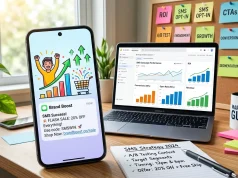
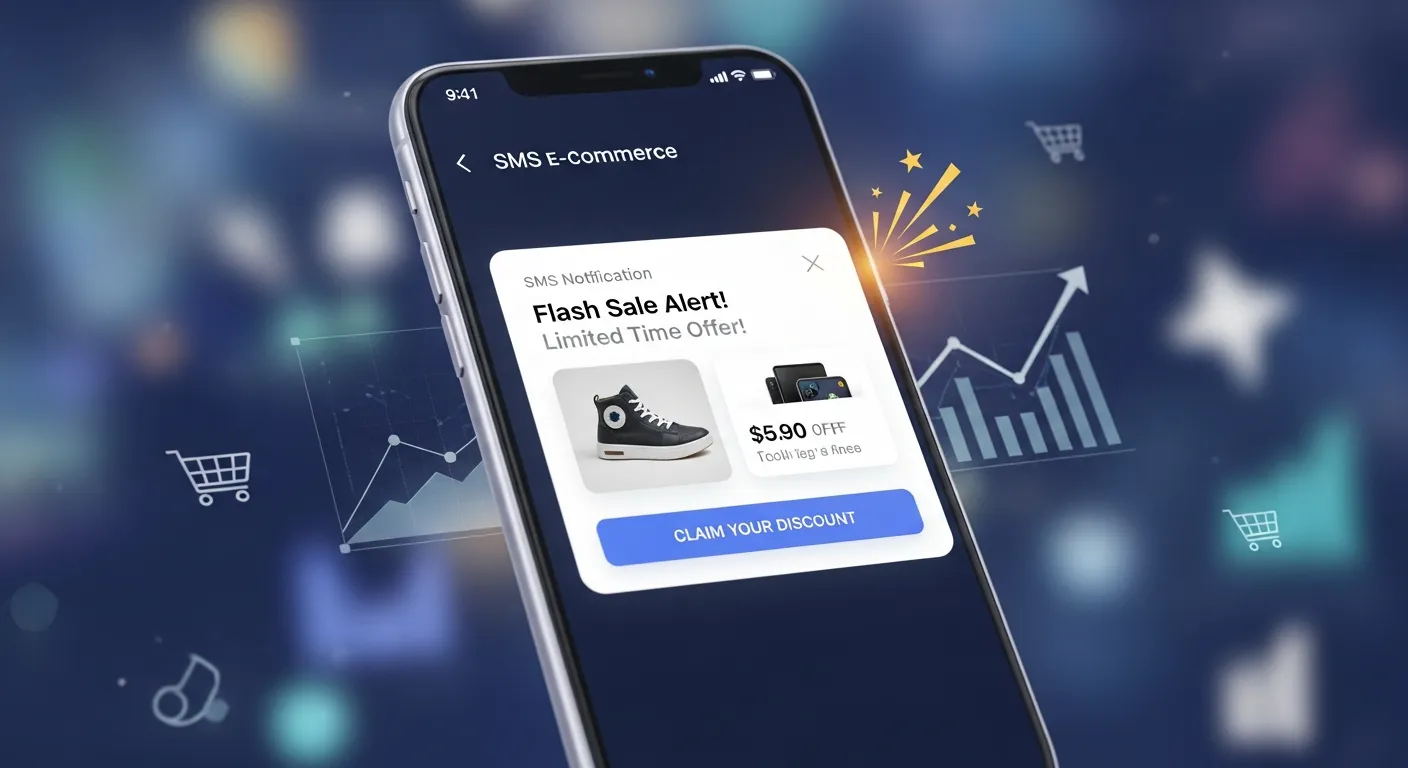
Ecommerce SMS notifications are automated text messages sent to customers for order updates, promotions, and abandoned cart reminders. They improve engagement, boost conversions, and enhance customer experience by delivering timely, personalized communication directly to mobile devices.
Ecommerce sms notifications are automated text messages sent to customers to provide shipping updates, recover abandoned carts, and deliver promotional offers. When integrated properly, these text messages yield near-perfect open rates, foster brand loyalty, and significantly increase total online revenue for retail businesses.
Shoppers are constantly bombarded by digital advertisements, promotional emails, and social media banners. Capturing consumer attention requires communication channels that cut directly through this daily digital noise. A well-timed, relevant text message lands directly in a buyer’s hand and commands immediate attention, making mobile messaging a foundational pillar for modern retail success.
Many retailers mistakenly view text messages as intrusive, opting entirely for email campaigns. This hesitation leaves massive revenue on the table. Consumers actually prefer receiving brief, valuable updates from the brands they trust. By delivering relevant information—like a flash sale alert or a delivery confirmation—directly to a mobile device, retailers create a frictionless shopping experience that modern buyers demand.
Implementing a strategy around ecommerce sms notifications requires a dedicated approach. Retailers must secure explicit consent, integrate their data systems, and craft copy that delivers immediate value. This comprehensive guide details the exact strategies, compliance requirements, and advanced tactics necessary to turn basic text messages into a highly profitable revenue engine.
How is the landscape of e-commerce communication evolving?
 Digital communication habits shift rapidly. Ten years ago, email marketing dominated the e-commerce sector. Today, email open rates hover around 20%, with the vast majority of promotional messages filtering automatically into spam or promotions folders. The typical consumer simply ignores crowded inboxes.
Simultaneously, mobile commerce continues to capture a larger share of total online sales. According to the Pew Research Center (2023), nearly 97% of Americans own a smartphone of some kind. This constant connectivity changes how people want to interact with businesses. Shoppers expect instant updates, personalized recommendations, and immediate customer service.
Ecommerce sms notifications fill this exact gap. Text messages bridge the divide between a faceless online storefront and a personal shopping assistant. By leveraging a dedicated SMS marketing platform, retail brands can deliver time-sensitive information securely and quickly, meeting the modern consumer exactly where they spend most of their time.
Why are ecommerce sms notifications essential for your retail business?
Understanding the core benefits of mobile messaging helps justify the investment in an SMS marketing platform. The unique characteristics of text messaging provide distinct advantages over traditional marketing channels.
How do instant engagement and high open rates affect sales?
Text messages boast an average open rate of 98%. Furthermore, recipients typically read these messages within three minutes of delivery. When you launch a 24-hour flash sale, an email might sit unread for two days. An SMS notification ensures your audience sees the offer while they still have time to act. This immediacy directly correlates with faster traffic spikes and higher daily sales volume.
What are the best ways to scale personalization?
Generic broadcasts perform poorly across all marketing channels. Ecommerce sms notifications allow brands to scale personalization through dynamic data insertion. An SMS marketing platform can automatically pull a customer’s first name, reference their last purchased item, and suggest a complementary product. This level of granular personalization makes the shopper feel valued and understood, dramatically increasing the likelihood of a repeat purchase.
How can notifications drive conversions and reduce abandonment?
Shopping cart abandonment costs the retail industry billions annually. Distractions happen constantly. A customer might add an item to their cart, receive a phone call, and forget to complete the checkout. Text messaging serves as a powerful recovery tool. By sending an automated reminder shortly after abandonment, businesses pull high-intent shoppers back to the payment page.
What role do text alerts play in building customer loyalty?
Loyalty stems from consistent, positive interactions. While promotional texts drive sales, transactional texts build trust. When a customer receives immediate confirmation that their order processed successfully, followed by real-time tracking updates, their anxiety about the purchase drops. Consistent reliability fosters deep brand loyalty.
What are the different types of ecommerce sms notifications and their strategic applications?
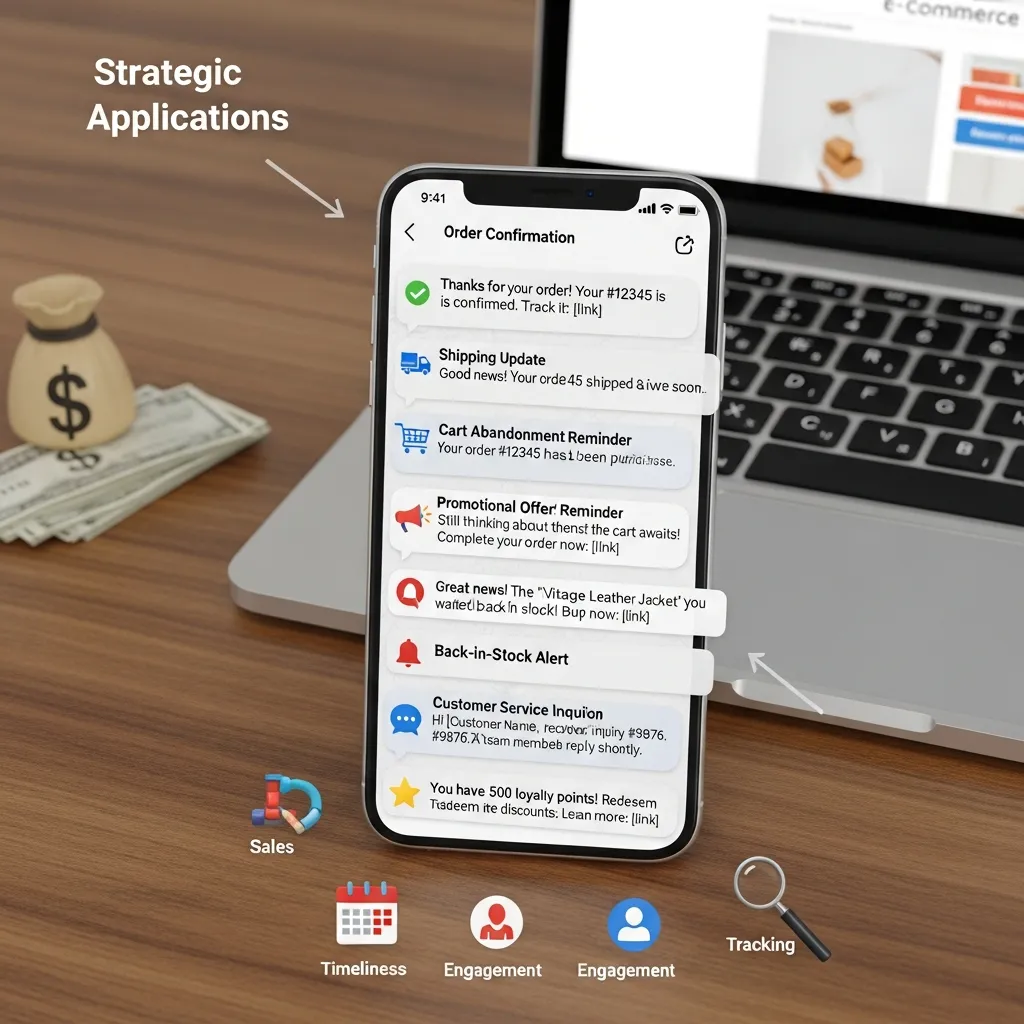 Every text message sent by your brand must serve a specific purpose. Categorizing your ecommerce sms notifications helps maintain a balanced communication strategy.
How do abandoned cart reminders recover lost sales?
An abandoned cart reminder triggers automatically when a known subscriber leaves items in their digital cart without paying. Send the first reminder approximately 45 minutes after abandonment. Keep the tone helpful. If the shopper fails to convert, trigger a second message 24 hours later featuring a small incentive, such as a free shipping code. For a complete breakdown of this sequence, review this abandoned cart SMS strategy guide.
Why are order confirmations and shipping updates vital for the customer experience?
Transactional messages inform customers about the status of their money and their merchandise. Trigger an order confirmation immediately after a successful payment. Send a subsequent message the moment the package ships, including a direct tracking link. Choose transactional SMS over email if rapid delivery confirmation matters to your specific customer base.
When should you use promotional offers and flash sales to boost immediate purchases?
Reserve promotional text messages for high-value events. Launching a holiday sale, clearing out seasonal inventory, or promoting an exclusive product drop all warrant an SMS blast. Because text messages create urgency, limit these promotions to short windows—typically 24 to 48 hours—to force an immediate purchasing decision.
How do back-in-stock alerts capitalize on customer demand?
If a popular item sells out, allow visitors to opt-in for a back-in-stock text alert. When inventory replenishes, the SMS marketing platform automatically notifies everyone on that specific waitlist. These specific ecommerce sms notifications convert at exceptionally high rates because the customer already demonstrated clear intent to purchase that exact item.
Can customer service teams use SMS for providing real-time assistance?
Two-way text messaging transforms customer support. Instead of forcing customers to navigate clunky phone menus or wait days for an email reply, allow them to text your support number directly. Support agents can resolve sizing questions, process returns, or update shipping addresses instantly.
What are the best practices for implementing effective ecommerce sms notifications?
Execution dictates success. Following strict industry best practices protects your brand reputation and keeps your messaging legally compliant.
How do retailers obtain consent and maintain TCPA and GDPR compliance?
You cannot legally send commercial text messages to anyone who has not explicitly opted in. In the United States, the Telephone Consumer Protection Act (TCPA) regulates mobile marketing. In Europe, the General Data Protection Regulation (GDPR) governs data usage. To remain compliant, clearly state what types of messages the subscriber will receive at the point of opt-in. Furthermore, every single text message must include a clear opt-out command, such as “Reply STOP to cancel.”
What techniques help marketers craft compelling and concise messages?
A standard text message limits you to 160 characters. Identify your brand immediately so the customer knows who is texting them. Use strong, active verbs. Place your discount or main value proposition at the beginning of the sentence. Finally, include a shortened, mobile-optimized link directly to the relevant product page.
When is the optimal time to send notifications for maximum impact?
Timing impacts engagement heavily. Never send promotional messages during quiet hours. Restrict your sending windows to between 9:00 AM and 8:00 PM in the recipient’s local time zone. If you target working professionals, mid-afternoon or early evening sends generally yield the highest click-through rates.
How does audience segmentation improve targeted campaigns?
Segmenting your audience means dividing your subscriber list into smaller groups based on shared characteristics. Create segments for frequent buyers, dormant customers, and specific product interests. Sending targeted ecommerce sms notifications to a specific segment—like texting an offer for running socks only to customers who previously purchased running shoes—drastically improves your conversion rates compared to generic blasts.
Why must you integrate your SMS marketing platform with your CRM?
Operating your texting software in isolation creates data silos. Integrating your SMS marketing platform with your Customer Relationship Management (CRM) system ensures all customer data stays synchronized. When the platforms communicate, your sales and support teams gain full visibility into every message the customer receives. Utilizing tools like Klaviyo SMS integration ensures your text campaigns leverage your existing customer data perfectly.
What advanced strategies maximize ROI with ecommerce sms notifications?
Once the foundational elements run smoothly, advanced tactics can squeeze significantly more revenue out of your mobile marketing efforts.
How does A/B testing improve your SMS campaigns?
A/B testing involves sending two variations of a text message to a small subset of your audience to see which performs better. Test a 15% discount against a specific $10 off coupon. Test sending the message on a Tuesday morning versus a Thursday afternoon. By identifying the winning variation, you optimize the message before sending it to your entire subscriber list.
What role do AI and automation play in smart messaging?
Modern SMS marketing platforms utilize artificial intelligence to streamline operations. AI algorithms can analyze customer behavioral data to determine the exact minute a specific shopper is most likely to click a link. To scale operations efficiently, marketers must master SMS marketing automation strategies that trigger messages based on these precise behavioral cues without requiring manual intervention.
How can marketers combine SMS with email for an omnichannel approach?
Email and SMS should complement each other, not compete. Use email to deliver long-form content, detailed product guides, and high-resolution images. Use SMS for urgent alerts and brief reminders. For example, send a detailed email announcing a weekend sale on Friday morning, and follow up with an urgent text message four hours before the sale ends on Sunday night.
Which performance metrics should you analyze to optimize continuously?
Tracking accurate data proves the financial viability of your campaigns. You must monitor your delivery rates, click-through rates, and conversion rates diligently. If an automated workflow shows a high opt-out rate, pause the campaign and rewrite the copy. Utilizing dedicated SMS ROI tracking tools helps connect text message link clicks directly to completed e-commerce transactions.
Which real-world case studies show success with ecommerce sms notifications?
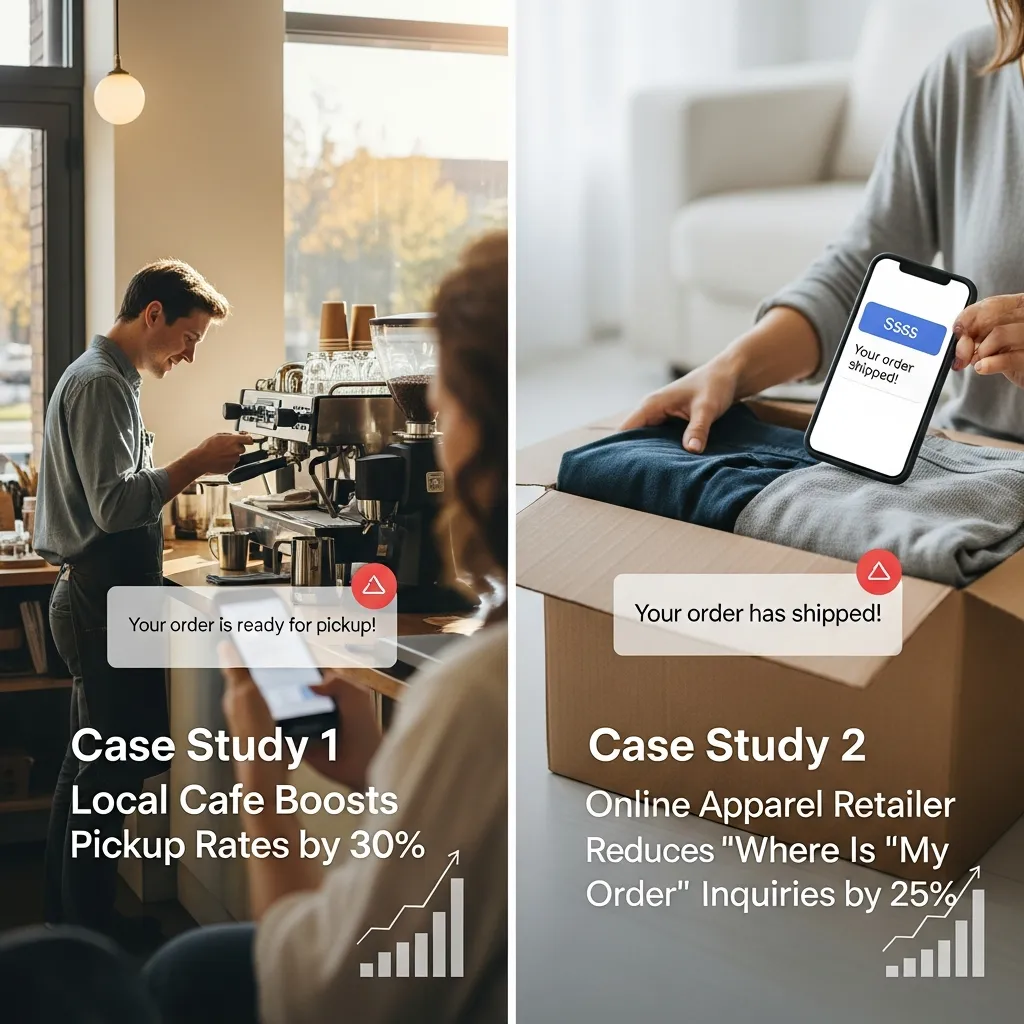 Examining how different retail organizations utilize text messaging provides a blueprint for successful implementation.
How are small businesses thriving using text message marketing?
A boutique coffee roaster struggled to convert one-time buyers into recurring subscribers. They implemented a post-purchase SMS sequence. Fourteen days after a customer bought a bag of coffee, the SMS marketing platform automatically texted them offering a 10% discount if they signed up for a monthly subscription. This simple, automated use of ecommerce sms notifications increased their subscription base by 34% in three months.
How do large enterprises scale operations with enterprise SMS marketing platforms?
A national cosmetics brand utilizes advanced segmentation to manage millions of mobile subscribers. They integrate their loyalty program directly with their SMS marketing platform. When a loyalty member accumulates enough points for a free product, the system texts them an alert containing a direct link to claim the reward. This strategy drove a massive spike in repeat website visits and increased the average customer lifetime value substantially. Choose advanced loyalty integrations if retaining existing buyers matters more than acquiring new ones.
What are the future trends in ecommerce sms notifications?
The technology powering mobile communications evolves rapidly. Preparing for upcoming changes ensures your marketing strategy remains relevant.
How will Rich Communication Services (RCS) enhance mobile messaging?
Rich Communication Services (RCS) represents the next generation of text messaging. Unlike standard SMS, RCS allows businesses to send high-resolution images, video carousels, and interactive buttons directly within the native messaging application. Shoppers will soon be able to browse a product catalog, select a size, and process a secure payment entirely within their texting app.
What impact will hyper-personalization and predictive analytics have?
Predictive analytics will remove the manual guesswork from campaign planning. Machine learning models will analyze a customer’s entire purchase history, website browsing behavior, and past text message engagement to predict exactly what product they want to buy next. The SMS marketing platform will then automatically draft and send a highly personalized text message containing that specific product recommendation at the exact time the customer is most likely to convert.
Transforming Retail Strategy with Direct Mobile Communication
Consumer attention remains the most valuable currency in digital marketing. Relying solely on crowded email inboxes and unpredictable social media algorithms severely limits your brand’s growth potential. Incorporating ecommerce sms notifications allows you to bypass the noise and speak directly to your buyers.
Begin by selecting a reputable SMS marketing platform that integrates flawlessly with your current e-commerce software. Focus entirely on building a compliant subscriber list by offering genuine value in exchange for a phone number. Map out your automated workflows—such as welcome series and abandoned cart recoveries—before launching major promotional blasts.
Consistently track your performance metrics, refine your copywriting through A/B testing, and respect your audience’s time. When executed with precision and care, mobile messaging transforms occasional shoppers into loyal brand advocates, driving sustainable revenue growth for years to come.
1. What are ecommerce SMS notifications?
Ecommerce SMS notifications are automated text messages sent by retail businesses to communicate shipping updates, deliver promotional codes, and remind shoppers about items left in their online shopping carts.
2. How do I get customers to opt-in for SMS messages?
You can encourage opt-ins by offering incentives like discounts or free shipping through website pop-ups, checkout checkboxes, and social media campaigns.
3. Is text message marketing legally regulated?
Yes. Businesses must comply with regulations like TCPA and GDPR, which require explicit customer consent before sending promotional SMS messages.
4. What is a good open rate for an e-commerce text message?
SMS marketing typically has an open rate above 95%, making it one of the most effective direct communication channels for ecommerce SMS notifications.
5. Can I track the ROI of my SMS campaigns?
Yes. Using tracking links, discount codes, and analytics tools, businesses can measure revenue generated from ecommerce SMS notifications.
6. How often should I send text messages to my customers?
Promotional SMS messages should generally be limited to 2–4 times per month, while transactional messages can be sent as needed.
7. What types of messages can be sent through ecommerce SMS notifications?
Businesses can send order confirmations, shipping updates, delivery alerts, promotional offers, and abandoned cart reminders.
8. Do ecommerce SMS notifications improve customer retention?
Yes. Personalized and timely SMS messages help maintain engagement, increase repeat purchases, and improve long-term customer loyalty.
9. Can ecommerce SMS notifications reduce cart abandonment?
Yes. Automated reminder messages and limited-time discount offers effectively encourage customers to complete unfinished purchases.
10. What tools are used for ecommerce SMS notifications?
Popular tools include SMS marketing platforms that integrate with ecommerce systems to automate messages, segment audiences, and track performance.