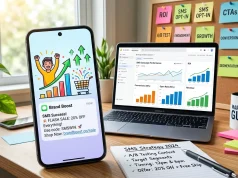
This content explains proven SMS marketing strategies that help businesses improve customer engagement, automate messaging workflows, and increase ROI. It focuses on optimizing SMS campaigns through targeted messaging, personalization, and performance tracking to achieve better marketing results and higher conversions.
Connecting with customers directly is a top priority for modern businesses, and text messaging offers an unparalleled avenue to do exactly that. Email inboxes are overflowing, and social media feeds are saturated with advertisements. When a mobile phone buzzes, however, people check it almost immediately. This behavioral habit makes text messaging an incredibly reliable channel for urgent, high-impact communication.
Developing robust SMS marketing strategies is essential for any brand that wants to maximize engagement and drive revenue. Simply blasting generic texts to a massive list will result in high opt-out rates and wasted budget. Organizations must build thoughtful frameworks that respect the customer’s time and deliver genuine value with every notification.
This comprehensive guide will walk you through the process of building, executing, and refining your texting campaigns. You will learn how to set a strong foundation with compliant opt-in methods, leverage advanced automation for perfectly timed messages, and measure your success using key performance indicators. We will also explore the best practices that keep your audience engaged and preview the future technologies shaping the industry.
Building Your Foundation: Essential SMS Marketing Strategies
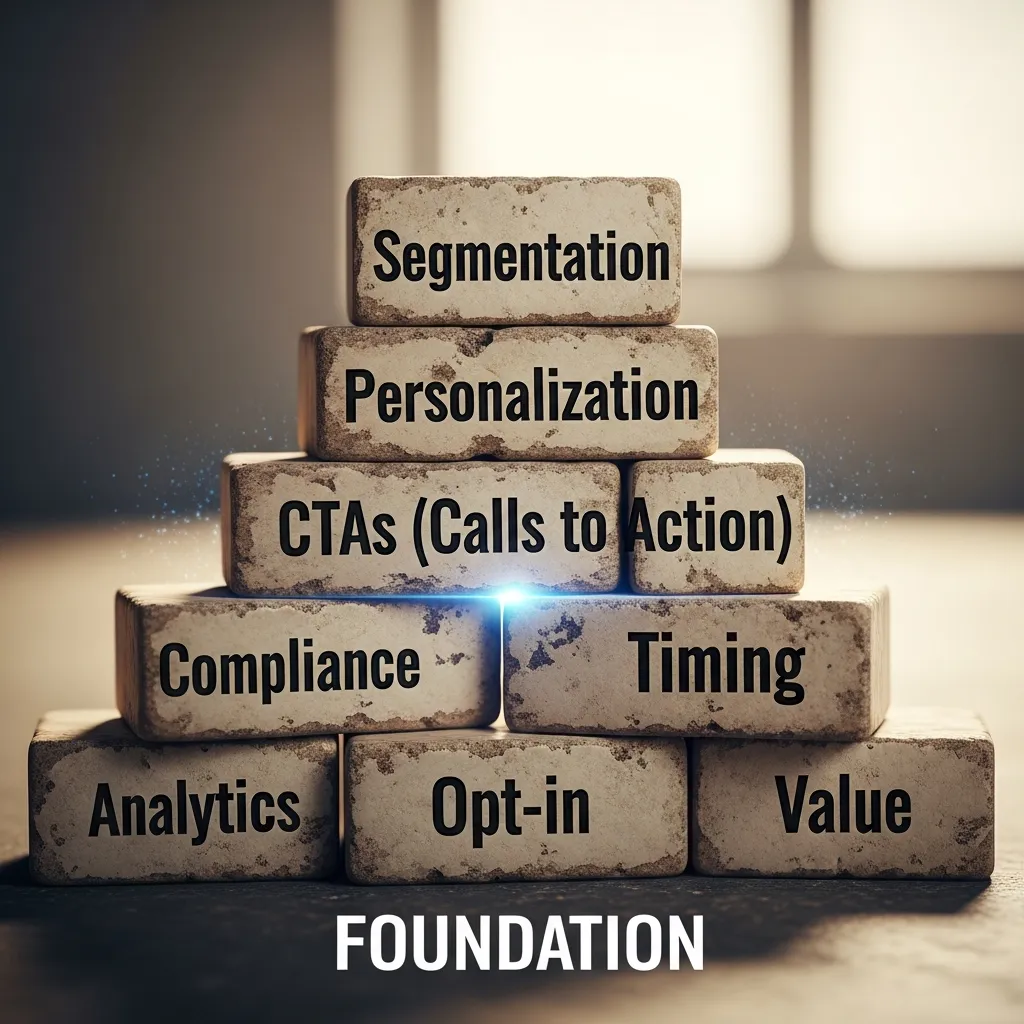 Before sending a single text, you need to establish a solid operational base. Effective SMS marketing strategies rely on gaining clear permission, understanding your audience, and utilizing the proper software infrastructure to manage your campaigns.
Crafting Compelling Opt-in Campaigns
The cornerstone of any texting initiative is a high-quality subscriber list. You cannot simply purchase phone numbers; you must earn them. Creating compelling opt-in campaigns involves offering a clear value proposition. Customers need a reason to hand over their personal phone numbers. Offer an immediate incentive, such as a 15% discount on their next purchase, free shipping, or access to an exclusive VIP club.
Equally important is maintaining strict compliance with SMS regulations. In the United States, businesses must adhere to the Telephone Consumer Protection Act, while European campaigns must follow GDPR rules. Always provide clear, explicit disclosures about what the customer is signing up for and how frequently they will receive messages. Include simple opt-out instructions, such as replying “STOP,” to ensure you meet all TCPA guidelines and maintain a trustworthy brand image.
Segmenting Your Audience for Personalized Messages
Sending the same message to everyone on your list is a quick way to lose subscribers. Segmentation allows you to group your audience based on specific criteria, ensuring that the content they receive is highly relevant to their interests. You can segment lists based on demographics, geographical location, or past purchase history.
The impact of this personalization is significant. When a customer receives a text about a product category they frequently buy from, they are far more likely to click the link and complete a purchase. By tailoring your SMS marketing strategies to specific behavioral triggers, you create a personalized experience that fosters long-term brand loyalty.
Choosing the Right SMS Platform and Tools
Managing a growing list of subscribers requires dedicated software. Your chosen SMS platform should offer visual workflow builders, robust compliance management, and dynamic tagging features. Ensure the tool you select can handle high message volumes and integrates seamlessly with your existing marketing stack, including your e-commerce platform and CRM.
Advanced SMS Marketing Strategies for Engagement and Conversion
Once your foundation is secure, you can deploy sophisticated tactics to scale your efforts. Advanced SMS marketing strategies move beyond basic text blasts, relying on intelligent automation and cross-channel integration to deliver the right message at the right time.
Leveraging Automation for Timely and Relevant Communication
Automation allows your marketing to run around the clock. By setting up specific triggers, you can send texts based on precise customer actions. A welcome series immediately greets new subscribers, setting the tone for future interactions. If a shopper leaves items in their digital cart, an abandoned cart reminder can prompt them to return and complete the transaction.
To implement these sequences, you should explore how to use automated SMS messages to boost growth. Proper workflow creation removes the manual effort from your daily operations. Establishing reliable SMS automation workflows guarantees that your customers receive consistent, timely communication without overwhelming your marketing team.
Integrating SMS with Other Marketing Channels
A truly effective marketing strategy uses multiple channels in harmony. SMS works exceptionally well when paired with email and social media. For example, you can send a detailed email newsletter about a new product line and follow it up with a brief text message reminder an hour before the launch goes live.
Integrating these systems requires syncing your software platforms. Setting up an email to SMS integration creates a seamless data flow, allowing you to trigger text messages based on email open rates. Furthermore, combining your CRM with text messaging ensures your sales and support teams have a complete, unified view of every customer interaction, creating a frictionless omnichannel experience.
Running Successful Promotional Campaigns
Promotional campaigns are the primary revenue drivers for most texting programs. Flash sales and exclusive, limited-time offers perform incredibly well via text because of the channel’s inherent immediacy. Create a sense of urgency by highlighting expiration times or limited stock availability.
You can also use text messaging to manage customer loyalty programs. Sending a quick update about a user’s point balance or offering them early access to a seasonal event makes them feel valued. Reminders for upcoming webinars, store openings, or local pop-up shops also drive high attendance rates when delivered straight to a mobile device.
Measuring Success: KPIs and Optimization
 To ensure your SMS marketing strategies are profitable, you must continuously track their performance. Data-driven decision-making allows you to allocate your budget effectively and eliminate tactics that fail to resonate with your audience. Consistent measurement ensures that your SMS marketing strategies remain efficient, scalable, and aligned with business goals.
Key SMS Marketing Metrics to Track
Monitor your delivery rates to confirm your messages are successfully reaching active phone numbers. Track your open rates and click-through rates (CTR) to gauge how compelling your offers are. Ultimately, the conversion rate dictates the success of a campaign. Understanding your return on investment (ROI) and customer lifetime value (CLV) helps you justify your software costs and marketing spend. These KPIs are essential for evaluating and improving SMS marketing strategies over time.
A/B Testing and Continuous Optimization
Never assume your first draft is the best possible version. Use A/B testing to compare different variables within your campaigns. Try sending the same offer with a dollar-amount discount versus a percentage discount. Experiment with different send times or variations in your call to action. Analyze the results to refine your approach continually. This process helps refine SMS marketing strategies for higher engagement and better conversion rates.
Tools for Analytics and Reporting
Modern texting platforms include comprehensive analytics dashboards. Review these reports weekly to spot emerging trends and potential issues. If you notice a sudden spike in your unsubscribe rate, you may need to adjust your sending frequency or improve the quality of your promotions. Advanced reporting tools also help you track audience behavior and optimize SMS marketing strategies based on real-time performance data.
Advanced Optimization Techniques
Beyond basic testing, marketers can use segmentation and personalization to further enhance performance. Grouping customers based on behavior, purchase history, or engagement level allows for more targeted messaging. Personalized SMS marketing strategies often result in higher engagement rates and improved customer loyalty.
By combining strong analytics, A/B testing, and advanced optimization techniques, businesses can continuously improve their SMS marketing strategies and achieve sustainable long-term growth.
Best Practices and Compliance in SMS Marketing
Long-term success requires discipline and respect for your audience’s boundaries. Adhering to proven best practices protects your sender reputation and ensures your messages are well-received.
Crafting Concise and Impactful Messages
Text messages offer very limited real estate. Get straight to the point. State your brand name, present the value of the offer, and provide a clear, trackable link. Avoid unnecessary jargon or complex formatting that might confuse the reader or break the character limit.
Maintaining a Clean Subscriber List
Routinely clean your contact database to remove inactive numbers and users who consistently ignore your messages. Sending texts to dead numbers wastes your budget and skews your engagement metrics. A healthy, engaged list of a thousand people is far more profitable than a bloated list of ten thousand unengaged users.
Adhering to Legal and Ethical Guidelines
Compliance is non-negotiable. Always honor opt-out requests immediately. Never purchase third-party contact lists, as messaging individuals without their explicit consent violates telecommunications laws. Following the rules set by regulatory bodies and organizations like the Pew Research Center regarding consumer privacy will safeguard your brand from massive fines and public relations disasters.
The Future of SMS Marketing
The technology powering mobile communication is evolving rapidly. Staying ahead of these trends will give your business a significant competitive advantage over slower-moving competitors. Modern SMS marketing strategies are no longer limited to simple text blasts—they are becoming intelligent, data-driven, and highly interactive systems designed to maximize engagement and conversions.
AI-Driven Personalization and Predictive Analytics
Artificial intelligence is making text marketing incredibly smart. Predictive analytics can evaluate a customer’s past behavior to determine the exact time of day they are most likely to click a link. Machine learning algorithms can even help draft message copy that is statistically proven to drive higher conversion rates, allowing for hyper-personalized communication at a massive scale.
As AI continues to improve, SMS marketing strategies will become more automated and behavior-based. Businesses will be able to segment audiences dynamically, send real-time personalized offers, and optimize campaigns without manual intervention. This will significantly increase efficiency while reducing wasted marketing spend.
Rich Communication Services
Standard SMS is limited to text and basic links, but Rich Communication Services (RCS) is poised to change the landscape. RCS allows brands to send high-resolution images, video carousels, and interactive payment buttons directly to a native mobile messaging app. This upgrade bridges the gap between text messaging and rich email, offering an immersive experience without requiring the user to download a separate application.
With RCS integration, SMS marketing strategies will evolve into full multimedia experiences. Businesses will be able to showcase products visually, enable in-chat purchases, and provide customer support within the same messaging thread. This creates a smoother customer journey and increases conversion potential.
Integration with Omnichannel Marketing
The future of SMS marketing is also deeply connected with omnichannel strategies. SMS will not work in isolation but as part of a unified system that includes email, social media, and CRM platforms. This integration ensures consistent messaging across all touchpoints, improving brand recognition and customer retention.
Hyper-Automation and Real-Time Engagement
Automation will go beyond scheduled messages. Future systems will trigger SMS messages instantly based on real-time user actions such as cart abandonment, website browsing behavior, or app activity. This level of responsiveness will make SMS marketing strategies more powerful and conversion-focused than ever before.
Ultimately, the future of SMS marketing is centered around intelligence, personalization, and seamless customer experience. Businesses that adopt these advancements early will gain a strong competitive edge in engagement, loyalty, and long-term revenue growth.
Transform Your Business with Smart Texting
 Building effective SMS marketing strategies requires a balance of strong technical infrastructure and thoughtful, customer-centric communication. By earning consent, segmenting your lists, and automating key interactions, you can create a highly profitable marketing channel that cuts through the digital noise and delivers messages directly to your audience in real time.
Modern businesses must also focus on personalization and timing. Sending the right message to the right customer at the right moment significantly increases engagement and conversion rates. When combined with data-driven insights, SMS marketing strategies become a powerful tool for nurturing leads, recovering abandoned carts, and strengthening customer loyalty.
Review your current customer journey to identify the touchpoints that would benefit from instant communication. Test different offers, monitor your analytics closely, and optimize your approach based on real data. Committing to these best practices will help you build stronger relationships with your audience and drive sustainable, long-term growth.
Additionally, integrating SMS with other digital channels such as email, social media, and CRM systems enhances overall marketing performance. This omnichannel approach ensures consistent messaging across platforms and creates a seamless customer experience. As a result, SMS marketing strategies become even more effective in driving engagement and revenue.
Finally, continuous improvement is essential. Regularly updating your messaging approach, testing new formats, and analyzing performance metrics will keep your campaigns competitive in a rapidly evolving digital landscape. Businesses that prioritize adaptability will gain the most value from their SMS marketing strategies over time.
Conclusion
SMS marketing strategies are a powerful way for businesses to connect with customers instantly, improve engagement, and drive higher conversions. By focusing on personalization, automation, segmentation, and data-driven optimization, businesses can build highly effective campaigns that deliver strong ROI. As technology continues to evolve, integrating SMS with AI, omnichannel marketing, and real-time analytics will make this channel even more impactful. Consistent testing and improvement ensure long-term success and sustainable growth in a competitive digital landscape.
FAQs
1. What are SMS marketing strategies?
SMS marketing strategies are planned methods used to send targeted text messages to customers for engagement, promotion, and conversions.
2. Why is SMS marketing effective?
It is effective because messages are opened quickly and directly reach customers on their mobile devices.
3. How can I improve SMS marketing ROI?
You can improve ROI by segmenting audiences, personalizing messages, and continuously optimizing campaigns using analytics.
4. What metrics should I track in SMS marketing?
Important metrics include delivery rate, open rate, click-through rate (CTR), conversion rate, and ROI.
5. What is A/B testing in SMS marketing?
A/B testing involves sending different versions of messages to see which performs better in terms of engagement or conversions.
6. How important is personalization in SMS marketing?
Personalization is very important because it increases engagement, trust, and conversion rates significantly.
7. Can SMS marketing be automated?
Yes, SMS marketing can be automated using workflows for welcome messages, reminders, and abandoned cart recovery.
8. What tools are used for SMS marketing?
Businesses use SMS platforms with features like automation, analytics, segmentation, and campaign management.
9. Is SMS marketing better than email marketing?
SMS marketing is faster and has higher open rates, while email is better for detailed content—both work best together.
10. What is the future of SMS marketing?
The future includes AI-driven personalization, RCS messaging, and deeper integration with omnichannel marketing systems.