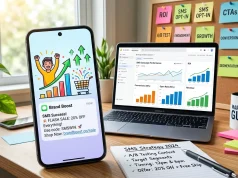

SMS segmentation benefits for marketing include sharper personalization, higher open and click rates, stronger conversions, lower opt-outs, and smarter spending—by sending the right message to the right customer at the right time.
Marketers send millions of texts every day, yet most still blast one identical message to their entire list. That approach wastes money and drives subscribers to hit “STOP.” The fix is segmentation—dividing your audience into smaller groups so every message feels personal and relevant.
The numbers explain why this matters. Text messages reach a 98% open rate, compared to roughly 20% for email, according to Gartner (2023). Most recipients read a text within three minutes of delivery. When you pair that immediacy with smart targeting, you create one of the most powerful tools in modern marketing.
This guide breaks down the core SMS segmentation benefits for marketing, the strategies that power effective SMS marketing audience segmentation, and the steps to implement customer segmentation for SMS campaigns. By the end, you’ll have a clear roadmap for personalized SMS marketing strategies that lift revenue without inflating your send costs.
What is SMS segmentation in marketing?
SMS segmentation is the practice of dividing your subscriber list into smaller groups based on shared traits—purchase history, location, behavior, or demographics—then sending each group messages tailored to its specific interests. Instead of one generic blast, you send several targeted messages that each speak directly to the recipient.
SMS marketing has evolved far beyond simple text alerts. Early campaigns treated every subscriber the same, sending identical offers to first-time browsers and loyal VIPs alike. Today, advanced SMS marketing platforms pull customer data automatically, making customer segmentation for SMS campaigns accessible to businesses of every size.
Why segmentation matters in today’s marketing landscape
Customers expect relevance. A shopper who just bought running shoes doesn’t want a generic “20% off everything” text—they want a message about matching socks or a restock alert for their favorite brand. Generic broadcasts inflate opt-out rates and waste your marketing budget on people who will never act on the offer.
SMS marketing audience segmentation solves this. By grouping subscribers and tailoring content, you raise engagement, protect your list health, and squeeze more revenue from every message you send. The benefits compound over time as your data sharpens and your segments become more precise.
What are the core SMS segmentation benefits for marketing?
 The case for segmentation rests on five measurable advantages. Each one strengthens your campaigns and improves your return on every dollar spent.
How does segmentation improve personalization and relevance?
Personalization is the foundation of effective SMS marketing. When you move beyond generic messages, every text feels like it was written for one person.
Consider the difference. “BRAND: Big sale now on” lands flat. “Hi Jordan, the hiking boots you viewed are 20% off today” performs far better because it references a specific product the customer already showed interest in. That precision is only possible with segmentation.
SMS marketing audience segmentation lets you tailor content to individual needs at scale. Modern platforms use dynamic data insertion to pull a subscriber’s name, reference their last purchase, and recommend a complementary product—automatically. Personalized SMS marketing strategies turn a one-size-fits-all blast into hundreds of relevant conversations, each tuned to what the recipient actually cares about.
How does segmentation boost engagement rates?
Relevant messages earn more attention. Segmented campaigns consistently deliver higher open and click-through rates because subscribers receive offers that match their interests instead of noise they learn to ignore.
The mechanics are simple. When a customer trusts that your texts will be useful, they open and read them. When every message is generic, they tune out—or unsubscribe. SMS already enjoys a 98% open rate (Gartner, 2023), and segmentation pushes click-through rates even higher by ensuring the offer inside resonates.
Segmentation also increases two-way interaction. When you send a back-in-stock alert only to the shoppers who wishlisted that exact item, you spark real conversations and replies. Those interactions deepen the customer relationship and create more chances to convert.
How does segmentation optimize conversion rates?
Higher engagement leads directly to higher conversions. Targeted messages drive specific actions because they reach people already primed to take them.
Abandoned cart recovery proves the point. According to the Baymard Institute (2023), the average documented cart abandonment rate sits at nearly 70%. A segmented SMS sequence targeting only those high-intent shoppers consistently delivers the highest ROI of any SMS workflow—far more than a blanket discount sent to your entire list.
Customer segmentation for SMS campaigns also maximizes ROI by matching offer to audience. High-value buyers get early access to new collections. Lapsed customers get a win-back incentive. Each segment receives the message most likely to move them, which means more revenue from the same subscriber base.
How does segmentation reduce opt-outs and improve retention?
Every irrelevant text is a reason to unsubscribe. Segmentation respects customer preferences by sending fewer, more relevant messages—which keeps subscribers on your list longer.
When you only message people about things they care about, opt-out rates fall. A subscriber who receives three useful texts a month stays engaged. The same subscriber bombarded with offers that don’t apply to them hits “STOP” quickly.
Lower churn builds long-term relationships. Retention is cheaper than acquisition, and a healthy, consented list consistently outperforms a large, poorly managed one. Personalized SMS marketing strategies turn occasional shoppers into loyal subscribers who genuinely want to hear from you.
How does segmentation improve resource allocation and cost efficiency?
Every SMS costs money to send. Targeting the right audience with the right message eliminates wasted spend on subscribers who will never convert.
Instead of paying to text 10,000 people about a product only 2,000 care about, you send to the relevant 2,000 and pour your budget where it actually works. SMS marketing audience segmentation minimizes wasted marketing spend and lifts your cost-per-acquisition in the right direction.
This efficiency matters most for small businesses and startups working with tight budgets. Segmentation lets you compete with larger brands by spending smarter, not more.
What are the key strategies for SMS audience segmentation?
 Effective segmentation depends on choosing the right variables. The strongest programs blend several approaches to build precise, high-value segments.
How does demographic segmentation work?
Demographic segmentation groups subscribers by traits like age, gender, and location. A clothing retailer might send different product recommendations to different age groups, or promote men’s and women’s collections to the relevant audiences.
Income and occupation also shape what offers resonate. Premium product lines suit higher-income segments, while budget-friendly promotions speak to value-conscious shoppers. Matching offer to demographic raises relevance from the first word.
How does behavioral segmentation work?
Behavioral segmentation is often the most powerful approach because it groups subscribers by what they actually do, not just who they are.
Common behavioral segments include:
- Purchase history and frequency: Separate one-time buyers from repeat customers, then tailor offers to each group’s buying pattern.
- Website activity and engagement: Target subscribers based on the pages they browse and the products they view.
- Cart and browse abandonment: Reach shoppers who left items behind with a direct link back to checkout.
Cart abandoners deserve special attention. These are high-intent buyers who came close to purchasing. A timely, targeted text often pulls them back—which is why this segment delivers the strongest conversion rates of any workflow.
How does psychographic segmentation work?
Psychographic segmentation groups subscribers by interests, hobbies, lifestyle, and values. A subscriber who consistently buys eco-friendly products belongs in a segment that responds to sustainability messaging. A fitness enthusiast wants different content than a casual shopper.
This approach goes deeper than demographics. Two customers of the same age and income can have completely different motivations. Personalized SMS marketing strategies built on psychographic data feel genuinely understood, which strengthens loyalty.
How does geographic segmentation work?
Geographic segmentation tailors messages by location, which opens powerful local opportunities.
Local promotions reach subscribers near a specific store with offers they can act on today. Event-based marketing announces a regional sale, a pop-up, or a store opening only to the people close enough to attend. Geographic segments also let you respect time zones, so your “flash sale” text never lands at 2 AM.
How does value-based segmentation work?
Value-based segmentation groups subscribers by their worth to your business. This focus protects your most important relationships and revives those at risk.
High-value customers—your VIPs—deserve exclusive perks, early access, and subscriber-only rewards that keep them loyal. At-risk customers who haven’t purchased in 90 days or more need a win-back campaign before they churn entirely. Treating these groups differently maximizes lifetime value across your whole list.
How do you implement customer segmentation for SMS campaigns?
 Strategy means nothing without execution. Building effective segments starts with data and ends with continuous refinement.
How do you collect and analyze customer data?
Quality segmentation depends on quality data. Gather information from every touchpoint—purchase records, website behavior, opt-in preferences, and past campaign engagement. Most SMS platforms integrate with ecommerce stores and CRMs to pull this data automatically, so your segments update without manual effort.
Once you have the data, analyze it for patterns. Which products sell together? Which subscribers buy most often? Which segments show the highest opt-out rates? These insights shape smarter, more profitable customer segmentation for SMS campaigns. For a deeper look at building a segmentation framework, the SMS marketing for online stores guide covers audience grouping in detail.
How do you choose the right SMS platform for segmentation?
Your platform determines what you can segment and automate. Look for these essentials:
- Automation workflows triggered by customer behavior, such as purchases and cart abandonment.
- Dynamic data insertion that personalizes each message at scale.
- Ecommerce and CRM integrations with Shopify, WooCommerce, or Salesforce.
- Analytics dashboards that track performance by segment in real time.
Compliance tools matter too. Always secure explicit opt-in consent, include “Reply STOP to cancel” in every promotional message, and follow the Telephone Consumer Protection Act (TCPA) in the United States and the General Data Protection Regulation (GDPR) in Europe.
How do you test and refine your segments?
Segmentation is never finished. Run A/B tests to learn what each segment responds to—test one variable at a time, whether offer type, message length, or send time, then roll out the winning version. The SMS conversion optimization guide covers testing methodology in full.
Review your analytics regularly. A spike in opt-outs signals a segment that needs adjustment. A high-converting segment is one to scale. Pair these tactics with proven personalized SMS marketing strategies to keep improving over time, and connect your text efforts with other channels using an omnichannel marketing framework.
Conclusion
The SMS segmentation benefits for marketing are clear and measurable: sharper personalization, higher engagement, stronger conversions, lower opt-outs, and smarter spending. Together, they transform text messaging from a blunt broadcast tool into a precision revenue engine.
Start small. Pick two or three segments—cart abandoners, VIP buyers, and lapsed customers are a strong place to begin. Build a targeted message for each, send it, and measure the results. Then expand your segments as your data sharpens and your confidence grows.
The brands winning with SMS share one habit: they treat every subscriber as an individual, not a number on a list. Choose your platform, build your first segments, and send a smarter campaign this week.
Frequently Asked Questions
1. What is SMS segmentation in marketing?
SMS segmentation is the practice of dividing your subscriber list into smaller groups based on shared traits—such as purchase history, location, or behavior—then sending each group messages tailored to its specific interests instead of one generic blast.
2. What are the main benefits of SMS segmentation for marketing?
The main SMS segmentation benefits for marketing are enhanced personalization, higher open and click-through rates, improved conversion rates, reduced opt-out rates, better customer retention, and more efficient use of your marketing budget.
3. How does segmentation improve SMS conversion rates?
Segmentation improves conversion rates by sending each subscriber the offer most likely to move them. Targeting high-intent groups, such as cart abandoners, drives specific actions and consistently delivers higher ROI than untargeted broadcasts.
4. What types of SMS audience segmentation are there?
The five main types are demographic (age, gender, location), behavioral (purchase history, cart abandonment), psychographic (interests and values), geographic (local and time-zone targeting), and value-based (VIP and at-risk customers).
5. Does SMS segmentation reduce opt-out rates?
Yes. By sending fewer, more relevant messages, segmentation respects customer preferences and gives subscribers less reason to unsubscribe. A healthy, well-segmented list consistently retains subscribers longer than a list receiving generic blasts.
6. What data do I need for customer segmentation in SMS campaigns?
Useful data includes purchase history, website browsing behavior, location, opt-in preferences, and past campaign engagement. Most SMS platforms pull this data automatically through ecommerce and CRM integrations.
7. Who benefits most from SMS marketing audience segmentation?
Businesses of all sizes benefit, but small businesses and startups gain the most relative value. Segmentation lets them compete with larger brands by spending their limited budget only on the subscribers most likely to convert.
8. How many segments should I start with?
Start with two or three high-impact segments, such as cart abandoners, VIP buyers, and lapsed customers. Build a targeted message for each, measure the results, then expand as your data and confidence grow.
9. Is SMS segmentation worth it for a small subscriber list?
Yes. Even small lists contain distinct groups with different needs. Segmenting a small list improves relevance and protects subscribers from opt-outs, which matters more when every subscriber counts.
10. How do I measure the success of segmented SMS campaigns?
Track delivery rate, click-through rate, conversion rate, ROI, and opt-out rate by segment. Use trackable links and unique discount codes to attribute revenue, and review performance regularly to scale winning segments.