An SMS marketing strategy for retail business uses opt-in text messages to drive sales, recover carts, and build loyalty—reaching shoppers through a channel with a 98% open rate and three-minute read times.
Retail competition keeps climbing. Shoppers ignore emails, scroll past ads, and tune out the noise fighting for their attention. Yet one channel still lands directly in a customer’s hand and gets read within minutes—text messaging.
A well-planned SMS marketing strategy for retail business gives store owners a direct line to their customers, bypassing crowded inboxes and unpredictable algorithms. Text messages reach a 98% open rate, while marketing emails hover around 20%. When a phone buzzes, people check it almost instantly.
This guide walks you through everything you need to build a winning retail SMS marketing strategy. You’ll learn what SMS marketing is, why it works for retail stores, how to grow a compliant subscriber list, which campaigns deliver the strongest results, and how to measure your return. By the end, you’ll have a clear roadmap to turn text messaging into a reliable revenue engine.
What is SMS marketing for retail business?
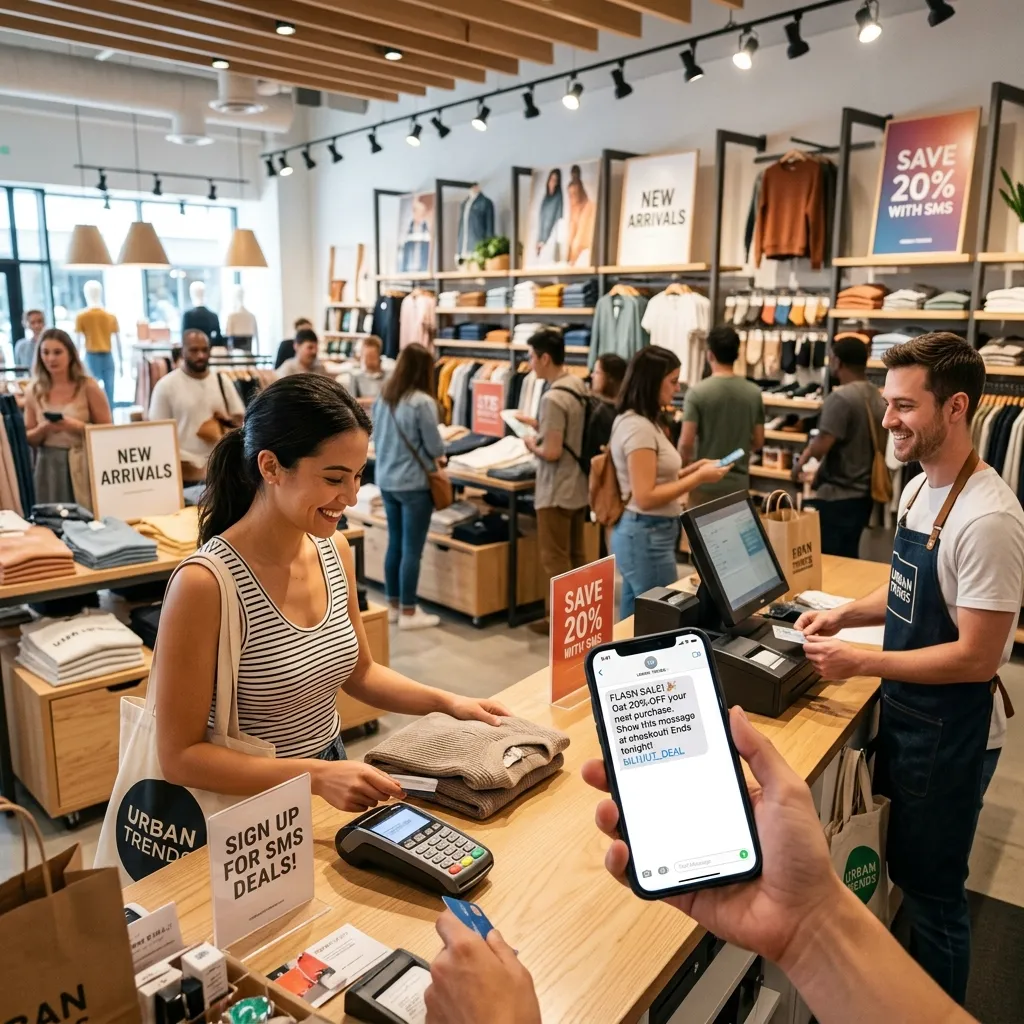 SMS marketing for retail business is the practice of sending automated and broadcast text messages to customers who have opted in to receive them. These messages cover flash-sale alerts, new product launches, order confirmations, and abandoned cart reminders—all delivered directly to a shopper’s mobile device.
Unlike email, which often filters into spam or promotions folders, SMS lands in the same inbox people use to text family and friends. That personal placement is exactly why text messaging cuts through the clutter so effectively. Customers who opt in genuinely want brief, valuable updates from the retailers they trust.
Why does SMS marketing matter for modern retail stores?
Foot traffic patterns have shifted, and online competition keeps growing. Retailers need a channel that delivers immediate results without expensive ad-bidding wars. A retail SMS marketing strategy fills that gap. A single text can fill a slow Tuesday afternoon, clear seasonal inventory, or announce a doorbuster sale—all within minutes of hitting send.
What are the key benefits of an SMS marketing strategy for retail stores?
The case for adding text messaging to your retail strategy rests on several hard advantages.
How do high open rates drive more retail sales?
Text messages reach a 98% open rate, according to Gartner (2023), and recipients typically read them within three minutes. Launch a 24-hour flash sale by email, and it might sit unread for two days. An SMS alert ensures your audience sees the offer while they still have time to act. This immediacy creates faster traffic spikes and higher daily sales.
How does SMS create direct customer engagement?
An SMS marketing platform delivers messages straight to a customer’s native messaging app, eliminating the barriers of spam folders and algorithmic feeds. Shoppers carry their phones everywhere. A text reaches them whether they’re at home, commuting, or browsing a competitor’s store.
Is SMS marketing cost-effective for retail business?
Yes. SMS requires no expensive creative production, no algorithm to fight, and no bidding battles. You pay for software and per-message fees, then reach an audience that already opted in. Because behaviorally targeted messaging converts so well, the return per dollar spent often outpaces both email and paid social.
How does SMS deliver personalization at scale?
Generic broadcasts underperform on every channel. SMS marketing for retail business lets brands scale personalization through dynamic data insertion. Your platform can automatically pull a customer’s first name, reference their last purchase, and suggest a complementary product. That level of detail makes shoppers feel understood, which lifts repeat-purchase rates.
How do you develop a winning SMS marketing strategy for retail stores?
 A strong program starts with clear goals and a solid legal foundation. Skip these steps, and you risk wasted spend, fines, and a damaged brand reputation.
How do you set clear objectives for your retail SMS strategy?
Decide what you want before you send a single text. Common retail goals include:
- Driving foot traffic to physical store locations
- Increasing online sales through direct product links
- Building customer loyalty with VIP perks and rewards
- Promoting new products and sales the moment they launch
Each goal shapes the type of campaign you run and the metrics you track.
How do you build your SMS subscriber list?
Your list quality determines your conversion ceiling. A large list of disengaged subscribers produces worse results than a smaller list of genuinely interested buyers. Grow your list through these proven channels:
- In-store sign-ups: Promote a keyword text-to-join campaign at the point of sale, on receipts, and via flyers.
- Online sign-ups: Use website pop-ups offering a discount, plus checkout opt-in forms where purchase intent is already clear.
- Social media: Run text-to-join campaigns promoted across your social channels.
- Contests and giveaways: Collect opt-ins by offering entry to a prize draw in exchange for a phone number.
Always pair these tactics with a clear value exchange—a discount, free shipping, or early access—so the benefit of opting in is obvious. For more detail on building a quality list, review this guide on SMS marketing for online stores.
How do you stay compliant with SMS marketing regulations?
You cannot legally send commercial texts to anyone who hasn’t explicitly opted in. In the United States, the Telephone Consumer Protection Act (TCPA) regulates mobile marketing. In Europe, the General Data Protection Regulation (GDPR) governs how you collect and process data. Industry guidelines from the CTIA add further standards.
Follow these rules to stay compliant:
- Use double opt-in so you have a clear record of consent.
- Disclose clearly what types of messages subscribers will receive and how often.
- Make opting out easy with a clear command like “Reply STOP to cancel” in every message.
- Honor consent instantly by ensuring your platform processes STOP requests automatically.
How should you segment your retail audience?
Segmentation divides your subscriber list into groups based on shared traits, then tailors each message to that group’s interests. Segment your audience by:
- Purchase history: What they bought, and how often.
- Location: Time zones and offers tied to nearby stores.
- Engagement levels: Regular clickers versus passive subscribers.
- Demographics: Age, gender, or product preferences.
Targeted messages dramatically outperform generic blasts every time.
What types of SMS campaigns work best for retail?
Not every text serves the same purpose. The strongest retail programs blend promotional, transactional, and engagement messages across several proven campaign types.
Which promotional campaigns drive the most urgency?
Reserve promotional blasts for high-value moments. These campaigns work especially well for retail:
- Promotional offers and discounts: Subscriber-only codes that reward your list.
- New product announcements: Give subscribers a first look at fresh inventory.
- Flash sales and limited-time offers: Short 24-to-48-hour windows that force quick decisions.
- Event invitations: Promote in-store or online events to drive attendance.
- Loyalty program updates: Notify members of point balances and rewards they’re close to unlocking.
How do transactional SMS messages build trust?
Transactional texts build customer confidence by providing critical post-purchase information. Send an order confirmation immediately after purchase, then trigger a shipping update with a tracking link the moment the package leaves your warehouse. Reliable communication reduces “where’s my order?” support tickets and fosters deep brand loyalty.
How do abandoned cart reminders recover lost sales?
According to the Baymard Institute (2023), the average documented cart abandonment rate sits at nearly 70%. A well-timed text pulls high-intent shoppers back to checkout. Send the first reminder 30 to 60 minutes after abandonment, referencing the specific items left behind with a direct link to the cart. If they don’t convert, follow up 24 hours later with a small incentive like free shipping. Keep the sequence to three messages over 72 hours. For a full breakdown, study this abandoned cart SMS strategy guide.
What are the best practices for SMS content in retail?
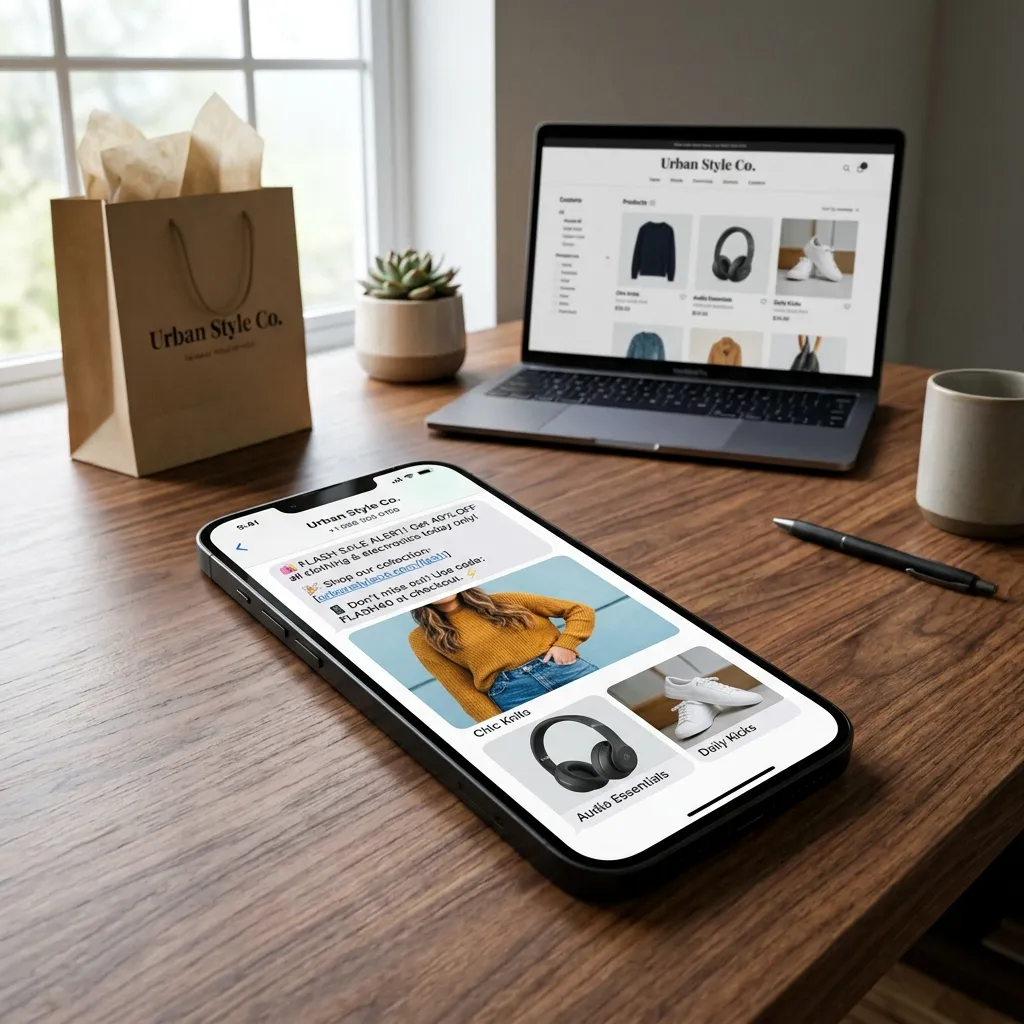 A great campaign lives or dies on its copy. With only 160 characters to work with, every word counts.
How do you write concise, clear SMS messages?
Identify your brand immediately so the customer knows who’s texting. Lead with your discount or main value proposition. Use strong, active verbs and a single, clear call to action. Add a shortened, mobile-friendly link straight to the relevant product page.
What makes a strong retail SMS call to action?
Weak CTAs kill conversions. The best calls to action are specific, urgent, and verb-driven. Replace “Click here” with “Claim your 20% off now.” Replace “Learn more” with “Tap to shop the sale.” Create genuine urgency through limited inventory signals or clear expiration dates.
How should retailers use personalization tokens and emojis?
Personalization tokens, like a first name or a recently viewed product, make every message feel relevant. “Hi Sarah, your favorite Blue Runners are 20% off today” performs far better than “Big sale now on.” Use emojis sparingly—one well-placed emoji adds personality, but a string of them looks like spam and can trigger carrier filters.
When is the best time to send retail SMS messages?
Timing heavily influences engagement. Restrict your sending windows to between 9:00 AM and 8:00 PM in the recipient’s local time zone. Mid-afternoon and early evening sends usually earn the highest click-through rates. Limit promotional blasts to two to four per month to keep your list healthy and avoid subscriber fatigue.
What advanced tactics grow retail business through SMS?
Once your basic campaigns run smoothly, introduce advanced tactics to squeeze more value from every send.
How do you integrate SMS with other marketing channels?
Your SMS efforts should amplify an existing multi-channel strategy rather than operate in isolation. Use email for long-form content and high-resolution imagery. Use social media to build awareness. Rely on SMS for urgent, action-oriented alerts. A practical sequence: send an email announcing a weekend sale on Friday, then follow up with an SMS four hours before it ends on Sunday. This layered approach captures buyers across their preferred channels.
How does two-way SMS improve customer service?
Two-way texting transforms a one-sided promotional blast into an interactive tool. Allow shoppers to reply with questions about sizing, shipping, or returns. Resolving queries instantly via text significantly increases the likelihood of a completed sale and strengthens customer relationships.
How can retailers use SMS to drive in-store traffic?
Text messaging bridges your online and physical channels. Send location-based offers to subscribers near a store, distribute mobile coupons redeemable in person, or announce exclusive in-store events. A well-timed text can pull nearby shoppers through your doors within the hour.
How does AI improve retail SMS personalization?
Artificial intelligence analyzes a shopper’s browsing behavior and purchase history to predict future buying intent. By integrating AI, your SMS marketing platform can automatically send personalized product recommendations at the exact moment a customer is statistically most likely to buy.
How do you measure the success of your retail SMS strategy?
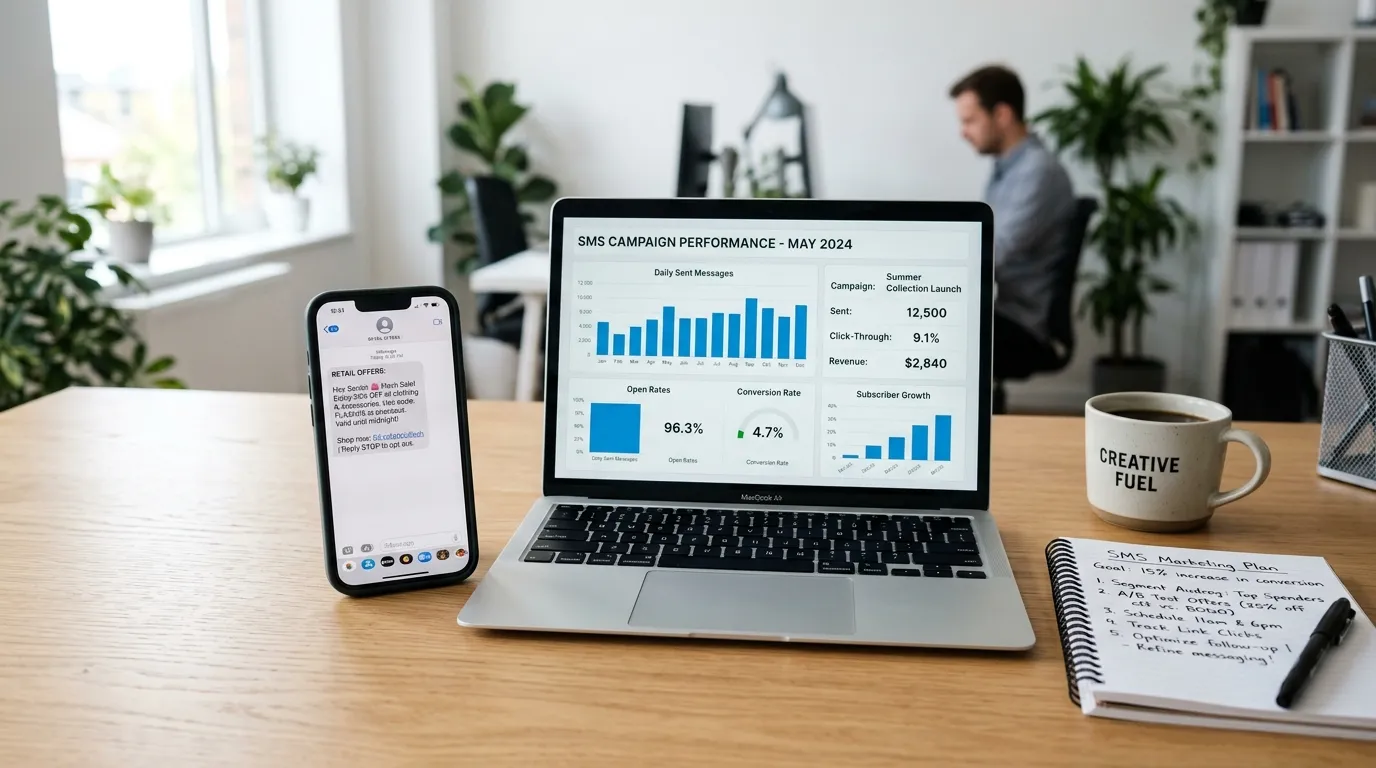
 Sending texts is only half the job. Tracking what happens after you hit send is where real growth comes from. Monitor this mix of engagement and financial metrics:
- Delivery rate: Confirms your list is clean and active.
- Click-through rate (CTR): Shows whether your offer and CTA resonate.
- Conversion rate: Reveals how many clicks turn into purchases.
- Return on investment (ROI): Ties revenue directly to campaign cost.
- Customer lifetime value (CLTV): Measures long-term revenue per subscriber.
- Opt-out rate: Signals whether you’re sending too often or pushing irrelevant offers.
Use trackable links and unique discount codes to connect each promotion directly to sales. To deepen your tracking, explore this guide on SMS conversion optimization, and learn how to coordinate channels with these SMS promotion strategies for ecommerce.
Turning your retail SMS strategy into long-term growth
Text messaging gives retailers a direct, high-converting line to their customers—one that bypasses crowded inboxes and unpredictable algorithms. The retailers winning with SMS share a common approach: they build compliant lists, deliver genuine value, automate the heavy lifting, and let data guide every decision.
Start small. Choose a reputable SMS marketing platform that integrates cleanly with your store and POS system. Build a compliant subscriber list by offering real value in exchange for a phone number. Set up your two essential automations—a welcome series and an abandoned cart sequence—before launching big promotional blasts. Then track performance, run A/B tests, and refine as you go.
When you execute an SMS marketing strategy for retail business with precision and respect for your audience, you transform occasional shoppers into loyal advocates. Pick your platform, build your list, and send your first campaign this week.
Frequently Asked Questions
1. What is an SMS marketing strategy for retail business?
An SMS marketing strategy for retail business is a plan for sending opt-in text messages—such as promotions, order updates, and cart reminders—to drive sales, increase foot traffic, and build customer loyalty.
2. How effective is SMS marketing for retail stores?
SMS marketing for retail stores is highly effective, with a 98% average open rate and most messages read within three minutes. This immediacy makes it one of the strongest channels for driving sales.
3. Is SMS marketing legal for retail businesses?
Yes, provided you obtain explicit customer consent. Retailers must follow regulations like TCPA, GDPR, and CTIA guidelines, ensuring users opt in before receiving messages and can opt out anytime.
4. How do retailers get customers to opt in to SMS?
Offer incentives like discounts or free shipping. Use website pop-ups, checkout checkboxes, in-store keyword signage, contests, and social media campaigns. A double opt-in process is recommended for compliance and trust.
5. How often should a retail store send promotional texts?
Limit promotional messages to two to four per month. Transactional messages, like order confirmations and shipping updates, can be sent more frequently because customers expect them.
6. Which retail SMS campaign delivers the highest ROI?
Abandoned cart recovery campaigns usually deliver the highest ROI. These messages target shoppers who already showed buying intent, making them more likely to complete a purchase.
7. How much does an SMS marketing strategy for retail stores cost?
Cost depends on your platform and message volume. It typically includes a monthly subscription plus per-message charges, but remains cost-effective due to high conversion rates.
8. Can a retail SMS marketing strategy be automated?
Yes. Workflows can trigger messages from actions like sign-ups, purchases, or cart abandonment, reducing manual effort while improving timing and relevance.
9. What is the best time to send retail SMS messages?
The best time is usually between 9:00 AM and 8:00 PM in the customer’s local time zone. Mid-afternoon and early evening hours often generate the highest engagement.
10. How do retailers measure SMS marketing ROI?
Retailers measure ROI using click-through rates, conversion rates, and revenue tracking. Trackable links and unique discount codes connect each message directly to sales performance.