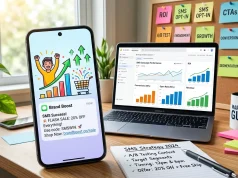
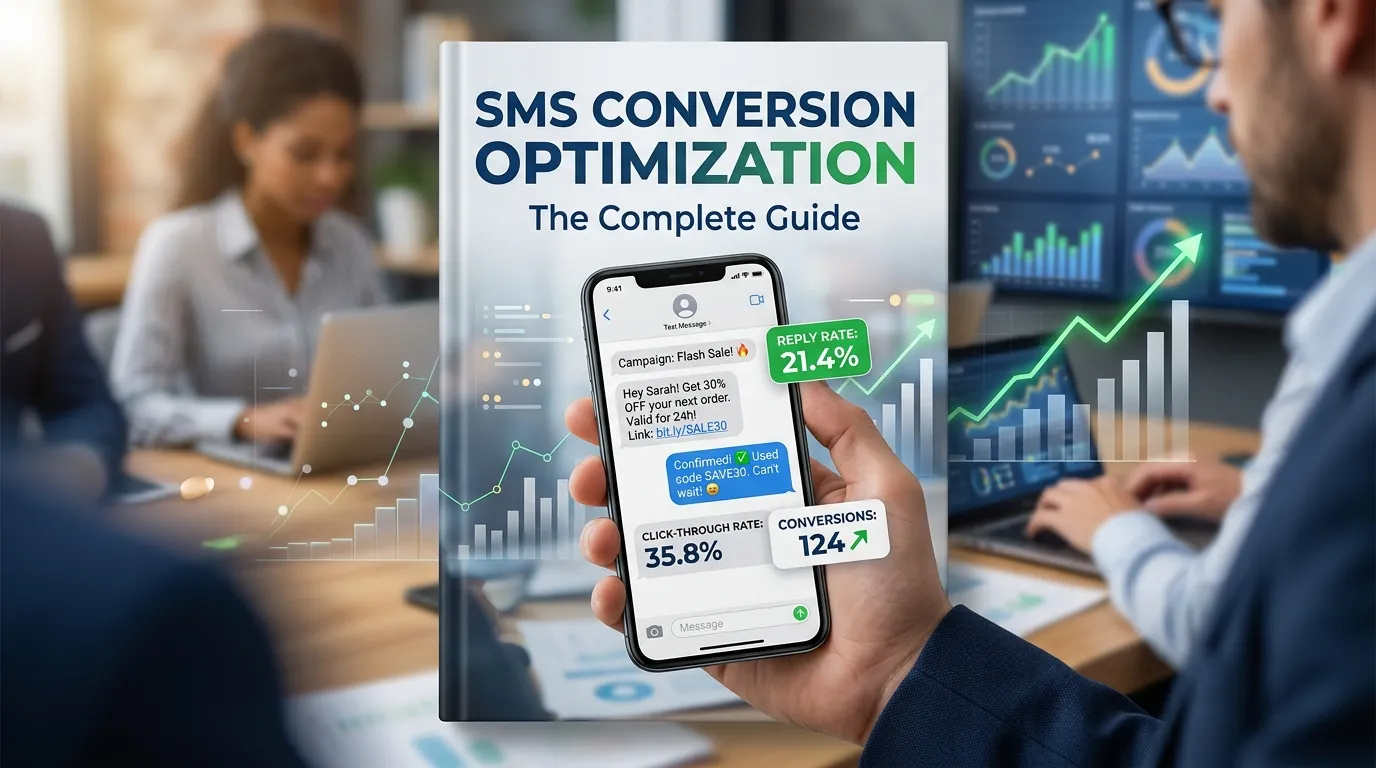
SMS conversion optimization focuses on improving how effectively text message marketing turns recipients into customers. It involves crafting clear, personalized messages, optimizing timing, using strong calls-to-action, and segmenting audiences.
SMS conversion optimization is the process of improving how effectively text message campaigns turn subscribers into buyers. With SMS open rates averaging 98% and most messages read within three minutes, businesses that optimize their SMS marketing conversion rate—through segmentation, compelling content, smart timing, and data-driven testing—consistently outperform other digital channels in engagement and revenue.
SMS marketing conversion rate benchmarks are hard to ignore. Text messages see open rates of 98%, compared to roughly 20% for email (according to Baymard Institute, 2023). Most messages are read within three minutes of delivery. No other marketing channel puts your offer in front of a customer that quickly or reliably.
Yet sending a text is the easy part. Getting recipients to click, buy, or act is where most brands fall short. That gap between sending and converting is exactly what SMS conversion optimization closes.
This guide covers everything marketers need to know—from building a high-quality subscriber list and writing messages that drive action, to leveraging analytics and advanced automation for continuous text message marketing optimization. Whether you’re running your first SMS campaign or refining an established program, you’ll find practical, actionable strategies here.
Understanding Your Audience and Their SMS Behavior

How Does Audience Segmentation Improve SMS Marketing Conversion Rates?
Blasting the same message to your entire subscriber list is one of the fastest ways to inflate your opt-out rate. Segmentation solves this by dividing subscribers into groups based on behavior, demographics, purchase history, or engagement level—then tailoring each message to that group’s specific interests.
For example, a fashion brand might segment customers by average order value. High-value buyers receive early access to new collections. Budget-conscious buyers get flash sale alerts. Both messages are relevant to their recipient, which is why segmented SMS campaigns consistently deliver stronger SMS marketing conversion rates than generic broadcasts.
Common segmentation variables include:
- Purchase history — What have they bought, and how often?
- Engagement level — Are they regular clickers or passive subscribers?
- Geographic location — Time zones and regional promotions matter
- Lifecycle stage — New subscribers need different messaging than loyal repeat buyers
How Does Personalization Beyond a Name Lift SMS Conversions?
Using a subscriber’s first name is a starting point, not a strategy. Deep personalization means referencing the specific product a customer browsed, the category they buy from most, or the loyalty milestone they just hit.
“Hi Jordan, the hiking boots you viewed are almost sold out” outperforms “Hi Jordan, check out our footwear sale” every single time. Dynamic content fields within SMS platforms make this possible at scale—no manual writing required.
What Is the Optimal Timing Strategy for SMS Campaign Performance Improvement?
Timing directly affects whether a subscriber acts on your message or ignores it. Most SMS platforms now offer send-time optimization, which analyzes individual subscriber behavior to deliver messages when each person is most likely to engage.
General timing principles that consistently improve SMS campaign performance:
- Weekday afternoons (12 PM–3 PM) perform well for promotional messages
- Weekend mornings drive strong engagement for leisure and lifestyle brands
- Avoid early mornings (before 8 AM) and late evenings (after 9 PM)—most compliance frameworks, including TCPA guidelines, discourage sending during these hours
Always respect the recipient’s local time zone. Platforms that auto-adjust for time zones remove the risk of sending a “flash sale” text at 2 AM.
Crafting Compelling SMS Content
How Do You Write SMS Messages That Drive Conversions in 160 Characters?
Every word must work. Standard SMS limits you to 160 characters, so vague phrasing or lengthy preambles kill your conversion before the reader reaches your link. Strong SMS copywriting follows a simple structure: identify your brand → state the offer clearly → provide a direct link → include opt-out instructions.
Example of a weak message: “Hey! We have some great deals happening right now at our store. Come check out what we’ve got going on this weekend. Click here.”
Example of an optimized message: “BRAND: 24hr flash sale — 30% off sitewide. Ends midnight 🛍️ [link] Reply STOP to opt out.”
The second version states who is texting, what the offer is, when it expires, and how to act—all in under 100 characters.
What Makes a Strong Call to Action in SMS Marketing?
Weak CTAs destroy SMS marketing conversion rates. The best calls to action are specific, urgent, and use strong verbs. Compare these examples:
|
Weak CTA |
Strong CTA |
|---|---|
|
“Click here” |
“Claim your 20% off now” |
|
“Learn more” |
“See what’s new — tap to shop” |
|
“Visit our site” |
“Unlock free shipping today only” |
Create genuine urgency through limited inventory signals, countdown timers, or expiration dates. Artificial urgency—claiming a sale ends “soon” without any deadline—trains subscribers to ignore your offers over time.
How Do Emojis and Rich Media Affect SMS Engagement?
Emojis can increase engagement, but they work best used sparingly and contextually. A single relevant emoji (🛒, 🎉, ⏰) draws the eye without cluttering the message. Using too many appears spam-like and can trigger carrier filters.
Rich media, including images and video, requires MMS (Multimedia Messaging Service), which costs more per send. MMS delivers higher engagement for visually driven products—fashion, food, home décor—but the ROI needs testing before committing to higher send costs across your entire list.
Why Is A/B Testing Critical for Text Message Marketing Optimization?
Assumptions cost money. A/B testing reveals what your specific audience responds to rather than what industry best practices suggest they should prefer.
Variables worth testing:
- Offer type — Percentage discount vs. flat dollar amount
- CTA wording — “Shop now” vs. “Claim your deal”
- Send time — Morning vs. afternoon delivery
- Message length — Short and punchy vs. slightly more descriptive
- Emoji use — With vs. without
Run tests on a statistically significant sample before rolling out the winning variation to your full list. Small improvements compound quickly across large subscriber bases.
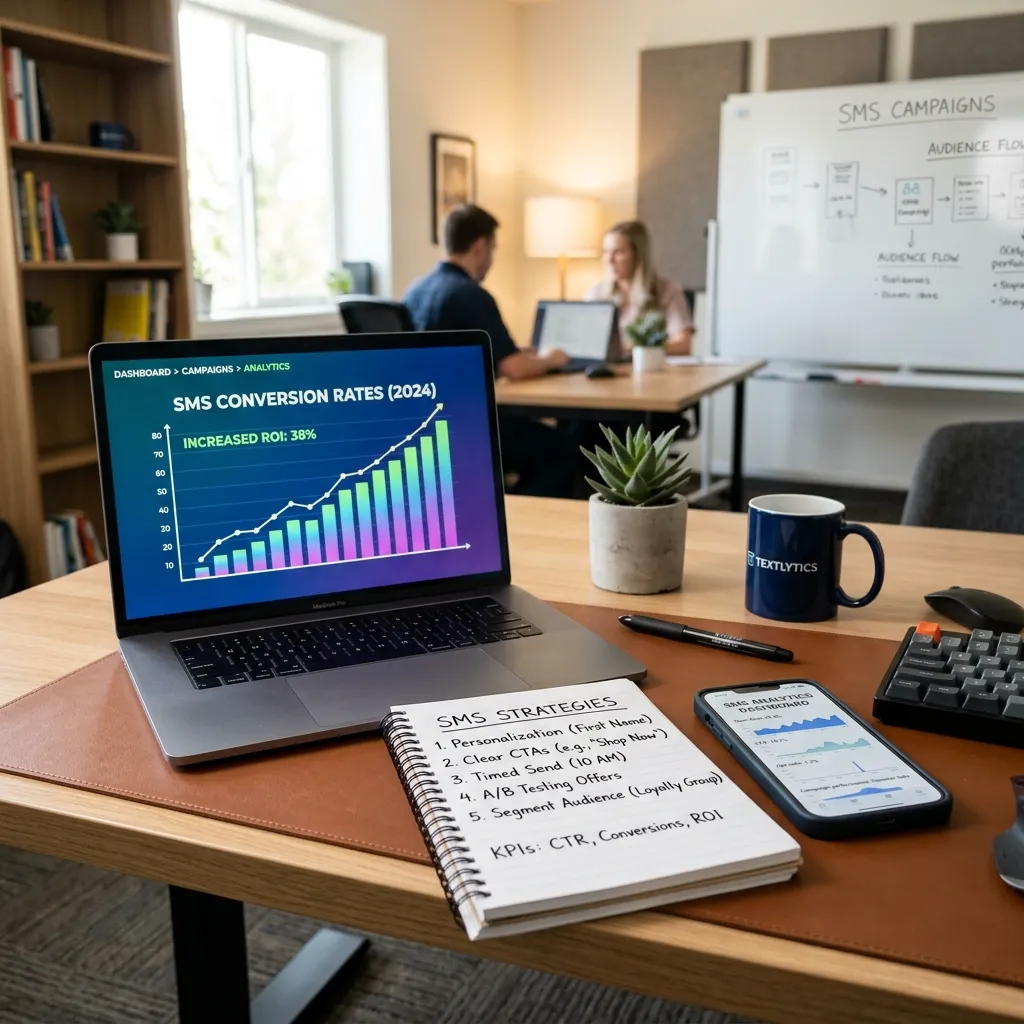
Key Strategies for SMS Marketing Conversion Rate Improvement
How Do You Build a High-Quality SMS Subscriber List?
List quality determines conversion rate ceilings. A large list of disengaged subscribers produces worse results than a smaller list of genuinely interested buyers. Effective opt-in strategies include:
- Website pop-ups with a clear value exchange (“Text JOIN to get 15% off your first order”)
- Checkout opt-in forms where purchase intent is already demonstrated
- Keyword text-to-join campaigns promoted via social media or in-store signage
- Exclusive subscriber offers that make the value of opting in obvious
Critically, explicit written consent is legally required under the Telephone Consumer Protection Act (TCPA) in the US. Always confirm what subscribers are agreeing to receive and how often. Transparency during opt-in reduces future opt-out rates.
How Do Exclusive Offers Via SMS Drive Higher Conversions?
SMS subscribers convert at higher rates when they believe the offer is genuinely exclusive. Early access, subscriber-only discount codes, and VIP sales create a psychological sense of belonging that generic promotional emails can’t replicate.
Structure your exclusive SMS offers around:
- First access to new product drops before the general public
- Time-limited discount codes that expire in 24 hours or less
- Free shipping thresholds specifically for text subscribers
- Loyalty point bonuses tied to completing a purchase from the text
How Does Abandoned Cart SMS Recovery Improve Conversion Rates?
Abandoned cart SMS campaigns are among the highest-converting automated workflows in digital marketing. According to the Baymard Institute (2023), the average documented cart abandonment rate sits at nearly 70%. SMS recovery directly targets this lost revenue pool.
A proven three-message recovery sequence looks like this:
- 30–60 minutes after abandonment — Gentle reminder with a direct link back to the loaded cart
- 24 hours later — Introduce an incentive (free shipping or a limited-time discount) with a clear expiry
- 48–72 hours later — Final “last chance” message combined with a customer service invitation
For a detailed breakdown of automating and optimizing this sequence, visit our Abandoned Cart SMS Strategy Guide.
How Do Post-Purchase SMS Flows Build Loyalty and Repeat Conversions?
The customer relationship doesn’t end at checkout. Post-purchase SMS sequences build loyalty, reduce buyer’s remorse, and create upsell opportunities that significantly increase customer lifetime value.
Effective post-purchase flows include:
- Order confirmation and shipping updates with tracking links
- Product check-ins 7–14 days after delivery to request reviews
- Cross-sell recommendations based on the original purchase
- Loyalty program updates that remind subscribers of their current point balance
Discover how to build these flows into a larger automation strategy with our guide to SMS marketing automation strategies.
How Do SMS Campaigns Drive Traffic to Landing Pages Effectively?
SMS drives high-intent traffic precisely because recipients act on messages immediately. To maximize landing page conversions from SMS clicks, the destination page must match the message’s promise exactly. Mismatched expectations—such as a text promoting free shipping that leads to a general homepage—destroys conversion rates instantly.
SMS landing page best practices include:
- Mobile-first design with fast load times (under 3 seconds)
- A single, prominent CTA that mirrors the text’s offer
- Pre-populated forms that minimize data entry on mobile
- Visible trust signals (security badges, reviews) near the CTA
For more detail on optimizing destination pages for text traffic, visit SMS Landing Page Best Practices.
Leveraging Analytics for SMS Campaign Performance Improvement

What Key Metrics Should You Track for SMS Conversion Optimization?
Effective SMS conversion optimization depends on monitoring the right numbers. Vanity metrics like total messages sent tell you nothing about performance. Track these instead:
- Delivery rate — What percentage of messages actually reached a device?
- Click-through rate (CTR) — How many subscribers tapped your link?
- Conversion rate — What percentage of clickers completed the desired action?
- Opt-out rate — Are you losing subscribers after specific campaigns?
- Revenue per message — What is each text worth in direct revenue terms?
Reviewing these metrics together paints a complete picture of where SMS campaign performance improvement is possible.
Which Tools Help You Track and Optimize SMS Marketing Analytics?
Modern SMS platforms include built-in dashboards that display delivery rates, CTRs, and conversions in real time. For enterprise-level visibility, integrating your SMS platform with your CRM and e-commerce storefront enables attribution across the full customer journey.
For platform-specific guidance on measuring campaign performance, explore SMS Marketing Analytics: Track & Optimize Performance. For calculating the actual financial return of your campaigns, our SMS ROI Tracking Tools Best Practices guide covers everything from metric selection to ROI calculation formulas.
How Do You Interpret SMS Data to Make Better Campaign Decisions?
Data only generates value when acted upon. When reviewing your analytics, look for these specific patterns:
- High open rate, low CTR — Your list is engaged, but the offer or CTA isn’t compelling enough
- High CTR, low conversion rate — The landing page experience is breaking the customer journey
- Spike in opt-outs after a campaign — Message frequency or content missed the mark
- High conversion from a specific segment — Scale that segment and replicate the messaging approach
Schedule weekly or bi-weekly analytics reviews rather than waiting until the end of a campaign cycle. Catching underperformance early saves budget and protects list health.
Advanced Techniques for Text Message Marketing Optimization
How Does Integrating SMS with Other Marketing Channels Improve Performance?
SMS performs best when it amplifies an existing multi-channel strategy rather than operating in isolation. Coordinating text campaigns with email, social media, and paid ads creates multiple touchpoints that guide prospects through the purchase funnel.
A practical multi-channel example: Send an email announcing an upcoming sale three days before launch. Follow up with an SMS on the day it goes live. Use retargeting ads on social media to reach subscribers who opened the text but didn’t convert. This layered approach consistently generates higher overall conversion rates than any single channel can achieve alone.
Explore how omnichannel coordination works in practice with our guide to omnichannel marketing with SMS, email, and social.
How Is AI Transforming SMS Marketing Automation and Conversion?
Artificial intelligence is eliminating the guesswork from text message marketing optimization. Machine learning models now analyze individual subscriber behavior—browsing history, purchase patterns, past engagement data—to predict the exact moment each person is most likely to convert.
Current AI applications in SMS marketing include:
- Predictive send-time optimization that adjusts delivery per subscriber, not per campaign
- Automated A/B testing that identifies winning variations faster than human analysis
- Dynamic content generation that personalizes message copy based on behavioral signals
- Churn prediction that flags subscribers likely to opt out before they do
What Does Compliance Look Like in a High-Performing SMS Program?
Compliance protects both your business and your subscriber relationships. The TCPA in the US requires explicit written consent before sending promotional messages. GDPR governs European audiences. Non-compliance results in significant financial penalties—some exceeding thousands of dollars per unsolicited message.
Every SMS program must include:
- Clear opt-in language that specifies what subscribers will receive
- “Reply STOP to unsubscribe” in every message
- Instant processing of opt-out requests by your SMS platform
- Sending windows that respect reasonable business hours
Compliance isn’t a constraint on conversion—it’s a foundation for it. A clean, consented subscriber list consistently outperforms a large, poorly managed one.
What Is Advanced Segmentation and How Does Dynamic Content Work?
Advanced segmentation moves beyond broad demographic groupings into behavioral micro-segments. Subscribers who clicked a text about running shoes, purchased from the athletic category, and have spent over $300 in the past six months form a distinct, high-value segment that warrants its own messaging strategy.
Dynamic content takes this further by automatically populating message templates with variables pulled from your CRM or e-commerce data—product names, cart values, loyalty points, or purchase dates—creating messages that feel individually written at machine-level scale.
Overcoming Common SMS Conversion Challenges

How Do You Prevent SMS Fatigue Without Sacrificing Conversion Rates?
SMS fatigue occurs when subscribers receive too many texts in too short a timeframe. Even highly relevant offers lose their impact when they arrive too frequently. Most successful SMS programs cap promotional sends at two to four messages per month, reserving additional messages for transactional updates like order confirmations and shipping alerts.
Frequency management strategies include:
- Setting subscriber expectations clearly at the point of opt-in
- Using preference centers that let subscribers choose their preferred message volume
- Monitoring opt-out spikes immediately following high-frequency periods
- Pausing promotional sends for recently converted customers
How Should You Address Rising Opt-Out Rates in SMS Campaigns?
An opt-out is a signal, not just a loss. When opt-out rates climb, diagnose the cause before sending another campaign. Common culprits include irrelevant content, excessive frequency, poor timing, and offers that don’t match subscriber expectations set during opt-in.
Remedies worth testing:
- Rewrite onboarding messages to set clearer content expectations
- Introduce a preference center that offers reduced-frequency options before a full unsubscribe
- Audit recent campaign relevance against the segments that showed the highest opt-out rates
- Run a re-engagement campaign for inactive subscribers before they passively churn
How Do You Maintain Brand Voice Consistency Across SMS Campaigns?
Inconsistent tone confuses subscribers and erodes trust over time. SMS copy should feel like it comes from the same brand voice as your emails, social posts, and website—just compressed.
Create an SMS style guide that covers:
- Approved abbreviations and emoji usage
- How to handle promotional claims and urgency language
- CTA phrasing standards
- Brand name formatting (always capitalize? Always include full name?)
Templates speed up production and reduce inconsistency, especially for teams managing high message volumes across multiple campaigns simultaneously.
Future Trends in SMS Conversion
How Will RCS Messaging Change SMS Conversion Optimization?
Rich Communication Services (RCS) represents the most significant shift in mobile messaging since SMS itself. RCS allows businesses to send high-resolution images, video carousels, interactive buttons, and even in-thread payment flows directly within the native messaging app—no separate app required.
For SMS conversion optimization, RCS eliminates one of text messaging’s biggest friction points: requiring the subscriber to leave the message thread and navigate to a mobile website. Future RCS campaigns will let customers view product images, read reviews, and complete a purchase without ever leaving their messaging app. Early adopters will hold a significant competitive advantage as RCS infrastructure scales globally.
For a detailed comparison of the two formats, see RCS vs SMS: Rich Messaging for Better Engagement.
How Will AI-Driven Hyper-Personalization Reshape SMS Marketing?
The next generation of text message marketing optimization moves beyond demographic segmentation into true one-to-one personalization. AI models will analyze thousands of behavioral data points per subscriber to predict not just what offer will convert—but which exact word choice, CTA structure, and send time will maximize that individual’s likelihood of taking action.
This level of personalization was previously reserved for brands with multi-million dollar technology budgets. As AI tools become more accessible, mid-market and small business SMS programs will benefit from the same precision that enterprise marketers have used for years.
What Does the Future of Mobile Marketing Mean for SMS Strategy?
Mobile usage continues to grow globally. As consumers spend more time on their phones, the competition for attention inside the messaging inbox will intensify. Brands that invest in building genuine, consent-based subscriber relationships now—rather than chasing subscriber counts with low-quality opt-ins—will be positioned to maintain strong SMS marketing conversion rates as the landscape evolves.
For a broader perspective on where mobile marketing is heading, review The Future of Mobile Marketing.
Conclusion
SMS Conversion Optimization is essential for turning simple text messages into real business results. By using strategies like segmentation, A/B testing, proper timing, and personalization, businesses can significantly improve engagement and sales. When combined with compliance and smart automation, SMS becomes one of the most powerful and high-converting marketing channels available today.