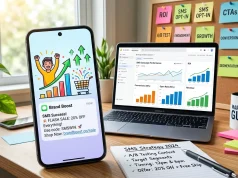

SMS targeting strategies send the right text to the right person at the right time—using audience segmentation, behavioral data, and AI to lift engagement, conversions, and ROI while cutting opt-outs and wasted spend.
Marketers send millions of text messages every day, yet too many still fire one identical blast at their entire list. That habit wastes budget and pushes subscribers to hit “STOP.” The smarter path is precision—and SMS targeting strategies give you exactly that.
Text messages reach a 98% open rate, compared to roughly 20% for email, according to Gartner (2023). Most recipients read a text within three minutes. When you pair that speed with sharp targeting, you turn a simple channel into one of the most reliable revenue engines in modern marketing.
This guide breaks down the SMS targeting techniques that actually move the needle. You’ll learn how to understand your audience, apply advanced SMS audience segmentation, build personalized SMS personalization strategies, integrate CRM and AI, measure performance, stay compliant, and prepare for what comes next. By the end, you’ll have a clear, actionable roadmap to launch smarter campaigns this week.
What are SMS targeting strategies in marketing?
 SMS targeting strategies are methods for delivering tailored text messages to specific groups of subscribers based on shared traits—purchase history, behavior, location, or preferences—rather than blasting one generic message to everyone. The goal is relevance: every text should feel like it was written for the person reading it.
Early SMS campaigns treated every subscriber the same. A first-time browser and a loyal VIP received identical offers, which inflated opt-out rates and burned marketing dollars. Today, advanced platforms pull customer data automatically, making precise SMS targeting techniques accessible to businesses of every size.
The payoff is measurable. Targeted messages consistently outperform generic broadcasts in open rates, click-through rates, conversions, and retention. When you stop guessing and start targeting, your entire program improves.
Understanding your audience: the foundation of effective SMS targeting
Every effective SMS targeting strategy starts with one thing—knowing who you’re texting. Without a clear picture of your subscribers, even the most polished message falls flat.
Why audience understanding comes first
Customers expect relevance. A shopper who just bought running shoes doesn’t want a generic “20% off everything” text. They want matching socks, a restock alert, or care tips for their new gear. Generic broadcasts ignore that context and train subscribers to tune you out.
Understanding your audience means gathering data from every touchpoint: purchase records, browsing activity, opt-in preferences, and past campaign engagement. Most SMS platforms integrate with ecommerce stores and CRMs to collect this data automatically, so your insights sharpen over time without manual effort.
How to build accurate customer profiles
Start by answering a few core questions about your subscribers. What do they buy? How often? Which messages do they open and click? Which offers do they ignore? These patterns reveal the building blocks of effective SMS audience segmentation.
A strong profile combines several data layers—demographics, behavior, and stated preferences. The more complete the picture, the easier it becomes to send messages that feel personal rather than promotional. For a deeper framework on grouping subscribers, the SMS segmentation benefits for marketing guide breaks down each approach in detail.
SMS targeting techniques: moving beyond basic segmentation
 Basic segmentation splits your list into a few broad groups. Advanced SMS targeting techniques go further, blending multiple data layers to build precise, high-value segments that each receive a message tuned to their interests.
How does behavioral targeting work?
Behavioral targeting groups subscribers by what they actually do, not just who they are—which makes it one of the most powerful SMS targeting techniques available.
Common behavioral segments include:
- Purchase history and frequency: Separate one-time buyers from repeat customers, then tailor offers to each group’s buying pattern.
- Browsing activity: Target subscribers based on the pages and products they view.
- Cart abandonment: Reach shoppers who left items behind with a direct link back to checkout.
Cart abandoners deserve special focus. According to the Baymard Institute (2023), the average documented cart abandonment rate sits at nearly 70%. A timely, targeted text often pulls these high-intent shoppers back—which is why this segment delivers the strongest conversion rates of any workflow.
How does demographic and geographic targeting work?
Demographic targeting groups subscribers by traits like age, gender, and product preferences. A clothing retailer might promote different collections to different age groups, matching offer to audience from the first word.
Geographic targeting tailors messages by location. Send location-based offers to subscribers near a specific store, announce a regional pop-up, or distribute mobile coupons redeemable in person. Geographic segments also let you respect time zones, so your “flash sale” text never lands at 2 AM. For a closer look at how store owners apply these tactics, see the SMS marketing strategy for retail business guide.
How does value-based targeting work?
Value-based targeting groups subscribers by their worth to your business. Your VIP buyers deserve exclusive perks, early access, and subscriber-only rewards that keep them loyal. At-risk customers who haven’t purchased in 90 days or more need a win-back incentive before they churn. Treating these groups differently maximizes lifetime value across your whole list.
Leveraging data for hyper-personalization: SMS personalization strategies
SMS audience segmentation tells you who to message. SMS personalization strategies determine what that message says. Together, they turn a one-size-fits-all blast into hundreds of relevant conversations.
How does personalization improve SMS performance?
Personalization is the foundation of effective SMS targeting. The difference is stark. “BRAND: Big sale now on” lands flat. “Hi Jordan, the hiking boots you viewed are 20% off today” performs far better because it references a product the customer already cares about.
That precision is only possible with data. Modern platforms use dynamic data insertion to pull a subscriber’s name, reference their last purchase, and recommend a complementary product—automatically. Personalized SMS marketing strategies make every text feel one-to-one, even when it reaches thousands of people.
What personalization tactics drive the best results?
A few proven tactics consistently lift engagement:
- Use first names to make each message feel direct and personal.
- Reference past purchases to recommend products that genuinely fit.
- Trigger messages on behavior, such as a back-in-stock alert for an item a subscriber wishlisted.
- Tailor timing to each subscriber’s time zone and engagement patterns.
Personalization beyond the first name matters most. A subscriber who receives a relevant product recommendation feels understood, which strengthens loyalty and lowers opt-out rates. For more tactical detail, explore these SMS marketing personalization strategies.
How do you balance personalization with privacy?
Personalization works only when subscribers trust you with their data. Be transparent about what you collect and how you use it. Secure explicit opt-in consent, honor preferences, and never use data in ways a subscriber wouldn’t expect. Respecting privacy isn’t a limit on personalization—it’s what makes personalization sustainable.
Advanced SMS targeting: integrating with CRM and AI
 The strongest SMS targeting strategies don’t run in isolation. They connect to your wider data stack, pulling intelligence from your CRM and applying AI to predict what each subscriber wants next.
How does CRM integration sharpen SMS targeting?
A connected CRM gives your SMS program a complete view of every customer. Instead of guessing, you trigger messages based on real shopping behavior—a purchase, a support ticket, or a lapse in activity.
This integration powers automation that runs without manual effort. A customer abandons a cart, receives an email reminder an hour later, then gets a targeted text the next day with a free shipping offer. To see how this works in practice, the CRM with text messaging guide covers the setup in detail. Connecting your channels also enables true omnichannel coordination across SMS, email, and social.
How does AI improve SMS targeting?
Artificial intelligence analyzes browsing behavior and purchase history to predict the exact moment each subscriber is most likely to buy.
That prediction drives smarter targeting in three key ways:
- Send-time optimization delivers each message when the subscriber is most likely to engage.
- Dynamic content generation tailors offers and product recommendations automatically.
- Predictive segmentation identifies subscribers likely to churn or convert before they act.
These capabilities, once reserved for enterprise retailers, are now within reach for mid-market and small businesses. The result is targeting that gets sharper with every campaign.
Measuring success: analytics and optimization for SMS campaigns
Sending targeted texts is only half the work. Tracking what happens next is where sustainable growth comes from. Without measurement, you’re guessing—and guessing wastes money.
Which KPIs should you track for SMS targeting?
Focus on metrics that connect directly to revenue, not vanity numbers like total messages sent:
- Delivery rate: Confirms your list is clean and messages reach devices.
- Click-through rate (CTR): Shows whether your offer and CTA resonate.
- Conversion rate: Reveals what percentage of clicks result in purchases.
- Return on investment (ROI): Ties campaign revenue directly to cost.
- Opt-out rate: Signals whether messages are too frequent or off-target.
Track these metrics by segment, not just across your whole list. A segment with a high opt-out rate needs adjustment. A segment with strong conversions is one to scale.
How do you optimize campaigns with A/B testing?
Never rely on assumptions. A/B testing sends two message variations to a small subset of your audience, then rolls the winning version out to the rest. Test one variable at a time—offer type, CTA wording, send time, or message length—so you know exactly what drove the change.
Small, consistent improvements compound quickly across large subscriber bases. For a deeper dive into testing methodology and ROI calculation, the SMS conversion optimization guide covers the full process.
How do you act on your data?
Watch for clear patterns in your analytics. A high open rate paired with a low CTR means your offer needs work. A high CTR with low conversions points to a broken landing page. A spike in opt-outs signals frequency or relevance problems. Use trackable links and unique discount codes to attribute revenue to specific campaigns, then let the data guide every decision.
Compliance and best practices in SMS targeting
Precise targeting means nothing if it isn’t legal. Compliance protects your business and, just as important, protects the subscriber relationships your targeting depends on.
What rules govern SMS targeting?
You cannot legally send promotional texts to anyone who hasn’t explicitly opted in. In the United States, the Telephone Consumer Protection Act (TCPA) governs mobile marketing. In Europe, the General Data Protection Regulation (GDPR) controls how businesses collect and process personal data. CTIA guidelines add further industry standards.
What best practices keep targeting compliant and effective?
A handful of habits separate the programs that thrive from those that fizzle out:
- Use double opt-in to confirm consent with a clear record.
- Include “Reply STOP to cancel” in every promotional message.
- Respect send times, texting only between 9:00 AM and 8:00 PM in the recipient’s local time zone.
- Limit promotional blasts to two to four per month to protect list health.
- Keep every message relevant, since irrelevant texts are the fastest path to opt-outs.
Compliance isn’t a constraint on conversion—it’s the foundation for it. A clean, consented list consistently outperforms a large, poorly managed one.
Future trends in SMS targeting
SMS targeting keeps evolving, and three trends stand out for the years ahead.
First, AI-powered personalization will grow more precise, predicting not just what a subscriber wants but the exact moment they’ll buy. Second, Rich Communication Services (RCS) will let brands send images, video carousels, and interactive buttons directly inside the messaging app, turning a simple text into a mini shopping experience. Third, conversational commerce through two-way texting will let shoppers ask questions and complete purchases without leaving the message thread.
Each trend points in the same direction: deeper relevance and richer interaction. Marketers who build strong SMS targeting strategies now will adapt to these shifts far more easily than those still sending generic blasts.
Mastering SMS targeting for modern marketing
 Effective SMS targeting strategies share one principle—treat every subscriber as an individual, not a number on a list. Understand your audience, segment with precision, personalize every message, integrate CRM and AI, measure relentlessly, and stay compliant. Do that, and text messaging becomes a precision revenue engine rather than a blunt broadcast tool.
Start small. Pick two or three high-impact segments—cart abandoners, VIP buyers, and lapsed customers are a strong place to begin. Build a targeted message for each, send it, and measure the results. Then expand as your data sharpens and your confidence grows. To plan your first campaign end to end, the SMS marketing checklist for businesses walks you through every step. Choose your platform, build your first segments, and send a smarter campaign this week.
Conclusion
Effective SMS targeting techniques help businesses deliver relevant messages to the right audience at the right time. By leveraging audience segmentation, personalization, behavioral data, and timing optimization, brands can improve engagement, increase conversions, and strengthen customer relationships. As mobile marketing continues to evolve, a strategic approach to SMS targeting remains essential for maximizing campaign performance and achieving long-term success.
Frequently Asked Questions
1. What are SMS targeting strategies?
SMS targeting strategies are methods for sending tailored text messages to specific subscriber groups based on shared traits like purchase history, behavior, location, or preferences—rather than blasting one generic message to everyone. The goal is to make every text relevant to the person reading it.
2. Why is audience understanding important for SMS targeting?
Audience understanding is the foundation of effective SMS targeting because relevance depends on knowing what each subscriber wants. Gathering data from purchases, browsing, and preferences lets you send messages that feel personal instead of generic, which raises engagement and lowers opt-outs.
3. What are the most effective SMS targeting techniques?
The most effective SMS targeting techniques include behavioral targeting (purchase history and cart abandonment), demographic targeting (age and preferences), geographic targeting (location and time zones), and value-based targeting (VIP and at-risk customers). Blending several approaches builds the most precise segments.
4. How does SMS audience segmentation improve results?
SMS audience segmentation improves results by sending each group the offer most likely to move them. Targeted messages consistently outperform generic blasts in open rates, click-through rates, conversions, and retention, while reducing wasted spend on subscribers who won’t act.
5. What are SMS personalization strategies?
SMS personalization strategies use customer data to tailor each message—inserting first names, referencing past purchases, and recommending relevant products automatically. These tactics make a single campaign feel like hundreds of one-to-one conversations, which strengthens loyalty and lifts conversions.
6. How does AI improve SMS targeting?
AI improves SMS targeting through send-time optimization, dynamic content generation, and predictive segmentation. By analyzing browsing and purchase data, AI predicts the moment each subscriber is most likely to buy and tailors messages accordingly—capabilities now accessible to businesses of all sizes.
7. Why integrate your CRM with SMS targeting?
Integrating your CRM with SMS gives you a complete view of every customer and lets you trigger messages based on real behavior—purchases, support tickets, or inactivity. This powers automated, perfectly timed campaigns without manual effort.
8. Is SMS targeting legal?
Yes, provided you obtain explicit opt-in consent. In the United States, SMS marketing must comply with the TCPA. In Europe, GDPR governs data collection and use. CTIA guidelines add industry standards, and every promotional message must include a clear opt-out option.
9. Which SMS campaign delivers the highest ROI?
Abandoned cart recovery campaigns consistently deliver the highest ROI. These messages target shoppers who already showed strong purchase intent, making them far more likely to complete checkout than a cold-audience segment.
10. How do you measure the success of SMS targeting?
Measure success by tracking delivery rate, click-through rate, conversion rate, ROI, and opt-out rate—ideally by segment. Use trackable links and unique discount codes to attribute revenue to specific campaigns, then scale winning segments and refine the rest.