
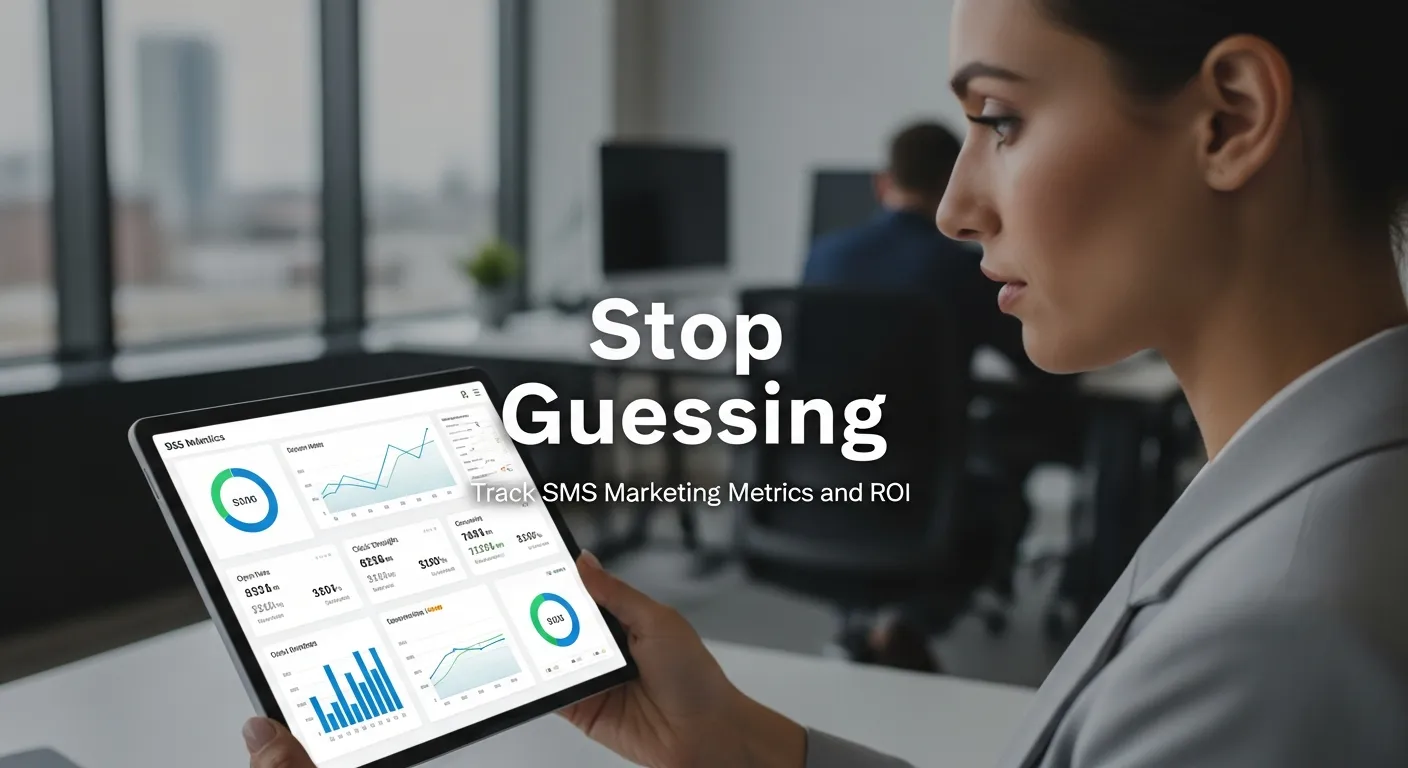
Unlock the power of text message campaigns by mastering SMS Marketing Metrics and ROI. This guide reveals how to effectively track performance, optimize your strategies, and drive significant business growth through highly targeted, measurable mobile communication.
Why SMS Marketing Metrics and ROI Matter
Understanding SMS Marketing Metrics and ROI is essential for evaluating the true effectiveness of any mobile marketing campaign. In today’s competitive digital environment, sending messages alone is not enough—businesses must know exactly how those messages perform and what return they generate.
Without proper tracking, it becomes impossible to determine which campaigns are driving real engagement, conversions, or revenue. You may be sending thousands of messages, but without data, there is no clear insight into what is working and what needs improvement. This can lead to wasted budget, poor targeting, and lower customer satisfaction.
By analyzing key performance indicators such as click-through rate (CTR), conversion rate, delivery rate, opt-out rate, and customer response rate, marketers gain a complete picture of campaign performance. These metrics help identify audience behavior patterns, showing which offers attract attention and which messages fail to engage users.
ROI measurement plays an even more critical role. It connects SMS marketing efforts directly to business outcomes such as sales, lead generation, and customer retention. When businesses understand the return on investment, they can allocate budget more effectively and scale high-performing campaigns with confidence.
Ultimately, strong SMS Marketing Metrics and ROI tracking allows brands to move beyond guesswork and make data-driven decisions. This not only improves campaign efficiency but also ensures long-term growth, better customer relationships, and higher profitability in mobile marketing strategies.
 Text messaging continues to dominate how people communicate. Unlike crowded email inboxes and algorithm-heavy social media feeds, text messages reach consumers directly on the devices they carry everywhere. This direct line of communication makes mobile marketing highly effective for businesses of all sizes.
Why SMS Remains a Powerful Communication Channel
Text messaging cuts through the digital noise. People typically open texts within three minutes of receiving them. This urgency makes it perfect for flash sales, event reminders, and time-sensitive alerts. By combining texts with an omnichannel marketing strategy, you can create seamless customer experiences that guide buyers from initial interest to final purchase.
Core SMS Marketing Metrics: Beyond the Basics
Sending text messages without analyzing the results wastes your marketing budget. To truly understand SMS Marketing Metrics and ROI, you need to monitor these core performance indicators.
Delivery Rate: Ensuring Your Message Lands
Your delivery rate shows the percentage of texts that successfully reach a user’s mobile carrier. A high delivery rate indicates a healthy, accurate subscriber list.
How Delivery Rate Impacts Campaign Reach
If your messages fail to deliver, your entire campaign suffers. Low delivery rates mean you are paying for texts that nobody sees. Messages often fail when numbers disconnect, carriers block spam, or users change their phone providers.
Strategies to Improve Delivery Rates
Clean your contact list regularly. Remove invalid phone numbers and inactive subscribers. Always use a reputable SMS provider to ensure your messages bypass carrier spam filters.
Open Rate: Grabbing Attention
The open rate measures how many people actually view your text. Because phones often display the full message on the lock screen, open rates for texts naturally run higher than emails.
Factors Influencing SMS Open Rates
Timing plays a massive role in whether someone opens your text immediately or ignores it. The sender ID also matters. Customers open texts faster when they recognize the brand name sending the message.
Crafting Compelling SMS Content for Higher Opens
Hook your reader immediately. Place the most important information or the biggest discount in the first sentence. Clear, punchy language encourages the recipient to open the message and read further.
Click-Through Rate (CTR): Driving Engagement
The click-through rate tracks how many people tapped the link included in your text. This metric shows whether your audience found your offer compelling.
Analyzing SMS CTR for Campaign Effectiveness
A low CTR usually means your offer did not resonate with the audience, or your call-to-action (CTA) was confusing. Tracking this metric helps you understand what types of promotions drive actual engagement. For a deeper dive into establishing baselines, check out our guide on SMS marketing metrics and KPIs.
Tactics to Boost Your SMS Click-Throughs
Use strong action verbs. Phrases like “Shop the sale now” or “Claim your 20% off” tell the customer exactly what to do. Ensure your links are short and mobile-friendly.
Conversion Rate: The Ultimate Goal
Your conversion rate measures how many people completed the desired action after clicking your link. This action might be completing a purchase, filling out a form, or registering for an event.
Measuring Conversions from SMS Campaigns
You track conversions by using unique discount codes or tracking links specifically assigned to your text campaigns. This data connects your marketing spend directly to your sales revenue.
Optimizing Your Call to Action (CTA) for Maximum Conversions
Make the next step effortless. If you want a customer to buy a product, link them directly to the checkout page with the item already in their cart. Friction kills conversions.
Opt-in and Opt-out Rates: Managing Your Audience
These rates track how fast your subscriber list grows and shrinks over time.
Understanding Subscriber Growth and Churn
A healthy campaign sees steady opt-in growth and low opt-out numbers. If your opt-out rate suddenly spikes, you likely sent too many messages or offered irrelevant content.
Best Practices for Consent and List Management
Always make it easy for customers to unsubscribe. Honor “STOP” requests immediately. Focus on providing value with every text so your audience actually looks forward to hearing from you.
Calculating SMS Marketing ROI: Proving Your Value
 You must justify your marketing budget by proving that your campaigns generate profit. Understanding SMS Marketing Metrics and ROI requires accurate revenue tracking.
Defining Return on Investment in SMS Marketing
ROI calculates the profit generated from your text campaigns compared to the cost of running them. Positive ROI means you make more money than you spend.
Formulas and Methodologies for ROI Calculation
Use a simple formula: (Revenue from SMS Campaign – Cost of SMS Campaign) / Cost of SMS Campaign x 100. The cost includes your software subscription, per-message sending fees, and labor. To understand financial metrics comprehensively, refer to Investopedia’s guide on Return on Investment.
Attribution Models: Connecting SMS to Revenue
Attribution models assign credit for a sale to a specific marketing touchpoint. A “last-click” model gives all the credit to the final text message the customer clicked before buying. A multi-touch model distributes credit across emails, social ads, and texts.
Advanced Metrics for Deeper Insights
Basic metrics tell you what happened. Advanced metrics tell you why it happened and how it impacts your business long-term.
Customer Lifetime Value (CLTV): Long-Term Impact of SMS
CLTV measures the total revenue a business can reasonably expect from a single customer account.
SMS’s Role in Nurturing Customer Relationships
Texting helps keep your brand top-of-mind. Sending personalized birthday discounts or early access to sales makes customers feel valued, encouraging repeat purchases over years.
Measuring CLTV Influenced by SMS Campaigns
Track customers who engaged with text campaigns versus those who did not. You will typically find that mobile subscribers buy more frequently and spend more over their lifetime.
Churn Rate: Retaining Your Subscribers
Churn rate measures how many subscribers leave your list over a specific period.
Identifying Reasons for Subscriber Churn
High churn usually results from message fatigue. Sending texts too early in the morning, too late at night, or simply too often will annoy your audience.
Proactive Strategies to Reduce Opt-Outs
Allow subscribers to choose their own message frequency. Set up preference centers where they can opt to receive only major sale alerts instead of weekly updates. You can build stronger retention using dedicated SMS customer loyalty programs.
Cost Per Acquisition (CPA): Efficiency of Subscriber Growth
CPA tracks how much money you spend to acquire one new text subscriber.
Calculating CPA for SMS Subscribers
Divide the total cost of your lead generation campaign (like a social media ad promoting a text sign-up) by the number of new subscribers gained.
Optimizing Your Acquisition Channels
If your Facebook ads cost $5 to get one subscriber, but your website pop-up gets subscribers for free, shift your focus to optimizing your website traffic.
Engagement Rate: Beyond Clicks
Engagement looks at the broader interaction between the customer and your brand.
Measuring Two-Way Communication and Interaction
Track how many customers reply directly to your texts. Two-way messaging builds strong relationships and resolves customer concerns quickly.
Leveraging SMS for Customer Service and Feedback
Send short surveys after a customer contacts your support team. Gathering instant feedback via text helps you improve your products and services immediately.
Tools and Technologies for Tracking SMS Performance
 You cannot track metrics manually. You need robust software to capture data and turn it into actionable reports.
SMS Marketing Platforms with Analytics Capabilities
Choose platforms that offer visual dashboards and real-time reporting. You need to see open rates, clicks, and bounces immediately after hitting send.
Integrating SMS Data with CRM and Analytics Tools
Your texting platform must talk to your other software. Integrating your CRM with text messaging ensures your sales and support teams see every interaction a customer has with your brand.
Dashboard Creation for Real-time Monitoring
Build custom dashboards that highlight your most important KPIs. This gives your marketing team a quick overview of campaign health without digging through spreadsheets.
Optimizing Your SMS Campaigns Based on Metrics
Data holds no value unless you use it to make changes. Let your metrics dictate your strategy.
A/B Testing Strategies for SMS
Test one variable at a time. Send the exact same offer, but change the call-to-action link. Send the exact same text, but test sending one batch at 10 AM and another at 2 PM.
Segmenting Your Audience for Personalized Messaging
Stop blasting your entire list. Group your subscribers based on their past purchase behavior. Send a text about women’s running shoes only to customers who previously bought athletic gear. This highly targeted approach is key to effective SMS marketing personalization.
Timing and Frequency: Finding the Sweet Spot
Review your analytics to find when your specific audience buys. Some brands see spikes during lunch hours; others see success on weekend mornings. Adjust your sending schedule accordingly.
Personalization and Dynamic Content
Use merge tags to automatically insert a customer’s first name into the text. Personalized messages always perform better than generic broadcasts.
Case Studies and Real-World Examples
Real-world application proves the theory. Many companies have transformed their revenue by prioritizing SMS Marketing Metrics and ROI.
How Businesses Achieved High SMS Marketing ROI
A national retail chain noticed their email open rates dropping. They shifted their abandoned cart reminders to text messages. By tracking the CTR and conversion rates closely, they recovered 15% more lost sales in a single quarter.
Lessons Learned from Successful Campaigns
The most successful brands learn that respecting the customer yields the best results. According to research by Pew Research Center, mobile connectivity is nearly universal, meaning consumers hold the power to block intrusive brands instantly. Providing genuine value protects your sender reputation.
The Future of SMS Marketing Metrics
Technology evolves rapidly, bringing new ways to measure and optimize mobile campaigns.
AI and Machine Learning in SMS Analytics
Artificial intelligence tools now analyze past campaigns to draft better copy. Machine learning algorithms can automatically segment your audience based on complicated behavioral patterns.
Predictive Analytics for Campaign Optimization
Predictive tools analyze past data to tell you the exact hour a specific customer is most likely to click a link. This hyper-personalization will soon become the industry standard.
Turn Your Data Into Actionable Growth
Understanding SMS Marketing Metrics and ROI is the foundation of a profitable mobile strategy. By tracking delivery rates, optimizing your click-throughs, and calculating your actual revenue, you transform text messaging from a guessing game into a reliable sales engine. Consistently test your copy, respect your audience’s preferences, and use advanced tools to automate your workflows. When you let data drive your decisions, your text campaigns will consistently deliver highly measurable, scalable growth.
Frequently Asked Questions (FAQs)
1. What is a good SMS open rate?
A strong open rate for text campaigns typically hovers around 90% to 98%. Texts are read almost immediately, making this metric consistently higher than email open rates.
2. How often should I send SMS marketing messages?
Most brands find success sending two to four messages per month. However, you should monitor your opt-out rates closely. If churn increases, reduce your sending frequency.
3. What are the legal requirements for SMS marketing?
You must obtain explicit, documented consent from users before sending promotional texts. You must also include clear opt-out instructions (like “Reply STOP to cancel”) and adhere to TCPA or GDPR regulations depending on your location.
4. Can SMS marketing integrate with my e-commerce platform?
Yes, modern SMS platforms integrate seamlessly with platforms like Shopify, WooCommerce, and BigCommerce, allowing you to trigger automated texts based on customer shopping behavior.
5. How can I track conversions from my SMS campaigns?
Use unique, trackable links (UTM parameters) or dedicated discount codes specifically assigned to your text campaigns. This connects the sale directly back to the message.
6. What is the difference between SMS click-through rate and conversion rate?
The click-through rate (CTR) measures how many people tapped the link in your text. The conversion rate measures how many of those people actually completed a purchase or desired action after clicking.
7. How do I reduce my SMS opt-out rate?
Ensure your messages provide immediate value. Segment your audience so customers only receive texts relevant to their specific interests, and avoid sending messages late at night.
8. Why is my SMS delivery rate low?
Low delivery rates usually stem from an outdated contact list filled with disconnected numbers, or carrier filters blocking your messages because they look like spam. Clean your list regularly.
9. Should I use A/B testing for text messages?
Absolutely. A/B testing helps you determine which wording, discount type, or sending time generates the highest engagement from your specific audience.
10. Does personalization actually improve SMS metrics?
Yes. Using a customer’s first name or referencing their past purchases significantly increases click-through and conversion rates because the message feels tailored and helpful rather than generic.






[…] and highly favorable return on investment. The empirical data and case studies surrounding SMS marketing for small businesses consistently reveal performance metrics that simply cannot be replicated by any other contemporary marketing channel, making it a highly […]