
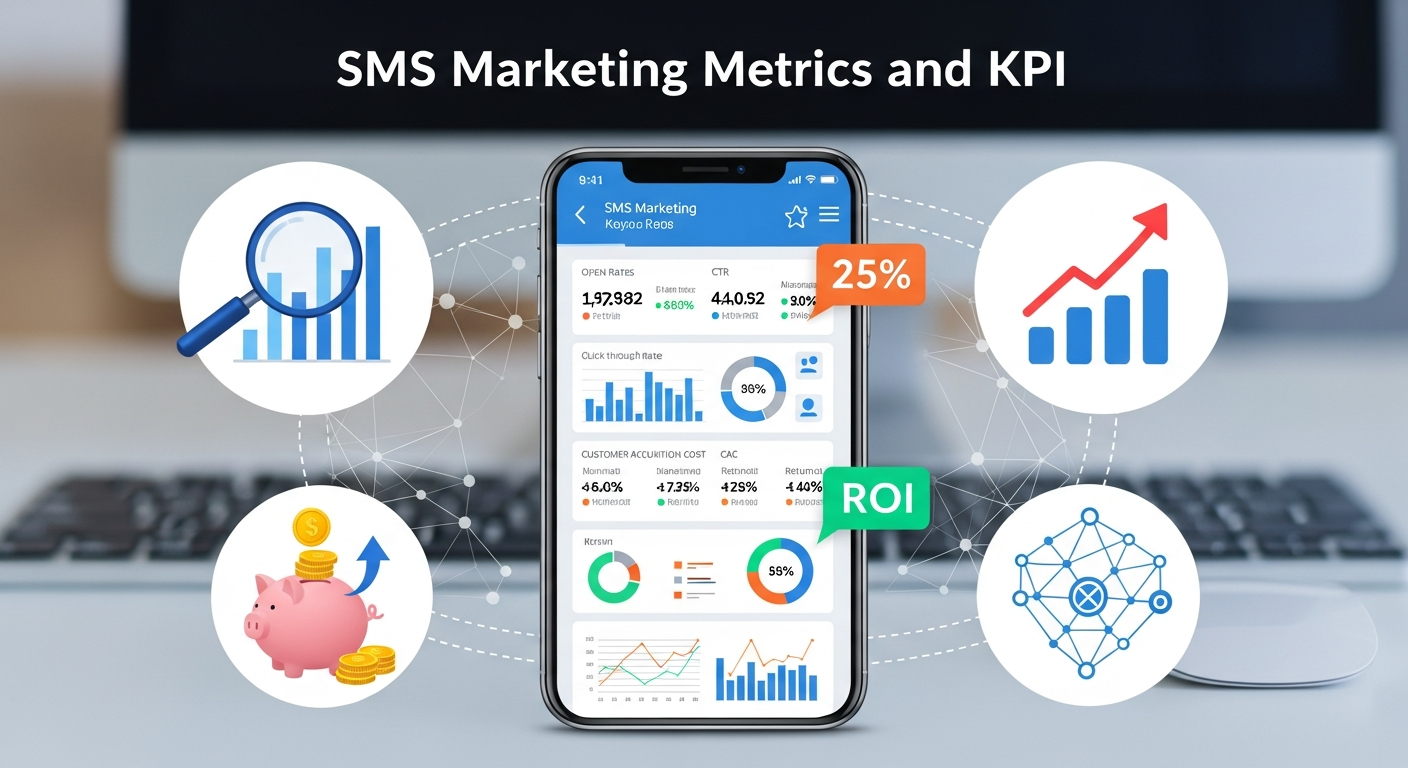
SMS marketing offers cost-effective, high-engagement customer reach, but tracking metrics is essential. This guide explores KPIs, benchmarks, and best practices, providing actionable insights to optimize campaigns, improve targeting, boost ROI, and drive sustainable growth.
Why Metrics Matter in SMS Marketing
SMS marketing metrics serve as the backbone for data-driven decision-making in modern campaigns. Unlike many other marketing channels where viewability and engagement can be murky, SMS provides precise measurements: delivery confirmations, open rates, click-throughs, replies, and opt-out counts. Each of these indicators offers unique insights into how subscribers interact with your messages and how effectively you’re communicating value.
Firstly, by tracking delivery rates, you confirm that your messages reach valid phone numbers and maintain a healthy sender reputation. An unusually low delivery rate might signal carrier filtering or list hygiene issues. Next, open rates—often exceeding 90% in this channel—demonstrate immediacy and relevance. Yet, open rate alone doesn’t prove success; correlating it with click-through rates and conversion actions reveals whether recipients take the next logical step after reading your prompt.
When you monitor replies and response rates, you gain qualitative feedback on message resonance and can tailor future campaigns to address customer sentiments or questions. Meanwhile, opt-out metrics highlight potential misalignments between message frequency or content and subscriber expectations. A spike in opt-outs typically suggests the need to refine targeting or adjust cadence.
In today’s environment, focusing on SMS marketing metrics empowers you to:
- Identify and segment high-performing audiences for personalized outreach.
- Optimize sending schedules and reduce subscriber fatigue.
- Detect deliverability issues early and resolve carrier-level concerns.
- Quantify ROI and justify budget allocations to stakeholders.
Ultimately, precise measurement transforms SMS marketing from a shot in the dark into a strategic tool for customer engagement and revenue growth.
Key SMS Marketing Metrics and KPIs
 Tracking the right SMS marketing metrics is essential to evaluating the health and effectiveness of your campaigns. Below, we break down the core KPIs every SMS marketer should monitor and optimize for peak performance.
Delivery Rate
Delivery Rate = (Number of SMS Delivered / Number of SMS Sent) x 100%. This metric indicates the percentage of messages that successfully landed in subscribers’ inboxes. A delivery rate above 95% signifies strong list quality and carrier compliance. If you observe rates below this threshold, consider cleaning your database, validating numbers, or reviewing compliance with carrier guidelines.
Open Rate
Open Rate = (Unique Opens / SMS Delivered) x 100%. Given the personal nature of text messaging, open rates often skyrocket above 90%. However, treat open rate as an initial engagement indicator. To make the most of this metric, compare it against subsequent actions such as clicks or replies to assess true message effectiveness.
Click-Through Rate (CTR)
CTR = (Number of Link Clicks / SMS Delivered) x 100%. If your SMS contains a URL—properly tagged with UTM parameters for analytics—CTR measures how compelling your call-to-action (CTA) is. Typical benchmarks range from 15% to 30%, depending on industry and offer. Improving CTR often involves refining message copy, shortening links, or experimenting with different incentives.
Conversion Rate
Conversion Rate = (Number of Desired Actions / Number of Clicks) x 100%. Desired actions might include purchases, sign-ups, or form submissions. This KPI ties engagement directly to revenue or lead generation, revealing the downstream impact of your SMS campaigns.
Response Rate
Response Rate = (Number of Replies / SMS Delivered) x 100%. For two-way SMS campaigns—such as customer surveys or support interactions—this metric measures the percentage of recipients who actively respond. Higher response rates often reflect message relevance and prompts that invite direct feedback.
Opt-Out Rate
Opt-Out Rate = (Number of Unsubscribes / SMS Delivered) x 100%. Monitoring opt-outs helps you balance message frequency and content relevance. A rate under 1% per campaign is generally acceptable, but any upward trend warrants review of your segmentation and sending cadence.
Cost Per Conversion (CPC)
Cost Per Conversion = Total Campaign Cost / Number of Conversions. By comparing CPC across channels, you can identify where SMS marketing delivers the lowest acquisition cost. This metric is key to maximizing ROI and allocating budget effectively.
Customer Lifetime Value (CLV)
CLV measures the total revenue a customer generates throughout their relationship with your brand. When you combine CLV with SMS acquisition metrics, you can forecast the long-term value of new subscribers and make informed decisions about list-building investments.
Setting Benchmarks and Goals
Establishing clear benchmarks is fundamental to assessing progress and setting realistic targets for your SMS marketing metrics. While industry averages provide a helpful frame of reference, the most meaningful benchmarks come from your own historical performance. Follow these steps to define and refine your goals:
1. Aggregate Historical Data
Compile metrics from at least three to six recent campaigns to identify average delivery, open, click, and conversion rates. Use this data as your baseline before implementing changes.
2. Segment by Campaign Type
Differentiate benchmarks for promotional blasts, transactional notifications, and two-way engagement campaigns. For example, promotional offers may yield higher CTRs but also slightly elevated opt-out rates compared to transactional alerts.
3. Highlight Top Performers
Review your highest-achieving campaigns and dissect their variables: message length, send time, CTA phrasing, and incentive type. Understanding what worked enables you to replicate similar successes.
4. Set SMART Objectives
Create targets that are Specific, Measurable, Achievable, Relevant, and Time-bound. For instance, aim to increase CTR from 18% to 22% within the next quarter or reduce opt-out rates from 0.8% to 0.5% over three campaigns.
Document these benchmarks and share them with your marketing team and stakeholders to ensure collective alignment. Review progress at regular intervals—weekly or per campaign—to identify areas in need of adjustment and celebrate achievements.
Tracking and Analyzing SMS Campaign Performance
 Effective tracking and analysis are essential for uncovering insights and driving continuous improvement in your SMS marketing program. Below are best practices for setting up robust tracking systems and leveraging data to fine-tune your approach.
Implement UTM Parameters
Appending UTM codes to SMS links allows you to capture traffic sources in Google Analytics or other web analytics platforms. This practice helps you attribute website visits, form completions, and purchases directly to specific SMS campaigns.
Integrate with CRM and Marketing Automation
Sync subscriber interactions—such as clicks, replies, and opt-outs—with your customer relationship management (CRM) system. By centralizing data, you build comprehensive user profiles that inform segmentation, lead scoring, and personalization strategies.
Deploy Real-Time Dashboards
Leverage the reporting features of your SMS provider or use business intelligence tools to create live dashboards. Monitoring metrics like delivery rate, open rate, and CTR in real time enables rapid response to performance anomalies.
Automate Recurring Reports
Schedule automated performance reports that compile key metrics and trend analyses at regular intervals—whether daily summaries, weekly deep dives, or post-campaign reviews. Automation saves time and ensures consistency in reporting.
Monitor Deliverability Health
Keep a close eye on bounce rates, carrier feedback, and sender reputation. Too many hard bounces can prompt carriers to filter or block your traffic, so proactively address invalid numbers and compliance issues.
By combining these tactics, you create a feedback loop that pinpoints opportunities for optimization and elevates the overall effectiveness of your SMS marketing efforts.
Improving Your SMS Metrics and ROI
 Once you’ve established a measurement framework and tracked baseline performance, it’s time to implement targeted tactics that drive improvements across each KPI. Below are proven strategies to optimize your SMS marketing metrics and maximize ROI.
Personalize Content at Scale
Use subscriber data—such as purchase history, location, or past engagement—to craft messages that resonate personally. Personalized messages consistently outperform generic blasts, boosting both open rates and click-throughs.
Optimize Send Timing
A/B test different days and times to uncover when your audience is most responsive. While evenings frequently yield high open rates, your unique subscribers may engage more during lunch breaks or weekends. Let data guide your scheduling decisions.
Refine Call-to-Action (CTA) Language
Strong CTAs use action-oriented verbs and convey a sense of urgency or benefit (e.g., “Redeem your exclusive discount now”). Keep URLs short and trackable, and consider using link shorteners with custom domains for brand consistency.
Segment Audiences Intelligently
Group subscribers based on behavior, demographics, or lifecycle stage. Sending tailored offers to segmented lists drives relevance and reduces opt-out rates compared to one-size-fits-all campaigns.
Leverage Automated Workflows
Implement drip sequences for common scenarios like onboarding new subscribers, cart abandonment reminders, and post-purchase follow-ups. Automation nurtures prospects through the funnel without manual intervention.
Test and Iterate on Frequency
Finding the optimal send frequency prevents subscriber fatigue while maintaining consistent engagement. Experiment with ramping up or dialing back message volume, and track how these changes influence opt-out and response rates.
By applying these best practices and continually refining your approach, incremental improvements across each metric will compound over time, leading to sustainable ROI growth for your SMS marketing program.
FAQ: SMS Marketing for Nonprofits & Businesses
1. What is the most important SMS marketing metric?
While all KPIs offer insights, conversion rate tied to your core business objectives is often the most critical metric for measuring true campaign success. Learn more about measuring success in SMS marketing ROI and metrics.
2. How often should I send SMS campaigns?
Optimal frequency varies by audience, but starting with 1–2 messages per week and closely monitoring opt-out and engagement rates helps determine the best cadence without causing fatigue.
3. How can I reduce opt-out rates?
Improve content relevance by segmenting subscribers and personalizing messages, and test different sending times to ensure your SMS reaches audiences when they’re most receptive. Advanced personalization strategies are detailed in SMS marketing personalization strategies.
4. How do I build an SMS marketing list legally?
Always obtain explicit consent from subscribers, provide opt-in options on websites, events, or social media, and clearly communicate what type of messages they’ll receive.
5. Can SMS marketing work for small nonprofits with tight budgets?
Yes! SMS is highly cost-effective, often costing just a few cents per message, making it accessible for small organizations to reach supporters without heavy expenses. Tips on running campaigns efficiently can be found in how to master SMS marketing on a shoestring budget.
6. What types of messages perform best in SMS marketing?
Personalized, concise, and action-oriented messages perform best. Examples include donation requests, event reminders, program updates, or exclusive offers.
7. Should I segment my audience for SMS campaigns?
Absolutely. Segmenting by behavior, demographics, or donation history allows you to deliver more relevant content, which improves engagement and reduces opt-out rates.
8. How do I measure ROI from SMS marketing?
Track metrics like conversion rate, click-through rate, revenue generated per campaign, and opt-out ratio. Many SMS platforms offer analytics dashboards for these insights.
9. Can I automate my SMS campaigns?
Yes, using automation tools, you can schedule messages, trigger campaigns based on user behavior, and set up workflows to nurture supporters without manual intervention.
10. Is SMS marketing effective across all supporter demographics?
SMS has broad reach, including individuals with limited internet access. Crafting culturally sensitive, personalized messages ensures your campaigns resonate across diverse audiences.
Conclusion
SMS marketing metrics are the foundation upon which successful mobile engagement strategies are built. From basic measures like delivery and open rates to more advanced indicators such as conversion rates and customer lifetime value, each KPI offers insights that guide campaign optimization. By setting benchmarks based on historical performance, integrating robust tracking tools, and deploying targeted tactics—such as personalization, optimized send times, and automation—you can transform raw data into actionable strategies that drive lasting results.
In today’s competitive environment, leveraging SMS marketing metrics effectively allows you to fine-tune your campaigns, improve subscriber experiences, and maximize ROI. Start implementing these practices today, and let data guide your path to SMS marketing excellence .