Why SMS Marketing Is a Game-Changer for E Commerce
In today’s fast-paced digital marketplace, E Commerce businesses face fierce competition to capture and retain customers. One of the most effective tools available is SMS marketing for E Commerce, a strategy that enables brands to connect directly with shoppers in a personal, timely, and highly engaging way. Unlike traditional channels such as email or social media, SMS messages are read almost instantly, offering one of the highest open rates in digital marketing.
Implementing SMS marketing for E Commerce strategies can significantly improve cart conversions, increase repeat purchases, and foster stronger customer relationships. By understanding the nuances of mobile messaging, marketers can craft campaigns that are not only effective but also feel personal and human.
Why SMS Marketing Is Essential for E Commerce
E Commerce shoppers today are overwhelmed with offers and promotions across multiple channels. To stand out, businesses need marketing methods that are immediate, personal, and actionable. SMS marketing for E Commerce fulfills all three requirements:
High Open Rates – More than 90% of text messages are opened within minutes, ensuring your message is seen quickly.
Direct Engagement – SMS messages feel personal and urgent, prompting customers to take action.
Conversion-Driven – Clear calls-to-action in SMS campaigns lead to immediate sales, making this channel highly ROI-positive.
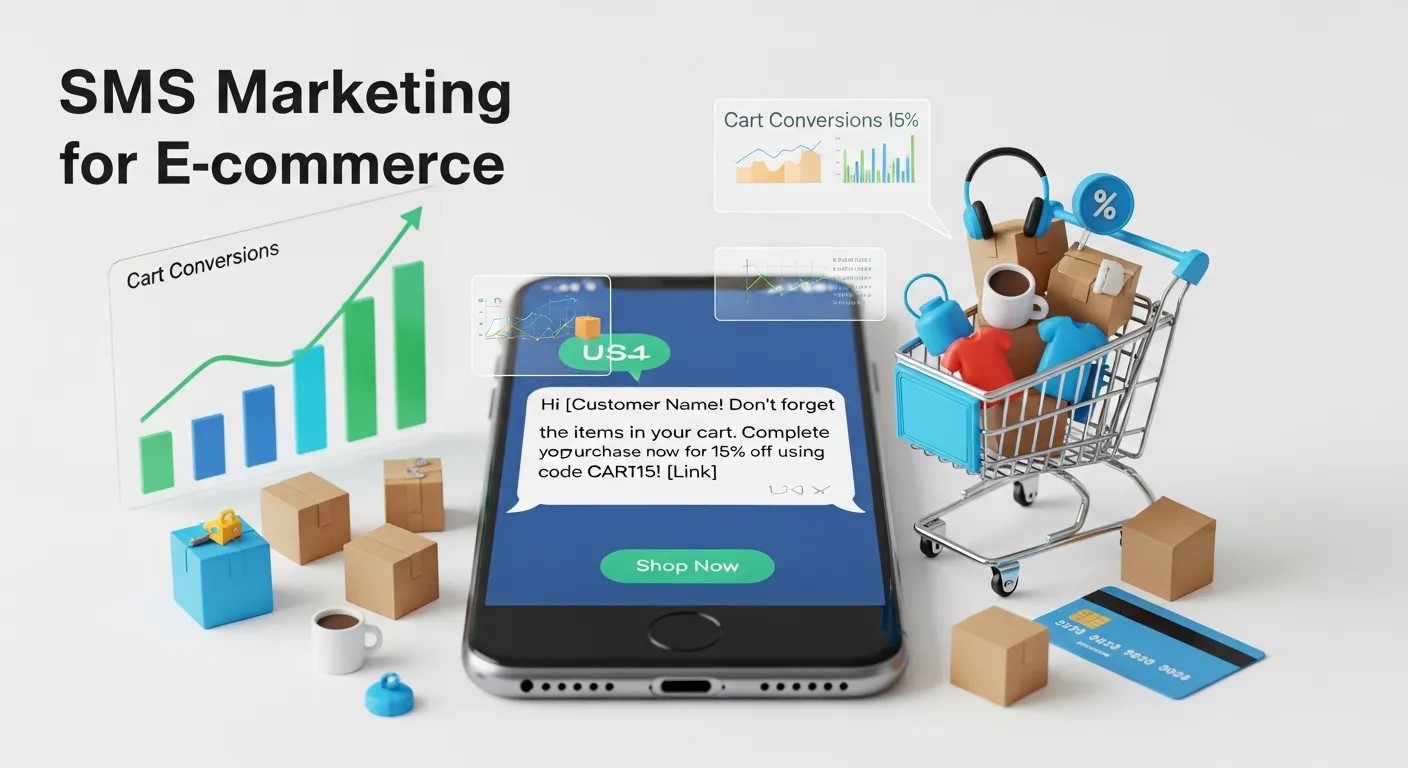
Brands using SMS marketing for E Commerce have observed that even simple campaigns, such as abandoned cart reminders or flash sale alerts, can recover lost revenue and increase overall sales performance.
Key Elements of Effective SMS Marketing
Success in SMS marketing for E Commerce depends on several critical elements that ensure messages are relevant, timely, and engaging.
1. Audience Segmentation
Segmentation allows marketers to tailor messages based on user behavior, preferences, and purchase history. For instance, a customer who abandoned their cart yesterday might receive a gentle reminder, while a loyal repeat buyer might be informed about exclusive offers. Personalized campaigns significantly outperform generic blasts, increasing both engagement and conversion rates.
2. Timing and Frequency
Sending messages at the right time is crucial. A cart abandonment reminder sent within an hour is far more effective than one sent days later. At the same time, it’s essential to avoid overloading customers, as excessive messaging can lead to unsubscribes.
3. Clear Calls-to-Action
Every SMS should include a clear, compelling call-to-action. Whether it’s “Complete Your Purchase” or “Shop Today and Save 20%,” clarity encourages immediate action.
4. Compliance and Opt-Ins
Respecting privacy and following regulations like GDPR or TCPA is critical for building trust. Customers must opt-in to receive messages, and brands should provide an easy opt-out option. Adhering to these rules not only ensures legal compliance but also enhances brand credibility.
Leveraging SMS Marketing Trends for Maximum Impact
Staying updated with industry trends can give E Commerce businesses a competitive edge. Some of the most effective SMS marketing trends include:
Interactive Campaigns – Polls, quizzes, or gamified offers increase engagement by involving customers directly.
Automation – Triggered messages such as abandoned cart alerts, welcome texts, and post-purchase follow-ups reduce manual effort while boosting results.
AI-Powered Personalization – Using predictive analytics, businesses can send messages recommending products that align with customer behavior, significantly increasing conversion chances.
By implementing these SMS marketing trends, E Commerce brands can keep campaigns fresh, relevant, and highly engaging.
Crafting High-Converting SMS Marketing Templates
A major advantage of SMS campaigns is the ability to craft concise, high-converting messages. Well-designed SMS marketing templates streamline campaigns and maintain consistency without sacrificing personalization. Here are some examples:
| Scenario | Template Example |
|---|---|
| Cart Abandonment | “Hi [Name], your cart is waiting! Complete your purchase now and enjoy 10% off: [link]” |
| Flash Sale | “Exclusive deal! 24-hour flash sale on your favorite items: [link]” |
| New Product Launch | “Be the first to try our new collection. Shop now: [link]” |
| Loyalty Reward | “Thank you for being a loyal customer! Redeem your reward today: [link]” |
Templates ensure professional communication while keeping messages actionable, a core principle of SMS marketing for E Commerce.
The Power of SMS Retargeting
Not every customer converts on the first visit. SMS retargeting enables businesses to re-engage shoppers who have shown interest but didn’t complete a purchase. Effective strategies include:
- Reminding users about abandoned carts
- Offering limited-time discounts for recently viewed products
- Highlighting complementary products based on prior purchases
Retargeted SMS campaigns are highly efficient because they focus on users with demonstrated intent, improving both conversion rates and ROI.
SMS Marketing on a Shoestring Budget
Even small businesses can implement effective campaigns without large investments. SMS marketing on a shoestring budget involves smart, cost-effective strategies:
- Prioritize high-intent audiences to avoid wasted sends
- Automate messages for efficiency
- Keep content concise and action-driven to maximize impact per message
With these approaches, even businesses with limited budgets can successfully leverage SMS marketing for E Commerce.
Measuring Success in SMS Marketing
Tracking performance is crucial for continuous improvement. Key metrics for SMS marketing for E Commerce include:
- Open Rate: How many recipients opened the message
- Click-Through Rate (CTR): How many clicked on the link
- Conversion Rate: Percentage of users completing a purchase
- Opt-Out Rate: Indicates message relevance and frequency
Analyzing these metrics enables businesses to refine campaigns, optimize content, and improve overall performance.
Advanced Strategies for SMS Marketing for E Commerce
While basic SMS campaigns can improve engagement and recover abandoned carts, advanced strategies take SMS marketing for E Commerce to the next level. By analyzing customer behavior, personalizing campaigns, and integrating SMS with other channels, businesses can see higher conversions and long-term growth.
1. Behavioral Segmentation
Behavioral segmentation involves grouping customers based on their actions, such as browsing history, purchase frequency, or previous interactions. For example, customers who regularly purchase seasonal items might receive early-bird notifications, while first-time buyers might get welcome offers.
By targeting these micro-segments, brands can send highly relevant messages that feel personal and timely. Behavioral targeting is especially effective when paired with SMS retargeting, which focuses on re-engaging users who have demonstrated intent but haven’t completed a transaction.
2. Personalization Beyond Names
While addressing a customer by their first name is common, personalization can go deeper in SMS marketing for E Commerce. Consider:
- Recommending products based on past purchases
- Highlighting trending items in the customer’s preferred category
- Sending location-based offers for nearby stores
Personalized messages increase the likelihood of clicks and conversions. When combined with automation, businesses can deliver highly relevant campaigns without manual effort.
3. Optimizing Timing and Frequency
The timing of SMS campaigns is crucial. SMS marketing for E Commerce campaigns should respect the customer’s daily routines and preferences. Best practices include:
Sending cart reminders within 30–60 minutes of abandonment
Scheduling promotional messages during peak engagement hours, often late mornings or early evenings
Limiting campaigns to 2–3 messages per week to avoid opt-outs
Automated scheduling tools can help ensure that messages reach customers at the most effective time, improving engagement while maintaining brand trust.
4. Integrating SMS with Multi-Channel Marketing
SMS works best when combined with other marketing channels. A well-rounded approach might include:
Email Marketing: Follow up SMS campaigns with personalized emails for additional engagement
Social Media: Promote flash sales via social channels while sending exclusive SMS offers
Loyalty Programs: Link SMS messages with rewards programs to encourage repeat purchases
By coordinating campaigns across multiple touchpoints, brands can reinforce their messaging and increase the chances of conversion.
5. Using Limited-Time Offers to Drive Urgency
Urgency is a powerful psychological trigger in SMS marketing for E Commerce. Limited-time offers, flash sales, and countdown messages create a sense of scarcity that encourages immediate action. For example:
Messages like this combine urgency with relevance, significantly boosting click-through and conversion rates.
Content Planning for Long-Term SMS Marketing Success
Consistency is key to a sustainable SMS strategy. Brands should develop a content calendar that balances promotional, transactional, and engagement messages.
Components of an SMS Content Calendar
- Promotional Campaigns: Sales, discounts, product launches
- Transactional Messages: Order confirmations, shipping updates
- Engagement Content: Surveys, tips, or personalized recommendations
This structured approach ensures that customers receive value from every message, enhancing loyalty and minimizing unsubscribes.
Mobile Optimization and User Experience
Since SMS campaigns are inherently mobile, optimizing the user experience is crucial for SMS marketing for E Commerce.
Short and Concise Messages: Keep messages under 160 characters to ensure readability on all devices
Clickable Links: Include a clear, easy-to-tap link to the relevant page
Responsive Landing Pages: Ensure the destination page is mobile-friendly and loads quickly
By prioritizing mobile experience, brands can convert clicks into purchases more effectively.
Advanced Automation Techniques
Automation is a cornerstone of effective SMS marketing for E Commerce. Advanced automation techniques include:
Triggered Campaigns: Automatically send messages based on actions, like cart abandonment or wishlist additions
Drip Campaigns: Gradually guide new customers through the sales funnel with timed messages
Re-Engagement Sequences: Target inactive customers with tailored offers to bring them back
Automation not only saves time but also ensures consistent, timely communication with high potential for conversions.
Case Study: Successful SMS Campaigns in E Commerce
Many e commerce brands have successfully leveraged SMS marketing for e commerce to boost conversions. Consider the following examples:
| Brand | Campaign Type | Result |
|---|---|---|
| Fashion Retailer | Abandoned cart reminder | 25% recovery of abandoned carts |
| Electronics Store | Flash sale alert | 40% increase in same-day sales |
| Beauty Subscription | Re-engagement offer | 30% of inactive users returned |
| Home Decor | Product recommendation SMS | 15% higher repeat purchases |
These examples demonstrate that a well-executed SMS strategy can significantly impact revenue and customer engagement.
Leveraging SMS Retargeting for Maximum ROI
Retargeting via SMS focuses on individuals who have already shown interest, making it one of the most cost-effective strategies in SMS marketing for e commerce. Some key approaches include:
Abandoned Cart Recovery: Send reminders within the first hour and follow up with a small discount if needed
Post-Visit Follow-Ups: Target users who browsed specific products without purchasing
Cross-Sell Campaigns: Recommend complementary items based on recent purchases
When implemented correctly, SMS retargeting campaigns not only increase conversion rates but also improve overall ROI by focusing resources on high-intent customers.
Cost-Efficient SMS Marketing: Strategies for Small Businesses
Even businesses with tight budgets can successfully execute SMS marketing for e commerce campaigns. Here are strategies to maximize results while minimizing costs:
Segment Wisely: Focus only on high-intent or repeat customers to avoid unnecessary costs
Automate Where Possible: Automated sequences reduce manual labor and prevent missed opportunities
Test and Optimize: Use A/B testing for message timing, content, and offers to find the most effective approach
By following these strategies, even startups and small e commerce stores can achieve impressive results using SMS marketing on a shoestring budget.
Best Practices for Writing SMS Messages
Crafting high-converting SMS messages requires attention to clarity, brevity, and relevance:
- Be Direct: Clearly state the offer or action required
- Add Value: Include a discount, free shipping, or exclusive offer
- Personalize Strategically: Use purchase history, browsing behavior, or location data
- Include Urgency: Limited-time offers or stock alerts can drive immediate action
These practices, when applied consistently, form the foundation of a robust SMS marketing for e commerce strategy.
Conclusion
SMS marketing for e commerce is a powerful tool that drives immediate engagement, increases cart conversions, and strengthens customer loyalty. By leveraging trends, automation, personalization, and retargeting, businesses can create cost-effective, high-converting campaigns that deliver measurable results and sustainable growth.
Frequently Asked Questions (FAQ)
What is SMS marketing for e commerce?
SMS marketing for e commerce is a strategy where brands send targeted text messages to customers to promote products, recover abandoned carts, share offers, or drive repeat purchases.
How does SMS marketing improve cart conversions?
By sending timely reminders, personalized offers, and limited-time discounts, SMS marketing encourages customers to complete their purchases, boosting cart conversions and overall sales.
Can small businesses afford SMS marketing?
Yes. SMS marketing on a shoestring budget allows small businesses to target high-intent customers, automate messages, and maximize ROI without large expenditures.
What are some effective SMS marketing strategies?
Key strategies include behavioral segmentation, personalization, automation, retargeting campaigns, and integrating SMS with email or social media for multi-channel engagement.
How do I measure the success of SMS campaigns?
Track metrics like open rate, click-through rate (CTR), conversion rate, and opt-out rate to analyze performance and optimize future campaigns.
What is SMS retargeting in e commerce?
SMS retargeting targets users who showed interest but didn’t complete a purchase, sending follow-ups or offers to re-engage them and increase conversions.
Are there any SMS marketing trends to follow?
Yes. Emerging SMS marketing trends include interactive messages, AI-driven personalization, automation, and gamified campaigns to boost engagement and ROI.