
Omnichannel marketing maximizes engagement by integrating SMS, email, and social media. This guide explores strategies, tools, and best practices to deliver cohesive campaigns, enhance customer experiences, and improve ROI through synchronized, cross-channel communication.
Building a Unified Customer Profile
Before launching any campaign in your omnichannel marketing strategy, it’s essential to establish a single source of truth for customer data. Fragmented spreadsheets, disconnected CRMs, and unlinked email or SMS marketing integration tools can result in duplicated records, inconsistent messaging, and missed engagement opportunities. A unified customer profile centralizes critical data—contact information, purchase history, communication preferences, behavioral insights, and consent records—into one consolidated repository. This foundation allows marketers to understand each customer holistically, ensuring that every touchpoint across SMS, email, and social media aligns with their unique journey.
Choosing the Right Platform
Start by selecting a robust Customer Data Platform (CDP) or an integrated marketing cloud capable of ingesting data from your website, CRM, Email marketing strategy, and SMS marketing integration platforms. A CDP unifies interactions—from website visits and app usage to social media engagement and SMS replies—creating a 360-degree snapshot of each individual. This comprehensive view enables marketers to create precise audience segments, deliver personalized messaging, and trigger campaigns based on real-time behavior, increasing engagement and conversion rates.
Key Steps to Build a Unified Profile
- Data Ingestion: Integrate all sources of customer information using APIs, webhooks, and automated data pipelines. Pull in signups, transaction history, loyalty program activity, and engagement metrics from every channel. Ensure all data is cleansed, deduplicated, and standardized to maintain accuracy across the system.
- Preference Capture: During onboarding or purchase interactions, invite customers to select their preferred communication channels—SMS, email, or social media. Recording channel preferences helps reduce message fatigue, increases response rates, and enhances the customer experience.
- Consent Management: Implement dynamic consent forms capturing timestamps, IP addresses, and channel-specific permissions. Regularly audit consent records to comply with regulations like CAN-SPAM, GDPR, and TCPA, safeguarding both your brand and your subscribers.
- Behavioral & Transactional Data Integration: Go beyond basic contact info. Track browsing history, purchase patterns, engagement with past campaigns, and product preferences. Merging this data across channels allows for predictive segmentation, personalized recommendations, and targeted promotions.
- Real-Time Updates: Configure event-based triggers so that when a user opens an email, clicks an SMS link, or interacts on social media, their profile updates immediately. This enables dynamic audience lists and personalized campaigns without manual intervention.
- Data Enrichment: Leverage third-party data sources to enhance profiles with demographic, geographic, and psychographic insights. These enriched profiles allow more granular targeting and improve the effectiveness of both Email marketing strategy and SMS marketing integration campaigns.
Benefits of a Unified Customer Profile
- Precise Segmentation: With accurate, consolidated data, you can segment audiences based on behavior, preferences, location, and engagement frequency, creating tailored experiences for every subscriber.
- Consistent Messaging Across Channels: A unified profile ensures all messages—whether via email, SMS, or social media—are relevant, personalized, and aligned with the customer journey.
- Increased Campaign Efficiency: Eliminating data silos reduces redundant messaging and operational inefficiencies. Marketers spend less time reconciling data and more time creating impactful campaigns.
- Better Analytics and Reporting: Centralized data makes tracking KPIs, measuring ROI, and analyzing engagement across channels simpler and more accurate.
- Improved Customer Experience: Customers receive consistent, relevant communication across all touchpoints, building trust, loyalty, and long-term brand affinity.
Investing in a robust unified customer profile is the cornerstone of successful omnichannel marketing. It allows you to deliver personalized, timely, and consistent experiences while maximizing the ROI of your SMS marketing integration and Email marketing strategy campaigns. Brands that implement a comprehensive unified profile framework can anticipate customer needs, respond dynamically, and create seamless journeys that drive engagement, conversions, and revenue growth.
Designing Coordinated Campaign Workflows
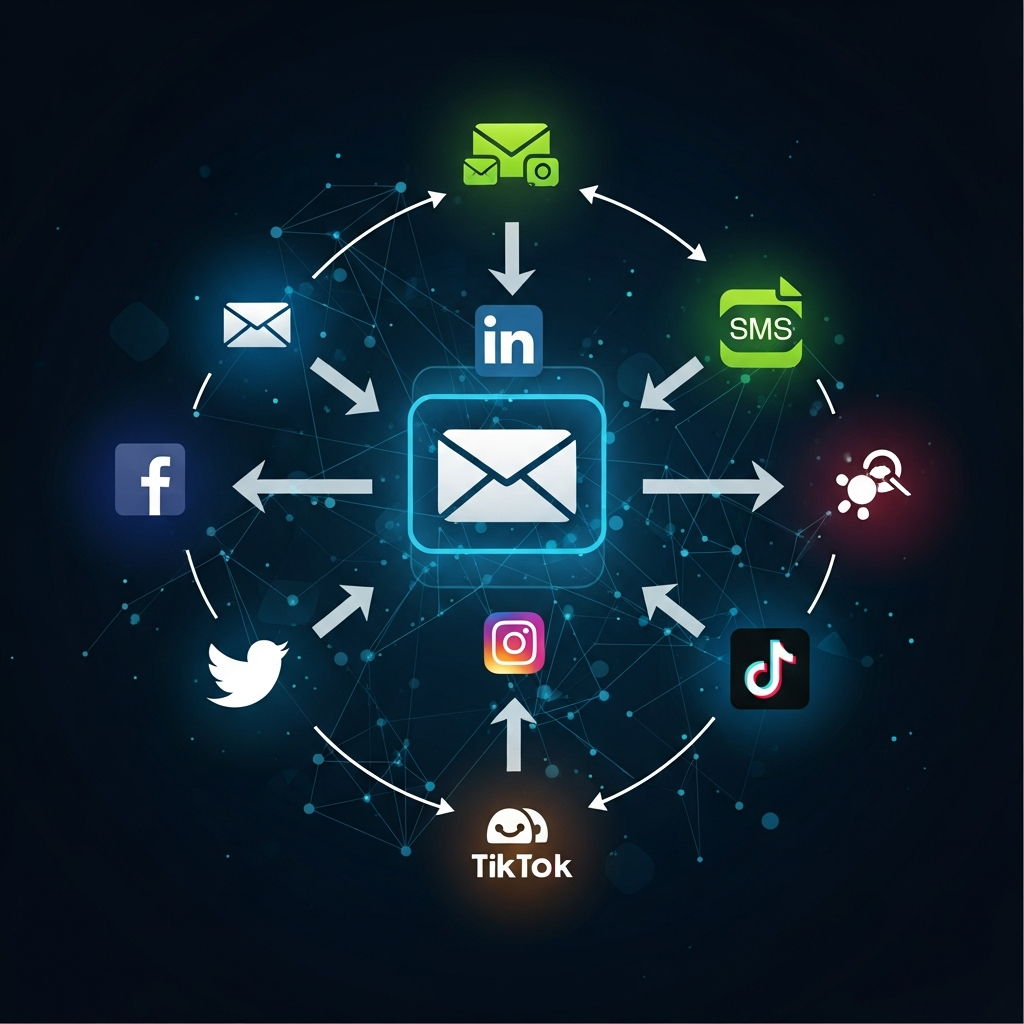 Once customer profiles are centralized, the next step is crafting workflows that guide subscribers through personalized, multi-touch journeys. Leveraging the strengths of each channel—Email marketing strategy for detailed storytelling, SMS marketing integration for immediacy, and social media for community engagement—creates a cohesive narrative that nurtures leads, strengthens relationships, and accelerates conversions. A well-designed workflow ensures that every interaction is intentional, timely, and relevant, aligning with the overall omnichannel marketing strategy.
Why Coordinated Workflows Matter
Without structured workflows, marketing campaigns risk being fragmented. Subscribers may receive inconsistent messaging, redundant offers, or irrelevant content across channels. Coordinated workflows allow you to:
- Deliver consistent messaging across email, SMS, and social platforms.
- Personalize interactions based on behavior, purchase history, and preferences.
- Increase engagement by delivering the right message at the right time.
- Improve conversions and ROI by guiding subscribers along a structured path.
Example Workflow Scenarios
1. Welcome Series
A strong welcome series sets the tone for your brand experience.
- Email #1 (Day 0): Introduce your value proposition, highlight key products or services, and share customer testimonials. Incorporate a clear Email marketing strategy with visually engaging design and actionable CTAs.
- SMS #1 (Day 1): Send a concise, high-impact welcome SMS with a special offer or incentive. The immediacy of SMS marketing integration ensures your message lands directly in front of new subscribers.
- Social Prompt (Day 2): Reinforce trust and social proof with targeted social ads or posts showcasing user-generated content, reviews, or community highlights.
2. Abandoned Cart Recovery
Recover lost sales with timely, cross-channel nudges:
- Email Reminder (Hour 2): Highlight abandoned products with urgency-driven copy, images, and shipping details. A strong Email marketing strategy here can persuade hesitant buyers.
- SMS Alert (Hour 6): Follow up with a short, compelling text message offering a limited-time discount or free shipping to drive immediate action.
- Social Retargeting (Day 1): Deploy dynamic ads on Facebook, Instagram, or TikTok featuring the exact items left in the cart. This reinforces your offer across platforms, boosting conversion chances.
3. Event or Product Launch Campaigns
Coordinated campaigns are essential for maximizing attendance or product adoption:
- Email (Week Before Launch): Provide detailed information about the event or product, including benefits, schedules, and registration links.
- SMS (Day Before Launch): Send a quick reminder or exclusive early access offer via SMS marketing integration.
- Social Media (Day of Launch): Create urgency and excitement with live posts, countdowns, and interactive content to engage the community in real-time.
Best Practices for Workflow Design
- Map the Customer Journey: Understand the stages of your audience’s lifecycle—from new leads to repeat buyers—and create tailored workflows for each stage.
- Time & Frequency Optimization: Avoid overwhelming subscribers. Space messages strategically and test timing for maximum engagement.
- Dynamic Content & Personalization: Use unified customer data to personalize every interaction. Merge tags, product recommendations, and location-specific content enhance relevance across Email marketing strategy and SMS marketing integration campaigns.
- Test & Optimize: Continuously A/B test email subject lines, SMS messaging, and social creatives to identify top-performing content.
- Track Performance: Monitor KPIs like open rates, click-throughs, conversion rates, and revenue metrics across all channels to refine your omnichannel marketing approach.
By thoughtfully sequencing channels and designing data-driven workflows, brands ensure that each touchpoint builds upon the last, creating momentum that guides subscribers from awareness to conversion. Coordinated workflows not only increase engagement and sales but also enhance the overall customer experience, strengthening loyalty and long-term brand affinity.
A robust omnichannel marketing strategy integrates Email marketing strategy and SMS marketing integration seamlessly, providing customers with timely, relevant, and personalized interactions that drive measurable results.
Personalize & Segment Across Channels
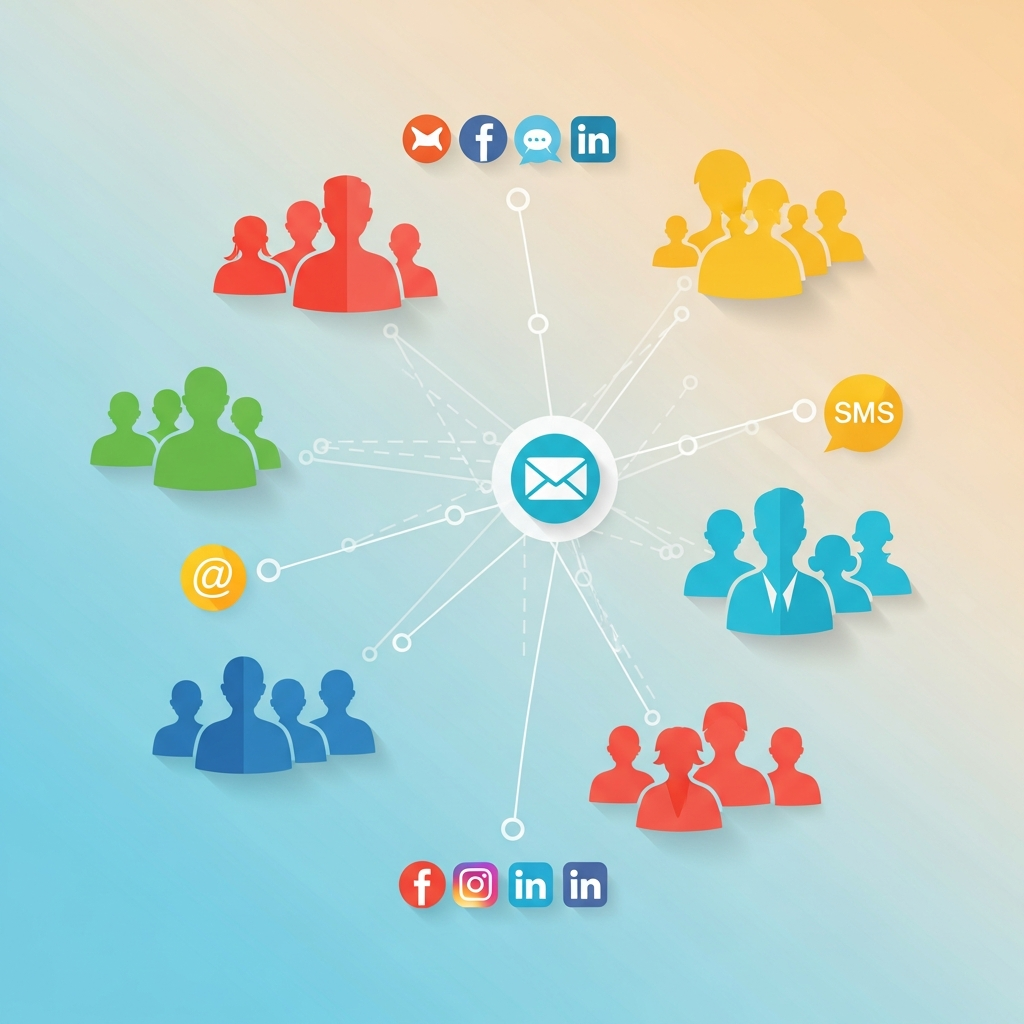 Segmentation and personalization are the cornerstones of modern omnichannel marketing. Using unified customer profiles enables marketers to deliver highly relevant messages tailored to each subscriber’s preferences, behaviors, and lifecycle stage. A generic message no longer resonates in a world where customers expect contextual and timely interactions across multiple touchpoints.
Advanced Techniques for Cross-Channel Personalization
- Behavioral Segmentation:
Group subscribers based on browsing history, past purchases, engagement frequency, and product interest. Send targeted Email marketing strategy campaigns with curated product recommendations, SMS marketing integration alerts for restocks or flash sales, and social media lookbooks highlighting items they are most likely to engage with. - Lifecycle Messaging:
Tailor communications according to where a customer is in their journey—prospects, new customers, repeat buyers, or VIPs. For instance, trigger a welcome SMS with a discount for new subscribers, follow up with a personalized email highlighting complementary products, and engage VIP customers through exclusive loyalty perks on social media. - Location-Based Targeting:
Leverage geofencing, IP-based data, or store check-ins to deliver localized and contextually relevant messages. Notify subscribers of nearby store events, local promotions, or weather-specific product recommendations via SMS, email, and social media campaigns. - Dynamic Content & Merge Tags:
Personalize messages with first names, product suggestions, purchase history, and loyalty tier information. Dynamic content blocks in emails, personalized SMS snippets, and customized social ad creatives ensure each interaction feels bespoke, increasing both engagement and conversion rates. - Predictive & AI-Driven Segmentation:
Utilize machine learning algorithms to anticipate customer needs. Predictive models can identify the next best product or optimal engagement time, allowing marketers to trigger SMS marketing integration and Email marketing strategy campaigns proactively.
By implementing these advanced personalization and segmentation techniques, brands can foster higher engagement, customer loyalty, and revenue—key outcomes of an effective omnichannel strategy.
Automate & Orchestrate with a Single Platform
Managing separate tools for email, SMS, and social media often leads to inefficiencies, errors, and missed opportunities. A unified marketing automation platform enables organizations to orchestrate omnichannel campaigns from a single interface, ensuring consistent messaging, operational efficiency, and faster campaign execution.
Core Features & Benefits
- Visual Journey Builder:
Create intuitive, drag-and-drop workflows that map triggers, conditions, and actions across channels. Visual journey builders facilitate collaboration between marketing, sales, and operations teams. - Unified Analytics Dashboard:
Track performance metrics like open rates, click-throughs, conversions, and ROI across SMS marketing integration and Email marketing strategy campaigns. Centralized dashboards allow faster decision-making and better budget allocation. - Cross-Channel A/B Testing:
Test variations of email subject lines, SMS copy, and social media creatives simultaneously. Evaluate performance side-by-side to determine top-performing content and optimize campaigns in real-time. - Automated Scaling:
Automatically enroll new contacts into pre-defined workflows. Trigger messages based on behavior, purchase history, or engagement data to ensure the right message reaches the right audience at the right time without manual intervention. - Integration & Connectivity:
Unified platforms often integrate with CRMs, e-commerce platforms, analytics tools, and social media networks, enabling seamless omnichannel marketing execution and a single source of truth for data.
Centralizing orchestration reduces human error, maintains data integrity, and allows marketers to scale campaigns while maintaining personalization and consistency.
Measuring Success with the Right Metrics
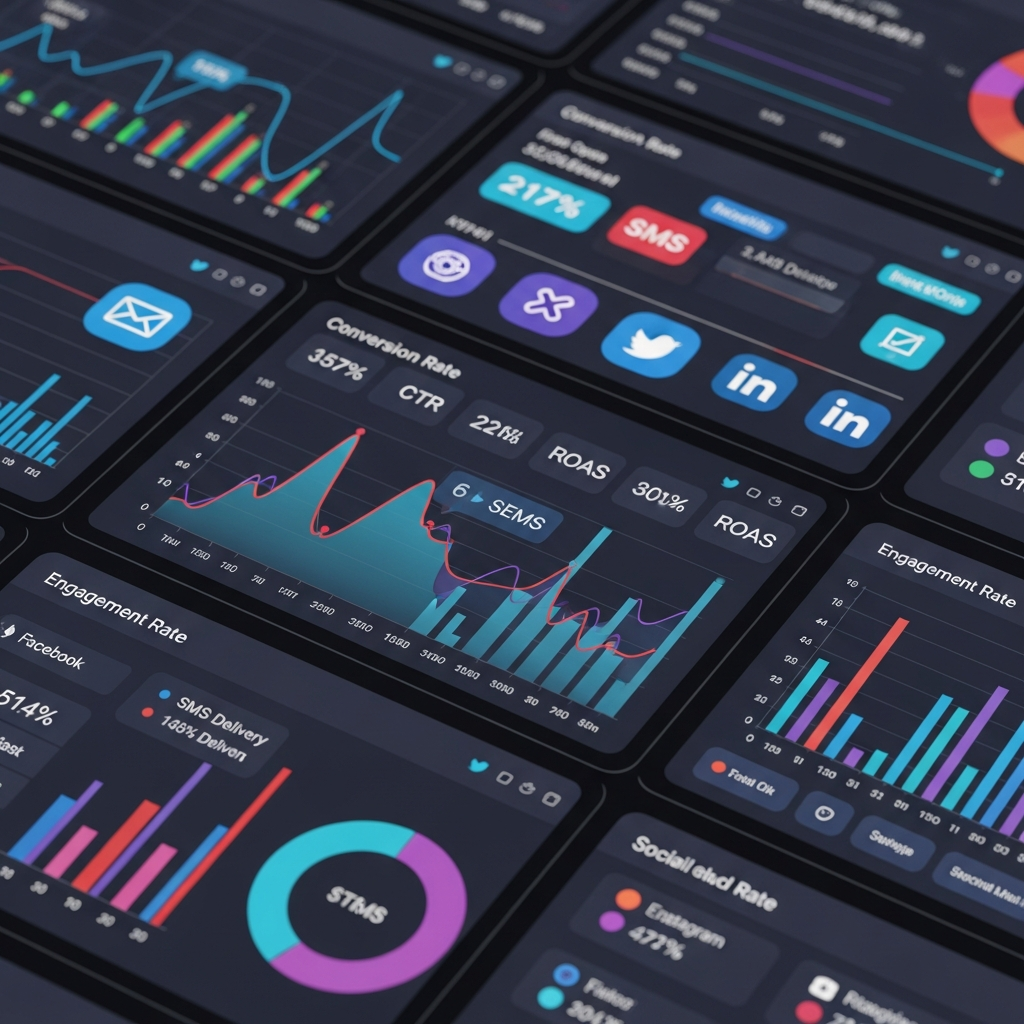 Measuring the effectiveness of omnichannel marketing initiatives requires more than simple open or click rates. Comprehensive KPI tracking ensures every touchpoint contributes meaningfully to business objectives, providing actionable insights that optimize strategy and maximize ROI.
Key Metrics to Track
- Attribution Modeling:
Move beyond last-click attribution by implementing multi-touch or data-driven models. Assign value to Email marketing strategy, SMS marketing integration, and social media interactions based on their influence on conversions. - Engagement Rates:
Monitor open rates, click-through rates, social interactions (likes, shares, comments), and responses to SMS campaigns. High engagement signals content relevance and successful personalization. - Revenue Metrics:
Track Average Order Value (AOV), Revenue Per Message (RPM), and Return on Ad Spend (ROAS) across channels. These metrics highlight which channels deliver the highest financial impact. - Customer Lifetime Value (CLV):
Compare CLV for subscribers engaged via omnichannel campaigns versus single-channel campaigns. Higher CLV indicates that cohesive, cross-channel strategies foster loyalty and long-term revenue growth. - Delivery & Compliance:
Track SMS delivery rates, bounce rates, unsubscribes, and opt-outs to maintain compliance with regulations such as CAN-SPAM, TCPA, and GDPR. Consistent monitoring ensures trust and brand reputation remain intact. - Conversion Path Analysis:
Examine the journey of customers who convert to identify which combination of email, SMS, and social interactions drove the sale. Use this data to refine campaign sequencing.
By monitoring these KPIs consistently, brands can optimize message timing, channel mix, and content strategies, ensuring every omnichannel marketing initiative drives measurable results.
FAQ:
1. What is omnichannel marketing?
Omnichannel marketing integrates SMS, email, and social media channels to deliver consistent, personalized customer experiences across all touchpoints.
2. How does SMS marketing integration improve campaigns?
Integrating SMS with email and social channels ensures immediate engagement, higher open rates, and seamless messaging that reinforces brand communication.
3. Why is Email marketing strategy important in omnichannel campaigns?
Email allows for detailed storytelling, rich content, and nurturing sequences that complement SMS alerts and social media engagement, boosting conversions.
4. How do I segment my audience effectively?
Use unified customer profiles to segment by behavior, purchase history, engagement, lifecycle stage, and location to send highly relevant, cross-channel messages.
5. Can small businesses implement omnichannel marketing?
Yes! Even small teams can leverage SMS marketing integration with email and social platforms to create personalized, cost-effective campaigns that scale over time.
6. What metrics should I track in omnichannel marketing?
Monitor multi-touch attribution, engagement rates, open and click-through rates, revenue metrics (AOV, ROAS), and customer lifetime value (CLV) to optimize campaigns.
7. How can personalization improve results?
Dynamic content, merge tags, and targeted recommendations ensure that messages feel custom-made, increasing engagement, loyalty, and conversion across SMS, email, and social channels.
8. How often should I send messages across channels?
Start with 1–3 messages per week per channel and adjust based on engagement, opt-outs, and subscriber preferences. Coordination ensures messages complement rather than overwhelm.
9. What tools help manage omnichannel campaigns?
Marketing automation platforms with journey builders, unified analytics dashboards, and cross-channel A/B testing simplify orchestration of email, SMS, and social campaigns.
10. How do I maintain compliance in SMS and email campaigns?
Follow opt-in/opt-out regulations, store consent records, honor user preferences, and comply with laws such as TCPA, CAN-SPAM, and GDPR.
Conclusion
Brands can no longer treat SMS, email, and social media as separate silos. Adopting a comprehensive omnichannel marketing approach—powered by unified data, coordinated workflows, dynamic personalization, and centralized automation—creates seamless experiences, stronger customer relationships, and measurable growth. Integrate SMS marketing integration and a solid Email marketing strategy to maximize engagement and ROI .