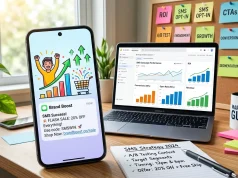

In today’s hyper-connected marketplace, capturing consumer attention is a massive challenge. Implementing SMS marketing for small businesses provides an unparalleled, direct line to your most engaged customers. This powerful channel bypasses crowded inboxes and algorithmic barriers, ensuring your brand message is seen instantly and acted upon rapidly.
This comprehensive guide explores everything required to launch and scale highly profitable text messaging campaigns. We dive deep into foundational setup, strict legal compliance protocols, advanced segmentation, and seamless technology integrations. By following these proven methodologies, local brands can leverage text messaging to dramatically boost conversions, build unwavering brand loyalty, and achieve sustainable, long-term operational growth.
The Evolution and Impact of SMS Marketing for Small Businesses
The landscape of commercial communication has shifted dramatically over the past two decades, moving rapidly from broad broadcast mediums to hyper-personalized, instant interactions. For generations, local entrepreneurs relied heavily on print advertisements, direct mailers, and eventually, generic email blasts to communicate their value propositions to their communities. However, as consumers became inextricably tethered to their mobile devices, the foundational rules of engagement fundamentally transformed. Today, the average person checks their smartphone hundreds of times a day, keeping it within arm’s reach at all hours. This profound behavioral shift created a massive opportunity, making SMS marketing for small businesses a central, non-negotiable pillar for modern revenue generation and community building.
When we deeply analyze the psychological factors driving contemporary consumer behavior, immediacy and intimacy stand out as the primary catalysts for action. A text message buzzes in a pocket or flashes on a smartwatch screen, demanding almost instantaneous acknowledgment. Unlike a promotional email, which typically sits passively in a cluttered inbox alongside thousands of unread blasts, a text message feels inherently urgent, deeply personal, and highly relevant. Consumers guard their phone numbers fiercely, generally reserving this communication channel for close friends, family members, and the select few brands they genuinely trust and wish to hear from.
By earning a coveted place in this highly protected digital space, your business gains an unmatched competitive advantage. Utilizing SMS marketing for small businesses means you are no longer shouting into the void of unpredictable social media algorithms or spending thousands on paid ads hoping for a fraction of a percent in engagement. Instead, you are engaging in direct, unmediated conversations with a highly qualified, heavily invested audience. This crucial transition from passive advertising to active, conversational commerce is exactly what separates thriving local enterprises from those struggling to maintain market relevance. To remain competitive and secure long-term survival, organizations must adapt their digital marketing strategies to prioritize platforms where consumers already spend the vast majority of their time and focused attention.
Core Benefits: Why Texting Outperforms Traditional Channels

Entrepreneurs and marketing managers are constantly bombarded with pitches for new software tools, advertising platforms, and promotional gimmicks. Therefore, any new channel adopted by an organization must rigorously justify its implementation through clear, measurable, and highly favorable return on investment. The empirical data and case studies surrounding SMS marketing for small businesses consistently reveal performance metrics that simply cannot be replicated by any other contemporary marketing channel, making it a highly lucrative avenue for growth.
The most frequently cited, and arguably most astonishing, statistic is the phenomenal open rate associated with text messaging. Leading industry analysts and marketing research firms, such as those featured in exhaustive data reports by platforms like HubSpot, consistently report that text messages achieve an average open rate hovering around ninety-eight percent. Furthermore, the vast majority of these messages are opened and read within a mere three minutes of delivery. This level of immediate visibility is an absolute game-changer for executing time-sensitive promotions, broadcasting emergency operational updates, or launching rapid flash sales. If an inventory surplus needs to be cleared quickly before the end of a financial quarter, sending a targeted text message guarantees that the target audience will see the offer almost instantly, driving immediate foot traffic or digital clicks.
Beyond sheer, undeniable visibility, SMS marketing for small businesses drives exceptional, measurable action. Click-through rates for hyperlinks embedded seamlessly within text messages regularly exceed those of standard email campaigns by a factor of four to five. When consumers read a text, the friction to act is incredibly low; they are highly inclined to tap a link, reply to an automated prompt, or utilize a promotional code directly from their screen. This high engagement rate translates directly into heavily accelerated sales cycles and significantly lower customer acquisition costs. Furthermore, text messaging campaigns operate on incredibly lean budgets, often costing mere fractions of a cent per message transmitted.
This rare combination of supreme visibility, sky-high conversion rates, and minimal operational overhead creates a perfect storm of profitability. It empowers boutique brands and local retailers to aggressively compete with massive corporate entities by delivering highly personalized, hyper-local messaging that resonates deeply and authentically with the recipient. It naturally forms a foundational element of comprehensive customer retention strategies, ensuring that once a buyer is acquired, they remain actively engaged, deeply valued, and continually incentivized to return for future purchases. Ultimately, ignoring the undeniable power of text messaging leaves massive amounts of potential revenue completely untapped.
Building a Foundation for SMS Marketing for Small Businesses
Launching a highly profitable text messaging initiative requires significantly more planning than merely picking up a smartphone and texting a spreadsheet of contacts. It necessitates a robust, scalable, and fully compliant technological infrastructure designed specifically for commercial messaging at volume. The crucial initial phase of properly implementing SMS marketing for small businesses involves selecting the appropriate sender identification and securing the underlying software platform that will seamlessly power, track, and automate your entire campaign architecture.
Choosing the Right Sender Identification
The specific phone number you utilize to transmit your messages directly dictates the type of campaigns you can successfully run, the volume of messages you can legally send per second, and the overall speed at which they are delivered by mobile carriers. Businesses must carefully evaluate their specific needs and generally choose between three distinct formatting options: dedicated short codes, ten-digit long codes (often referred to as 10DLC), and toll-free numbers.
| Number Type | Technical Description | Primary Best Use Cases | Average Delivery Speed | Estimated Cost Level |
| Short Code | 5 or 6 digit number (e.g., 555-55) | Mass emergency alerts, heavy volume national promos, rapid keyword opt-ins | Extremely Fast | Very High |
| 10DLC | Standard local 10-digit number | Localized brand presence, intimate two-way chat, targeted segmented promos | Moderate | Low to Medium |
| Toll-Free | Standard 1-800 style numbers | Extensive customer support, medium-volume text blasts across multiple states | Fast | Medium |
For the vast majority of local merchants and service providers, registering a verified 10DLC is universally recognized as the most strategic, cost-effective starting point. It provides a highly localized, authentic feel, allowing consumers to instantly recognize an area code they inherently trust, while still fully supporting the necessary throughput and automated capabilities required for highly effective SMS marketing for small businesses.
Selecting the Optimal Software Platform
Your chosen software application acts as the absolute central command center for your entire messaging operation. A robust, enterprise-grade application must offer intuitive drag-and-drop campaign builders, dynamic and highly granular segmentation capabilities, and complex automated workflow triggers. More importantly, it must seamlessly integrate with your existing tech infrastructure. Connecting your messaging tool directly to your CRM software for retail operations ensures that all customer data remains perfectly synchronized in real-time. This vital synergy prevents embarrassing redundant messaging and allows you to trigger automated, highly targeted texts based on specific customer behaviors meticulously logged within your database, such as a recent high-ticket in-store purchase or a resolved customer service ticket.
Navigating the Complexities of Legal Compliance and Consent
The absolute most critical and completely non-negotiable aspect of SMS marketing for small businesses is strict, unyielding adherence to legal compliance. Unlike traditional email marketing, where the CAN-SPAM Act allows for a certain degree of leeway regarding cold outreach and purchased lists, commercial text messaging is heavily, strictly regulated by stringent federal statutes. In the United States, the Telephone Consumer Protection Act (TCPA) strictly governs exactly how businesses can legally communicate via cellular networks, and the regulations are fiercely enforced.
The absolute foundational rule of the TCPA—which should be deeply understood by reviewing resources directly from the Federal Communications Commission (FCC)—is that a business must absolutely obtain prior express written consent before transmitting any automated commercial text messages. You cannot legally buy a list of phone numbers, scrape contact data from internet directories, or even text individuals who have casually, verbally given you their number without explicit, trackable written permission for commercial messaging. The financial penalties for violating these federal regulations are extraordinarily severe, with statutory fines ranging from five hundred to one thousand five hundred dollars per single unsolicited text message sent. For an unprepared organization, a single non-compliant promotional blast can easily result in instantaneous, devastating bankruptcy.
Crafting Bulletproof Opt-In Mechanisms
To legally, ethically, and effectively execute SMS marketing for small businesses, you must meticulously build airtight opt-in mechanisms that leave zero room for legal ambiguity. When a consumer actively signs up to join your list, they must be immediately presented with clear, highly visible, and unambiguous language detailing exactly what they are legally agreeing to receive from your entity.
Implement Clear Disclosures: Your digital or physical opt-in form must clearly state your exact brand name, the reasonably anticipated frequency of promotional messages, and the standard carrier disclaimer stating that message and data rates may apply.
- Enforce Explicit Consent Checkboxes: If you are actively capturing mobile numbers via a digital web form during an e-commerce checkout process, the designated consent checkbox must absolutely be left unchecked by default. Forcing consent as a mandatory condition of purchase is strictly prohibited by law.
- Utilize the Double Opt-In Protocol: While not strictly mandated by federal law in all jurisdictions, utilizing a double opt-in system provides the absolute maximum layer of legal protection. After a user provides their number, the system automatically sends a preliminary text asking them to reply with a specific keyword to definitively confirm their subscription.
- Provide Immediate Unsubscribe Options: Every single automated commercial message you transmit must include a clearly identifiable pathway to opt out, universally recognized and mandated as instructing the user to reply with the word “STOP”.
By prioritizing stringent legal compliance from day one, you not only shield your enterprise from catastrophic legal liabilities but also ensure that your audience is genuinely, actively interested in hearing from you. This proactive approach drastically elevates the overall success metrics, engagement rates, and ultimate profitability of your SMS marketing for small businesses.
Audience Acquisition and Strategic Lead Generation
With a legally bulletproof infrastructure firmly in place, the strategic focus of the organization must shift entirely to audience acquisition and list growth. Growing a robust, highly engaged subscriber list is not a one-time event; it is an ongoing, daily process that requires intense creativity, compelling offers, and consistent, relentless effort. Because modern consumers are highly protective of their mobile numbers, you must provide overwhelming, undeniable intrinsic value to successfully motivate an opt-in. The most financially successful implementations of SMS marketing for small businesses seamlessly weave irresistible subscription opportunities into absolutely every single consumer touchpoint available.
Leveraging Digital Touchpoints
Your primary website and associated digital properties are arguably the most powerful engines available for capturing eager subscribers. Implementing highly strategic lead generation tactics such as carefully timed exit-intent pop-ups, non-intrusive sticky notification bars across the header, and dedicated, hyper-optimized landing pages can drastically accelerate your list growth trajectory. However, the offer presented must be overwhelmingly compelling. Generic, boring phrases like “Sign up for updates” simply do not convert in today’s demanding market. Instead, you must offer an immediate, highly tangible benefit, such as a significant, high-value discount code, a deeply informative free digital resource, or exclusive, VIP access to limited-edition merchandise before the general public.
Converting Foot Traffic into Subscribers
For physical, brick-and-mortar operations, the actual storefront represents a massive, frequently underutilized opportunity for massive audience acquisition. Thoroughly training your front-line retail staff to warmly and verbally invite customers to join the exclusive text club during the checkout process is incredibly highly effective. Furthermore, placing highly visible, beautifully designed signage throughout the store—featuring a remarkably simple “Text to Join” keyword and short code—allows shoppers to seamlessly opt in while they actively browse the aisles.
For example, a boutique local coffee shop might place a small, elegantly designed placard on every single table stating, “Text BREW to 555-55 for a complimentary artisan pastry with your next latte purchase.” This entirely frictionless process capitalizes beautifully on the customer’s current positive, in-store experience, immediately enrolling them into your digital ecosystem with zero hassle. This holistic approach perfectly and seamlessly complements robust omnichannel marketing frameworks, elegantly bridging the crucial gap between physical retail experiences and digital, ongoing, highly profitable communication.
Developing Highly Converting Campaign Frameworks
The actual daily execution of SMS marketing for small businesses requires a highly nuanced, strategic approach to copywriting and overall campaign structuring. Due to the inherent, restrictive brevity of the medium—traditionally limited to just one hundred and sixty characters for standard SMS text messages—every single word utilized must be rigorously scrutinized, justified, and meticulously optimized for maximum psychological impact. A genuinely successful, revenue-generating campaign calendar relies heavily on a strategic, well-planned mix of various message types to prevent subscriber fatigue while consistently driving measurable, highly predictable revenue.
The Anatomy of a Perfect Promotional Text
Crafting a high-converting text message is an intricate blend of both art and behavioral science. The absolute most financially successful broadcast campaigns consistently follow a highly specific, proven structural formula designed specifically to capture attention immediately and force swift, decisive action from the reader.
- Establish Brand Identification Immediately: Never, under any circumstances, assume the recipient has your specific phone number saved in their personal contacts. Always begin your message with your clear brand name to establish immediate trust and context.
- Deliver The Hook and Core Offer: Clearly and concisely state the primary value proposition right away in the first sentence. Do not bury the highly anticipated discount code or the primary benefit at the bottom of the text.
- Inject an Urgency Trigger: Because texts are historically read instantly, they are the absolute ideal vehicle for aggressively time-bound offers. Utilize compelling phrases like “Today Only,” “Ends at Midnight Strict,” or “Only 50 Units Left in Stock.”
- Provide a Clear Call-to-Action (CTA): Give the reader an unmistakable, highly direct instruction accompanied by a clean, fully branded, and easily trackable hyperlink.
- Include the Opt-Out Language: Maintain your strict legal compliance by always, without fail, including “Reply STOP to cancel” at the end of the transmission.
Transactional vs. Promotional Messaging Strategy
A highly sophisticated, mature approach to SMS marketing for small businesses expertly balances aggressive, revenue-generating sales tactics with highly useful, automated, customer-centric communications. Transactional messages are specifically triggered by a user’s direct action and provide immense, undeniable utility to their daily life.
| Message Category | Primary Business Goal | Real-World Example Scenario | General Consumer Perception |
| Promotional | Drive immediate, trackable revenue | 24-hour flash sale, major holiday discount blast | Intrusive if heavily overused, highly valuable if relevant |
| Transactional | Drastically improve customer experience | Instant order confirmation, real-time shipping update | Extremely highly valued, expected, builds deep brand trust |
| Conversational | Gather crucial feedback and resolve issues | Post-purchase NPS survey, live customer support chat | Deeply appreciated, demonstrates strong, authentic brand care |
By heavily prioritizing transactional updates, you actively train your subscribers to open your texts with a sense of positive anticipation and trust. When you consistently, reliably deliver immense value through helpful order updates and timely appointment reminders, consumers are significantly more receptive and far less likely to complain when you eventually send a purely promotional, sales-driven offer. Balancing these distinct message types is the absolute paramount key to maintaining remarkably low opt-out rates and highly sustained long-term engagement.
Advanced Strategies: Segmentation and Personalization

As your subscriber database naturally expands over time, lazily blasting the exact same generic message to every single individual on the list becomes increasingly inefficient and highly detrimental to your brand image. The true, explosive, revenue-generating power of SMS marketing for small businesses is fully unlocked through rigorous, data-driven segmentation and deep, meaningful personalization. Treating your diverse audience as a single, monolithic entity completely ignores their highly unique preferences, specific purchase histories, and distinct behavioral patterns, ultimately leading to severely diminished returns and skyrocketing unsubscribe rates.
Advanced segmentation involves systematically dividing your master subscriber list into highly specific, narrowly defined sub-groups based on tangible, verifiable data points. Modern, enterprise-grade messaging platforms easily allow you to tag and dynamically organize subscribers in real-time. For instance, a growing apparel retailer can easily segment their audience by precise geographic location, historical past purchasing behavior, or explicitly expressed product category interests. When the winter season approaches, sending a heavy, insulated coat promotion exclusively to customers located in colder, northern climates, while simultaneously sending a completely separate promotion for lightweight, breathable jackets to those in warmer, southern regions, dramatically increases the relevance of the message and heavily spikes conversion rates.
Furthermore, true personalization extends far beyond simply lazily inserting the subscriber’s first name into the beginning of the text string. It involves intelligently tailoring the entire context and timing of the message to the individual’s unique, specific journey with your brand. Implementing highly automated, behavior-triggered workflows is absolutely essential for modern success. If a logged-in customer adds high-value items to their online shopping cart but abruptly leaves the website without finalizing the transaction, a highly automated abandoned cart text sequence can be instantly deployed. A message saying, “Hi Sarah, you left some of our best-selling items in your cart! Here is an exclusive 10% discount link to complete your order today,” provides a highly personalized, deeply relevant nudge that frequently rescues massive amounts of otherwise entirely lost revenue.
Additionally, seamlessly tying your text messaging infrastructure into highly structured customer loyalty programs yields genuinely extraordinary financial results. Sending beautifully crafted, automated texts congratulating a dedicated user on finally reaching a new VIP tier, or helpfully alerting them that their hard-earned reward points are about to expire, fosters a deep, unwavering sense of exclusivity and profound brand appreciation. This highly strategic utilization of SMS marketing for small businesses successfully transforms casual, one-time buyers into fiercely loyal, highly vocal brand advocates who continually and predictably prioritize your specific business over all other available market competitors.
Common Mistakes to Avoid in SMS Marketing
Despite its absolutely incredible, well-documented potential for driving massive revenue, SMS marketing for small businesses is an incredibly unforgiving medium. Because text messages interrupt a consumer’s daily life and personal space far more aggressively than a passive email or a highly skippable social media post, errors in judgment are swiftly and brutally punished by the consumer. Deeply understanding and actively avoiding these highly prevalent, industry-wide pitfalls is absolutely essential for safeguarding your hard-earned brand reputation and maintaining a healthy, exceptionally profitable subscriber list.
The absolute most universally destructive and frequently committed mistake is chronic over-messaging. When organizations become overly eager about the high open rates and begin aggressively blasting their audience on a daily basis, they instantly trigger a massive, often irreversible mass exodus of subscribers. The personal phone inbox is a highly sacred, deeply private space. When a brand begins to feel like a relentless nuisance rather than a highly valuable asset, the consumer will aggressively and permanently opt out. Establishing a deeply respectful, highly strategic communication cadence—typically strictly limited to two to four highly relevant, deeply valuable messages per month—is absolutely paramount for ensuring long-term sustainability and list health.
Another absolutely critical, completely avoidable failure is arrogantly ignoring the vital nuances of local time zones and socially appropriate sending hours. Deploying a loud promotional text message at three o’clock in the morning is a catastrophic, amateur error that not only completely fails to generate any meaningful sales but actively infuriates the sleeping recipient, often leading to immediate unsubscriptions and angry public reviews. Professional, high-level SMS marketing for small businesses requires localized, absolute precision. Your chosen software platform must intelligently and automatically delay message delivery to ensure it predictably arrives during reasonable, acceptable daytime hours strictly based on the subscriber’s specific local area code.
Finally, stubbornly relying exclusively on basic plain text while completely ignoring the immense, highly engaging capabilities of Multimedia Messaging Service (MMS) is a massive, highly costly missed opportunity. MMS technology allows you to seamlessly attach high-quality, full-color images, highly engaging animated GIFs, and significantly extended marketing copy directly to your messages. While traditionally slightly more expensive to transmit on a per-message basis, highly visual MMS campaigns consistently generate significantly higher engagement, vastly superior click-through rates, and much higher overall conversion rates, particularly for highly visually driven industries such as boutique retail fashion, gourmet food and beverage services, and high-end real estate.
Expert Insights and Pro Tips for Scaling Campaigns
To truly elevate your approach from basic, functional implementation to absolute, industry-leading mastery, you must fully adopt a highly analytical mindset and relentlessly, continuously refine your daily tactics based entirely on hard, verifiable data. The absolute most financially successful practitioners of SMS marketing for small businesses absolutely never rely on mere assumptions or gut feelings; they rely on rigorous, scientific testing and continuous, deeply calculated optimization.
Implement Relentless, Scientific A/B Testing:
Never blindly guess what specific type of messaging or offer will resonate best with your unique audience. You must systematically and rigorously test absolutely every single variable of your campaigns. Split your audience list evenly and meticulously test a percentage-based discount (e.g., 20% off) directly against a flat-dollar discount (e.g., $10 off) to definitively see which mathematical format drives higher total revenue. Test entirely different calls to action, varying levels of manufactured urgency, and distinctly different days of the week. By meticulously, obsessively analyzing the resulting data, you can continually and predictably optimize your approach, ensuring that your SMS marketing for small businesses yields increasingly higher, highly predictable returns over time.
Create Deeply Exclusive, SMS-Only Offers:
To drastically minimize list churn and absolutely maximize the perceived value of your text club, your mobile subscribers must receive highly tangible benefits that are completely unavailable anywhere else. If a customer can easily get the exact same twenty percent discount code by simply passively checking your Instagram page or reading your standard email newsletter, they have absolutely no logical, compelling incentive to remain subscribed to your highly intimate text list. You must cultivate a powerful aura of exclusivity by strictly reserving your absolute best, most aggressive promotions, highly coveted early access product drops, and exclusive VIP event invitations strictly and solely for your SMS database.
Embrace Real-Time, Two-Way Conversational Support:
The absolute definitive future of SMS marketing for small businesses lies heavily in seamless conversational commerce. Modern, highly demanding consumers increasingly expect to be able to simply reply directly to your marketing texts to ask questions or seek help. By heavily utilizing a localized 10DLC number and actively, diligently monitoring your digital inbox, you can answer complex product questions in real-time, resolve frustrating customer service issues incredibly swiftly, and build profound, highly interpersonal, fiercely loyal relationships with your buyers. This impressive level of immediate, hyper-personalized, high-touch support is a massive, highly visible differentiator that massive, slow-moving monolithic corporations simply cannot replicate efficiently.
Conclusion
Mastering SMS marketing for small businesses unlocks an incredibly powerful, direct line to your most valuable consumers. By prioritizing strict legal compliance, delivering hyper-personalized value, and respecting their digital inbox, you can drive unparalleled revenue and engagement. Start building your subscriber list today and instantly transform your strategy for lasting growth.
FAQs
1. Is SMS marketing for small businesses legally complicated to set up and manage?
While it absolutely requires strict adherence to regulations like the TCPA, it is not overly complicated if you follow the rules systematically. The foundational requirement is obtaining explicit, written consent from every individual before sending them commercial messages. Reputable software platforms have built-in, automated compliance tools that help manage opt-in and opt-out requests easily, making it highly manageable for smaller teams to stay well within legal boundaries without needing an in-house legal team.
2. How much does SMS marketing for small businesses typically cost to implement monthly?
The cost is exceptionally scalable and highly accessible. Most major software platforms operate on a tiered monthly subscription model or a flexible pay-as-you-go system. Generally, you can expect to pay anywhere from a fraction of a cent to a few cents per individual message sent. MMS (messages with images or GIFs) typically costs slightly more per transmission. Even with a highly modest budget of fifty to one hundred dollars a month, a local brand can execute highly profitable, high-ROI campaigns.
3. What is the fundamental difference between short codes and long codes in texting?
A short code is a dedicated five or six-digit number (e.g., 555-55) used primarily for high-volume, mass-blast text messaging and is absolutely excellent for rapid, automated opt-ins via keywords. A long code is a standard, ten-digit phone number that looks exactly like a normal consumer number. Long codes are generally much better for localized businesses seeking to build intimate, two-way conversational messaging and localized customer service interactions.
4. How often should I realistically send promotional texts to my subscriber list?
Frequency is a highly delicate balance and depends heavily on your specific industry and audience tolerance. As a general, safe baseline, two to four highly relevant text messages per month is an excellent starting point that keeps your brand top-of-mind without causing intense subscriber fatigue. You must monitor your opt-out rates closely; if you see a sudden spike in unsubscribes after increasing frequency, you are absolutely messaging too often.
5. Can I legally use my existing email subscriber list to start sending text messages?
Absolutely not, unless those specific individuals explicitly provided their mobile phone numbers and specifically, verifiably checked a box consenting to receive commercial text messages. Legal consent for email marketing does not legally transfer to SMS marketing under any circumstances. You must run dedicated, highly targeted campaigns to actively convert your email subscribers into SMS subscribers by asking them to opt in separately.
6. What specific types of businesses benefit the absolute most from text message marketing?
Virtually any modern business that heavily relies on repeat customers and time-sensitive, direct communication will absolutely thrive. Retailers, dynamic e-commerce stores, busy restaurants, appointment-based salons, medical clinics, and local home service providers (like plumbers or HVAC technicians) see massive, highly measurable benefits. It is particularly powerful for driving immediate, same-day foot traffic or rapidly recovering abandoned digital shopping carts.
7. How do I effectively get my customers to actually give me their personal phone numbers?
You must clearly offer a highly compelling, undeniable value exchange. Modern consumers will absolutely not hand over their private phone numbers without a strong incentive. Highly effective strategies include offering an immediate, high-value discount code upon signup, entry into an exclusive, high-ticket giveaway, highly coveted early access to new product drops, or practical, highly necessary utility like appointment reminders and real-time shipping updates.
8. What specific performance metrics should I track to accurately measure campaign success?
The absolutely most critical metrics to monitor include the total month-over-month growth rate of your active subscriber list, the specific opt-out (unsubscribe) rate per individual campaign sent, the click-through rate (CTR) on any tracked hyperlinks included in the text body, and ultimately, the final conversion rate and total, trackable revenue directly generated from the specific broadcast. Tracking these constantly allows you to continually refine your approach.
9. Can my customers easily reply directly to my automated marketing texts?
Yes, absolutely, provided you are properly utilizing a ten-digit long code and operating on a modern software platform that fully supports two-way conversational messaging. This is an incredibly powerful, highly requested feature for modern customer service, allowing consumers to organically ask quick questions about a product or intuitively reschedule an appointment instantly. Short codes generally do not support conversational replies beyond automated, strictly regulated keyword responses like “STOP” or “HELP”.
10. How do I actively prevent my marketing text messages from feeling like annoying spam?
Personalize the content as deeply as possible based on past purchase data, ensure every single message offers genuine, highly tangible value (rather than just a generic, aggressive sales pitch), strictly respect local time zones by only sending during highly acceptable regular business hours, and strictly, immediately honor all opt-out requests without fail. If your messages are consistently helpful, highly relevant, and timed perfectly, they will be warmly welcomed by your audience rather than viewed as an annoyance.