
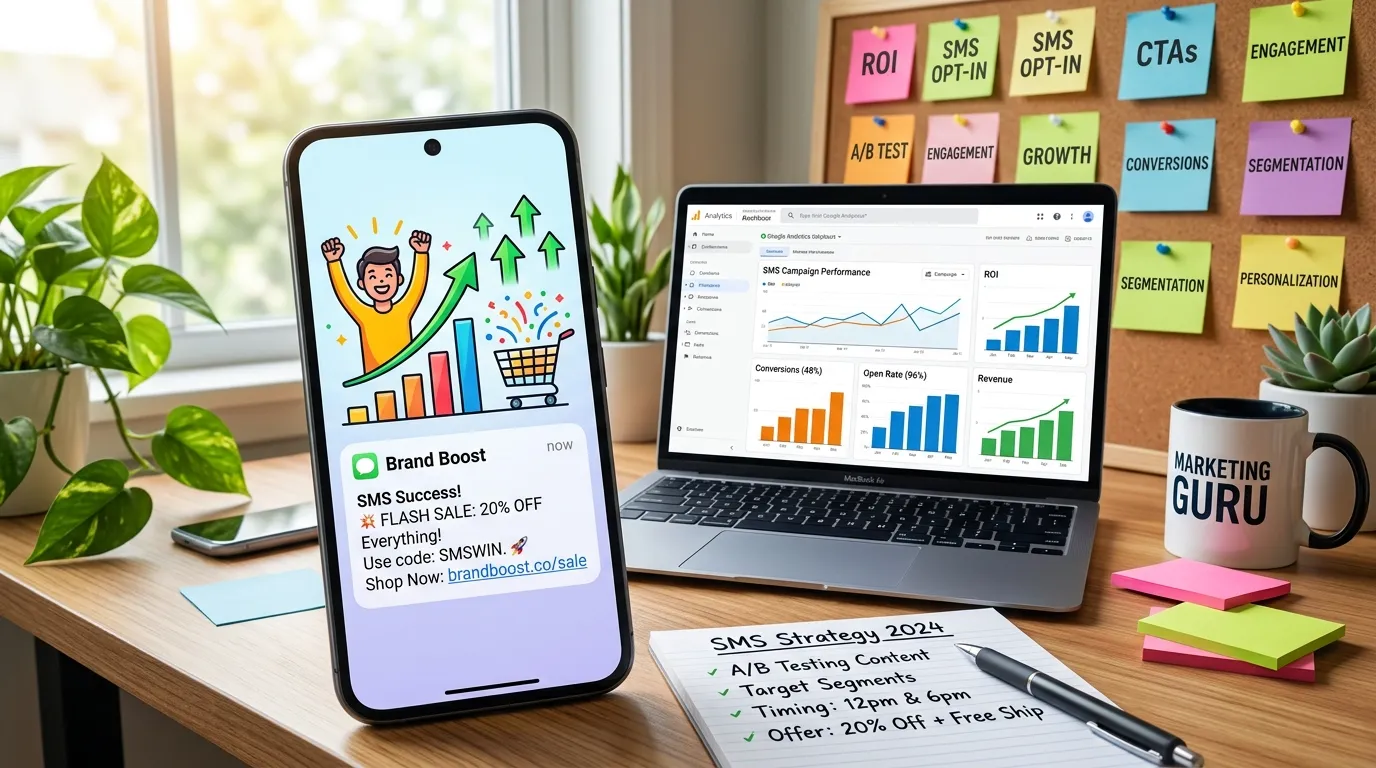
SMS marketing tips help businesses improve customer engagement, increase conversions, and build stronger relationships through effective text messaging. Learn SMS marketing best practices, text message marketing strategies, and mobile marketing tips to create campaigns that deliver better results.
SMS marketing tips that work include earning explicit opt-in consent, segmenting your audience, keeping messages under 160 characters with a strong CTA, sending at optimal times, personalizing content, and tracking KPIs to refine every campaign for higher conversions.
Text messages reach a 98% open rate, compared to roughly 20% for email, according to Gartner (2023). Most recipients read a text within three minutes of delivery. No other channel puts your offer in front of customers that fast.
Yet many businesses still blast one identical message to their entire list, then wonder why subscribers hit “STOP.” The difference between a campaign that drives revenue and one that drains your budget comes down to strategy.
This guide brings together the most effective SMS marketing tips, SMS marketing best practices, and text message marketing strategies in one place. You’ll learn how to build a compliant list, craft messages that convert, automate your campaigns, and measure what matters. Whether you run a small store or manage marketing for a growing brand, these mobile marketing tips give you a clear roadmap to launch a smarter campaign this week.
What is SMS marketing, and why does it matter?
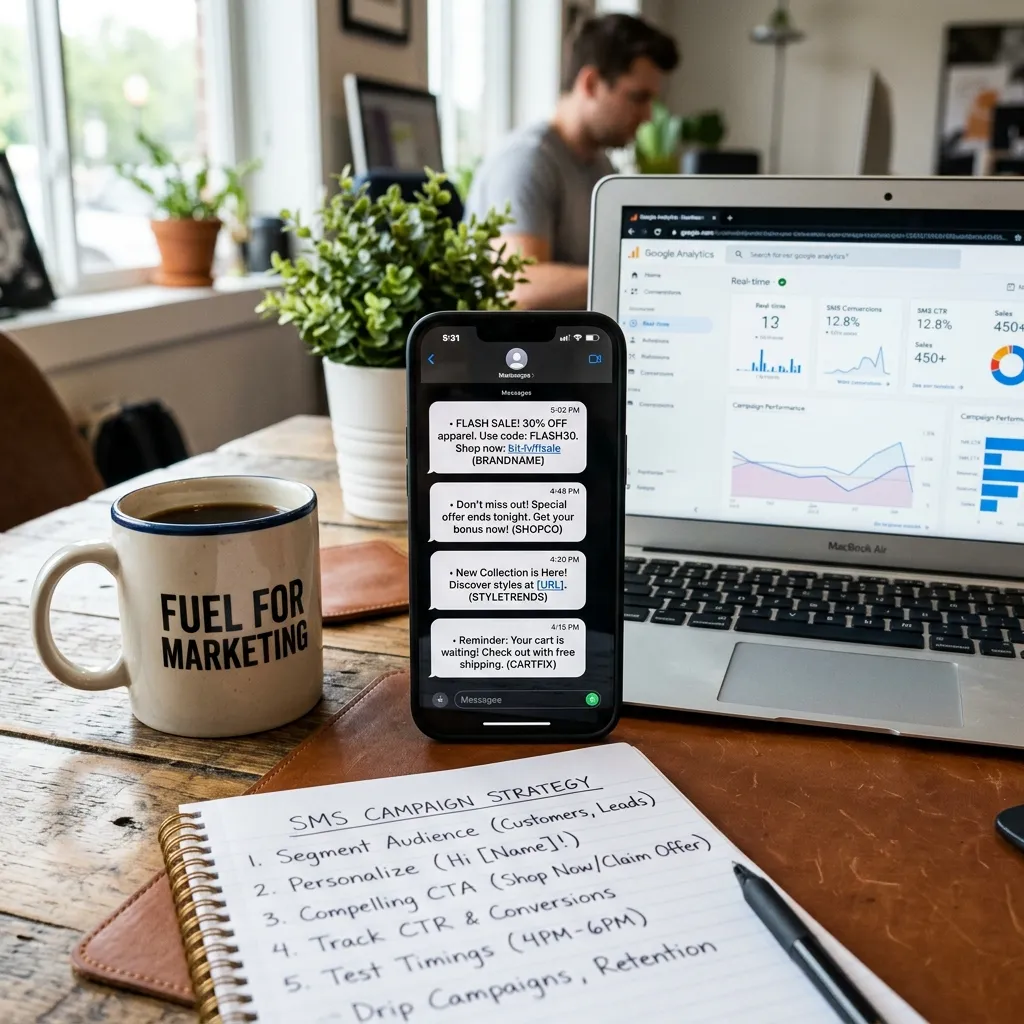 SMS marketing is the practice of sending promotional and transactional text messages to customers who have opted in to receive them. These messages cover flash sales, discount codes, order confirmations, shipping updates, and abandoned cart reminders—all delivered directly to a shopper’s mobile device.
Unlike email, which competes in a crowded inbox, SMS lands in the same messaging app customers use to text family and friends. That personal placement is why text messaging cuts through digital noise so effectively. Customers who opt in genuinely want brief, valuable updates from the brands they trust.
The benefits stack up fast. SMS delivers higher engagement than any other channel, direct reach that bypasses spam filters and algorithms, cost-effective conversions, and personalization at scale. Together, these advantages turn text messaging into a reliable revenue engine—which is exactly why strong SMS marketing best practices matter so much.
Build a solid foundation before you send
Strong campaigns rest on two pillars: ethical consent and the right platform. Skip these, and even the best message falls flat.
How do you collect opt-in consent the right way?
Consent is the cornerstone of ethical SMS marketing. You cannot legally send promotional texts to anyone who hasn’t explicitly opted in. The penalty for getting this wrong can be severe.
Several proven opt-in methods make joining your list easy:
- Keyword opt-ins: Let customers text a keyword to a short code to join instantly.
- Web forms and pop-ups: Offer a discount in exchange for a sign-up, plus a checkout opt-in checkbox where purchase intent is already clear.
- Point-of-sale sign-ups: Promote a text-to-join campaign at the register, on receipts, and through flyers.
Always pair these with clear disclosures. State exactly what types of messages subscribers will receive and how often. In the United States, the Telephone Consumer Protection Act (TCPA) governs mobile marketing. In Europe, the General Data Protection Regulation (GDPR) controls how businesses collect and process personal data. A double opt-in process confirms consent with a clear record, which protects your business legally and improves list quality at the same time.
What should you look for in an SMS marketing platform?
Your platform determines what you can automate, how you track results, and how easily you stay compliant.
Look for these essentials:
- Segmentation tools that group subscribers by behavior, demographics, and location.
- Automation workflows triggered by customer actions like purchases and cart abandonment.
- Analytics dashboards that track click-through rates, conversions, and opt-out rates in real time.
- Integrations with your existing CRM and ecommerce tools, such as Shopify, WooCommerce, or Salesforce.
Integration capability matters more than most teams realize. A connected CRM with text messaging lets you trigger promotions based on real shopping behavior, turning scattered data into perfectly timed campaigns.
How do you write SMS marketing messages that convert?
 Once your foundation is set, the message itself does the heavy lifting. These text message marketing strategies turn plain text into a click.
Keep it short, clear, and on-brand
Standard SMS limits you to 160 characters, so every word must pull its weight. Identify your brand immediately, then state the offer in the first few words. A subscriber should know who’s texting and why within the first line.
Skip the fluff. “Hey! We have some great stuff happening at our store this week,” wastes the entire message. “BRAND: 20% off sitewide — today only [link] Reply STOP to opt out” delivers the brand, the offer, the deadline, the link, and the opt-out in one tight package. One well-placed emoji adds personality. A string of them triggers carrier filters and looks unprofessional.
Use a strong call to action
A weak CTA kills conversions. Replace vague phrasing with verb-driven, specific instructions that tell subscribers exactly what to do next:
| Weak CTA | Strong CTA |
| “Click here” | “Claim your 20% off now” |
| “Learn more” | “Tap to shop the sale” |
| “Visit our site” | “Unlock free shipping today only” |
Pair your CTA with genuine urgency—a real deadline or limited stock. Artificial urgency that claims a sale ends “soon” with no date trains subscribers to tune you out.
Personalize beyond the first name
Personalization is one of the most powerful SMS marketing tips available. “BRAND: Big sale now on” lands flat. “Hi Jordan, the hiking boots you viewed are 20% off today” performs far better because it references a product the customer already cares about.
Modern platforms use dynamic data insertion to pull a subscriber’s name, reference their last purchase, and recommend a complementary product automatically. Use purchase history and browsing behavior, not just first names, to make every message feel one-to-one.
Time your messages for maximum impact
Send promotional texts between 9:00 AM and 8:00 PM in the recipient’s local time zone. Mid-afternoon and early evening typically generate the highest click-through rates. Respecting time zones also ensures your “flash sale” text never lands at 2 AM, which is a fast way to earn an opt-out.
Frequency matters just as much as timing. Limit promotional blasts to two to four per month to protect list health. Sending too often drives up opt-out rates and damages your sender reputation.
A/B test before you scale
Never rely on assumptions. A/B testing sends two message variations to a small audience subset, then rolls the winning version out to the rest of your list. Test one variable at a time—offer type, CTA wording, send time, or message length—so you know exactly what drove the change. Small, consistent improvements compound quickly across a large subscriber base.
What are the best advanced text message marketing strategies?
Once your core messaging runs smoothly, these advanced tactics extract more value from every subscriber.
How does segmentation improve SMS results?
Segmentation divides your subscriber list into smaller groups based on shared traits, then tailors each message to that group’s interests. Targeted messages dramatically outperform generic blasts in every measurable metric.
Build segments using:
- Demographic segmentation: Age, gender, and product preferences.
- Behavioral segmentation: Purchase history, browsing activity, and cart abandonment.
- Geographic segmentation: Local offers and time-zone-aware send times.
Cart abandoners deserve special attention. According to the Baymard Institute (2023), the average documented cart abandonment rate sits at nearly 70%. A timely text targeting these high-intent shoppers consistently delivers the strongest conversion rates of any workflow. For a deeper breakdown of each approach, the SMS segmentation benefits for marketing guide covers the full framework.
Which automated campaigns should you set up first?
Automation guarantees the right message reaches the right person at the right moment, without manual effort.
Build these core workflows first:
- Welcome series: Send your first text the moment someone subscribes, delivering the incentive you promised at opt-in.
- Abandoned cart reminders: Recover high-intent shoppers who left items behind with a direct link back to checkout.
- Post-purchase follow-ups: Thank customers, confirm orders, and create natural cross-sell opportunities.
- Birthday and anniversary messages: Send a personalized discount to mark the occasion and strengthen loyalty.
These sequences run continuously once set up, delivering value at every stage of the customer journey.
How do you integrate SMS with other channels?
SMS works best when it amplifies your other channels rather than operating in isolation. Use email for detailed announcements and long-form content. Use social media for brand awareness and to run text-to-join campaigns that convert followers into subscribers. A practical sequence: send an email announcing a weekend sale on Friday, then follow up with an SMS four hours before the sale ends.
Website integration closes the loop. Pop-ups and checkout opt-ins feed your list, while behavioral triggers connect on-site activity to your text campaigns.
How do loyalty programs work over SMS?
Reward your most valuable customers with subscriber-only perks, point-balance updates, and early access to clearance events. VIP SMS programs strengthen retention and reduce churn among high-value segments. Because these customers already trust your brand, exclusive offers over text feel like a privilege rather than a pitch.
How do you measure and optimize SMS campaigns?
 Sending texts is only half the work. Tracking performance after every campaign is where sustainable growth comes from.
Which KPIs should you track?
Focus on metrics that connect directly to revenue, not vanity numbers like total messages sent:
- Open rates and click-through rates (CTR): Confirm your messages reach subscribers and that your offer resonates.
- Conversion rates: Reveal what percentage of clicks result in purchases.
- Opt-out rates: Signal whether messages are too frequent or irrelevant.
Track these metrics by segment, not just across your whole list. A segment with a high opt-out rate needs adjustment. A segment with strong conversions is one to scale.
How do you turn data into better campaigns?
Watch for clear patterns. A high open rate paired with a low CTR means your offer needs work. A high CTR with low conversions points to a broken landing page. A spike in opt-outs signals a frequency or relevance problem.
Use trackable links and unique discount codes to attribute revenue to specific campaigns. Most platforms include dashboards that connect message performance directly to sales data, so you can let the numbers guide every decision.
What compliance and deliverability rules should you follow?
Precise targeting means nothing if it isn’t legal. Compliance protects your business and the subscriber relationships your campaigns depend on.
- Adhere to regulations. Follow the TCPA in the United States, GDPR in Europe, and CTIA industry guidelines. Every promotional message must include a clear opt-out option.
- Maintain a clean contact list. Remove outdated numbers regularly to protect deliverability and keep your sender reputation strong.
- Avoid spam triggers. Steer clear of spam-trigger words and limit emojis to keep messages flowing to devices.
- Always offer an easy opt-out. Include “Reply STOP to cancel” in every promotional message and ensure your platform processes those requests instantly.
For a step-by-step plan that ties these rules together, the SMS marketing checklist for businesses walks through every phase from planning to optimization.
What do successful SMS campaigns look like in practice?
Real-world results prove these SMS marketing tips work across industries.
E-commerce promotions drive fast revenue through flash sales and limited-time discounts. Because texts are read within minutes, a 24-hour promotion forces an immediate decision in a way email scheduled for “tomorrow morning” never can. The SMS promotions for ecommerce guide breaks down the campaign types that perform best.
Appointment reminders and service updates reduce no-shows and build trust. A timely confirmation or shipping update with a tracking link keeps customers informed and cuts down on support requests.
Event marketing fills seats. Announce an in-store or online event, then send a well-timed reminder to drive attendance. A single text can boost turnout within hours of hitting send.
What is the future of SMS marketing?
 Two trends will reshape text message marketing in the years ahead.
First, Rich Communication Services (RCS) will let brands send images, video carousels, and interactive buttons directly inside the messaging app, turning a simple text into a mini shopping experience. The line between a text and a full storefront will continue to blur.
Second, AI-powered personalization will grow more precise. By analyzing browsing and purchase data, artificial intelligence predicts not just what a subscriber wants but the exact moment they’ll buy. AI-driven send-time optimization, dynamic content generation, and predictive segmentation—once reserved for enterprise retailers—are now within reach for businesses of every size.
Both trends point in the same direction: deeper relevance and richer interaction. Marketers who master these SMS marketing best practices today will adapt to these shifts far more easily than those still sending generic blasts.
Conclusion
Successful SMS marketing is built on relevance, timing, and respect for your audience. By following proven SMS marketing tips, using SMS marketing best practices, and creating valuable, personalized messages, businesses can increase engagement and drive more conversions. Continue testing your text message marketing strategies, monitor campaign performance, and refine your approach to build lasting customer relationships and achieve consistent results.
Frequently Asked Questions
1. What are the most important SMS marketing tips for beginners?
The most important SMS marketing tips for beginners are to collect explicit opt-in consent, keep messages under 160 characters, include a strong call to action, send between 9:00 AM and 8:00 PM, and limit promotional blasts to two to four per month. These basics protect your list while driving engagement.
2. How often should I send marketing text messages?
Limit promotional messages to two to four per month to keep your list healthy and avoid subscriber fatigue. Transactional messages, such as order confirmations and shipping updates, can be sent more frequently because customers expect and welcome them.
3. What are the best SMS marketing best practices for compliance?
Key SMS marketing best practices for compliance include using double opt-in to confirm consent, following the TCPA in the United States and GDPR in Europe, including “Reply STOP to cancel” in every message, and ensuring your platform processes opt-outs instantly.
4. How long should a marketing text message be?
A standard SMS is limited to 160 characters, so keep messages short and focused. Identify your brand immediately, state the offer in the first few words, add a strong CTA and a direct link, and include an opt-out instruction—all within that limit.
5. Which text message marketing strategies deliver the highest ROI?
Abandoned cart recovery campaigns consistently deliver the highest ROI among text message marketing strategies. These messages target shoppers who already showed strong purchase intent, making them far more likely to complete checkout than a cold-audience segment.
6. What is the best time to send marketing SMS messages?
Send promotional texts between 9:00 AM and 8:00 PM in the recipient’s local time zone. Mid-afternoon and early evening typically generate the highest click-through rates. Always respect time zones so messages never arrive in the middle of the night.
7. How do I build an SMS subscriber list?
Build your list through website opt-in forms and pop-ups, checkout opt-in checkboxes, keyword text-to-join campaigns, in-store sign-ups, and social media promotion. Always offer a clear incentive, such as a discount, and use a double opt-in process for compliance.
8. Are these mobile marketing tips suitable for small businesses?
Yes. These mobile marketing tips work especially well for small businesses, which gain the most relative value from segmentation and affordable platforms. Many SMS services operate on a freemium model, removing the financial risk of testing the channel.
9. How do I measure the success of an SMS marketing campaign?
Measure success by tracking open rate, click-through rate, conversion rate, ROI, and opt-out rate—ideally by segment. Use trackable links and unique discount codes to attribute revenue to specific campaigns, then scale winning segments and refine the rest.
10. How does personalization improve SMS marketing results?
Personalization improves results by making each message feel one-to-one. Inserting first names, referencing past purchases, and recommending relevant products automatically make subscribers feel understood, which raises engagement, lifts conversions, and lowers opt-out rates.