
Understanding SMS Marketing Costs

Basic Pricing Structure
Pay per message is the most used SMS marketing platform. You send messages via an aggregator and pay between $0.01 and $0.05 per text depending on your provider and volume. Some platforms also assess monthly subscriptions that can range from $20 to $500 and typically cover a certain number of messages and access to premium features.
The cost factors include:
- Number of messages: The more you send, the less you pay per message
- Geographic location: It is more expensive to send an international message than a domestic one
- Message variety: MMS (multimedia messaging) costs more than regular SMS
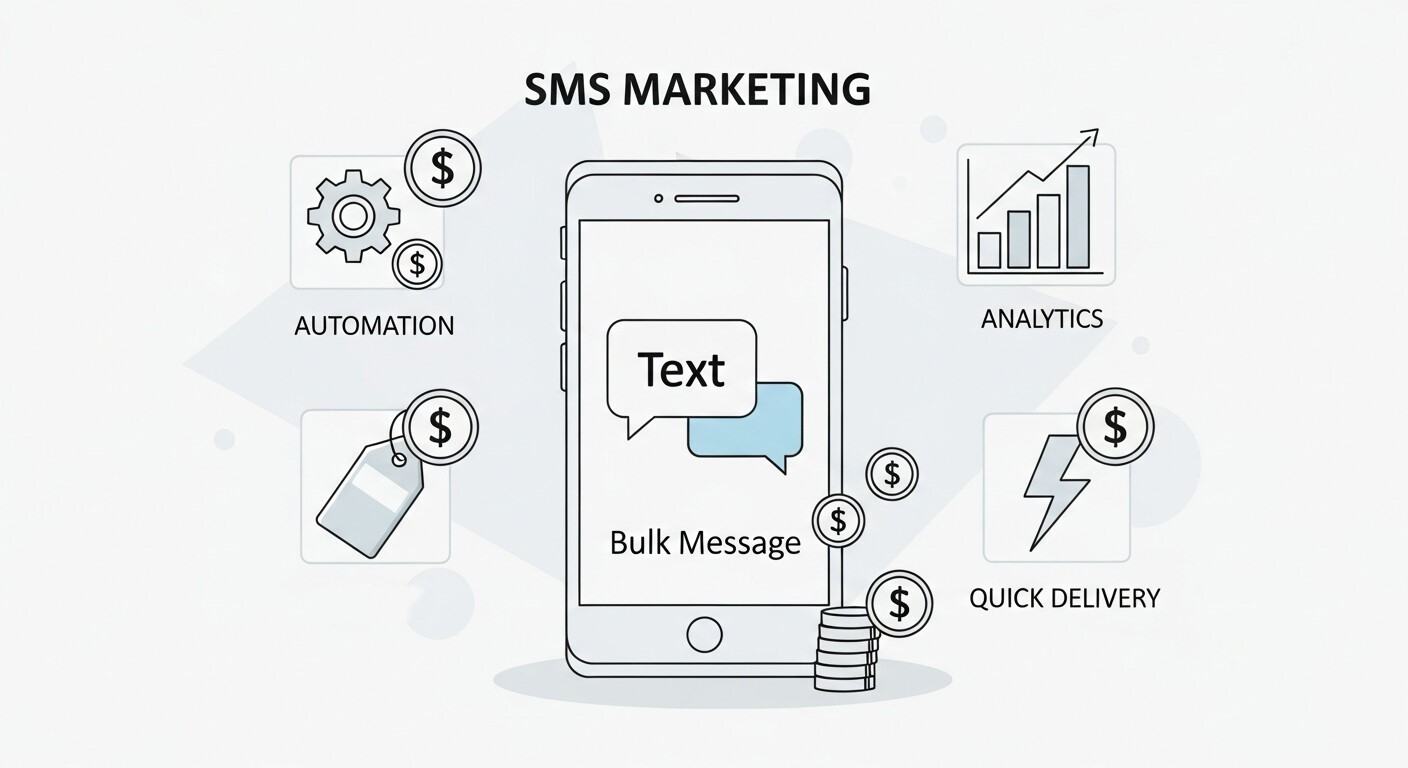
- Provider features: Cost may rise with more automation and analytics
How SMS Measures Up to Other Marketing Channels
It’s Expensive To use SMS marketing or not SMS marketing is a question many customers ask me about. If you want to consider whether SMS marketing is expensive then you need to compared it to alternatives:
- Average open rates of (20-25%), but that’s not bad when considering the norm for email open rates (10-20%).Typical costs for an email marketing platform can start from just $10/month to up to (from $10-300 month) for the same features. SMS has almost 5 times more-engagement rates.
- Advertisign on Social Sites may cost $0.50-$2.00 per click VS sending out an sms. SMS delivers your message directly to your recipient’s phone.
- The most established electronics retailers typically pay between $2-$5 per click through Google Ads. One SMS campaign targeting 1,000 customers might cost a total of $10-$50.
- Technical: The cost per direct mail piece is $0.50 to $2.00 when you consider postage, printing, and design. SMS removes all of these physical costs.
Things That Make a Difference in SMS Marketing Cost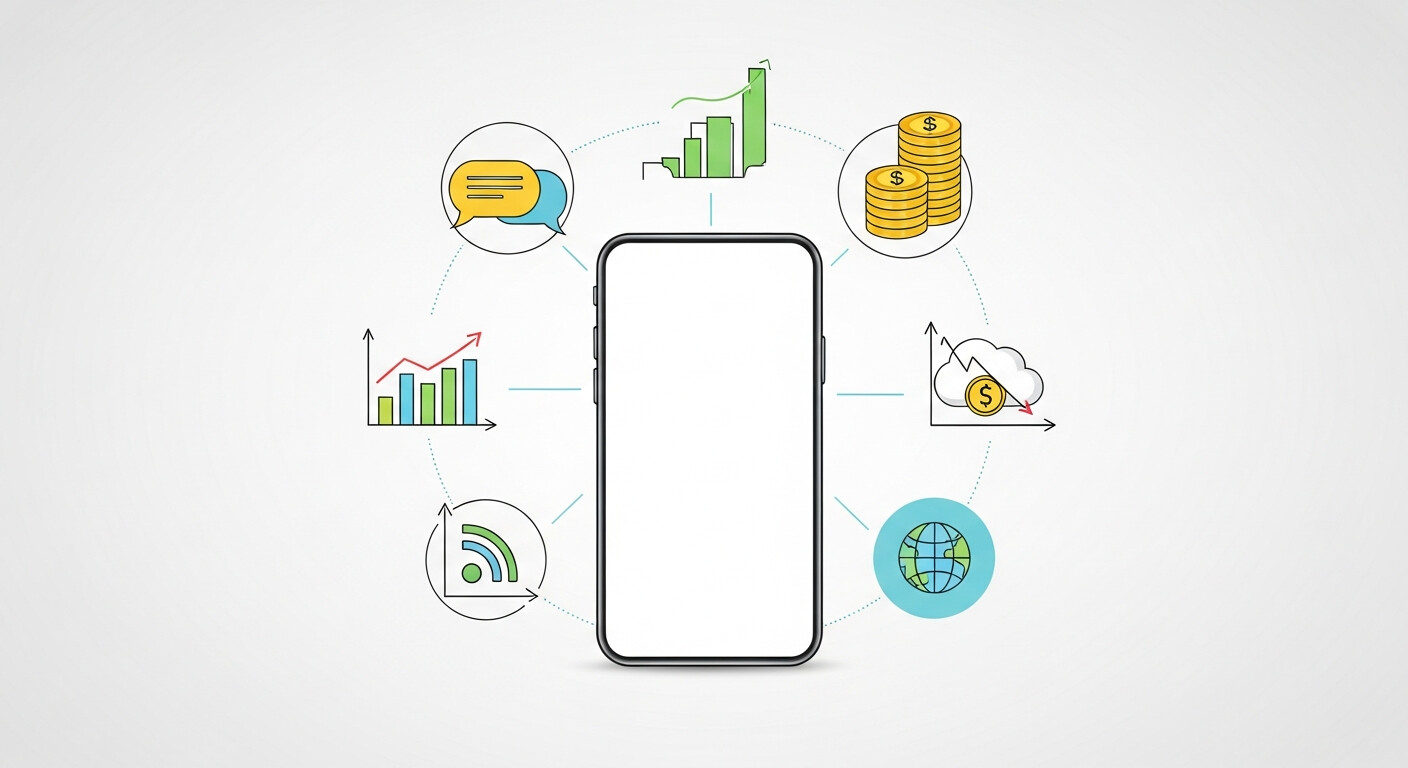
Message Volume and Frequency
Your volume of sending has a direct correlation to your costs. Most providers offer tiered pricing:
- Starter plans: 500-1,000 messages, $20-$50 per month
- Growth plans: 5,000 to 10,000 messages for $100 to $200 per month
- Enterprise plans: Custom pricing for 50,000+ messages
Sending frequency matters too. A restaurant with daily specials will pay a different amount than a retail store with weekly promotions.
Geographic Reach
Domestic SMS rates are least, usually around $0.01-$0.03 per message. International messaging is $0.05-$0.20/message (based on destination country). And if you’re going after local clients, your costs are practically zero.
Platform Features and Capabilities
There are limited broadcasting capabilities on basic SMS platforms which are at lower price points. Advanced platforms include:
- Workflows: Automatically send messages based on user activity
- Segmentation tools: Aim at a certain group of customers
- Analytics dashboards: Track campaign performance
- Integrations: Connect to existing tools
While these add-ons will add to your monthly expenditure, they often tend to increase the effectiveness of your campaigns, and hence a higher ROI.
Compliance and Deliverability
Legitimate SMS gateways have carrier relationships and tools to stay compliant. It’s a little more expensive, but it guarantees that your messages are making it to customers’ inboxes instead of getting spam filtered.
Top in Demand SMS Marketing Services and Pricing
Budget-Friendly Options
- Textedly begins at $24 a month for 1,000 messages. They are simple and does not charge setup cost so best for small scale business testing out SMS marketing.
- SimpleTexting starts at $29/month for 500 messages. Their features provide some automation and in-depth analytics for businesses looking to scale.
- Mid-Range Solutions
- Klaviyo manages SMS incorporated with Email marketing, and it is available from $20/month upwards for SMS functionality. They excel in e-commerce integrations and customer segmentation.
- Mailchimp recently introduced SMS to the platform with pricing starting at $20/month for 1,000 messages. And that’s fine for businesses already using their email services.
Enterprise Platforms
- Twilio also has pay-as-you-go pricing starting at $0.0075 per message, plus charges for phone numbers and features. Their API-first strategy is well received by large companies.
- In broader Salesforce Marketing Cloud, you will get SMS for the complete package, they have custom pricing for enterprise level.
Hidden Costs to Consider
Setup and Integration Expenses
SynovaGayleEPhotography.com Learn More Other platforms come with setup fees between $50–500. You’ll also want developer time to set up SMS in your existing systems, which could cost $500 to $5,000 depending on how complicated it is.
Phone Number Costs
Dedicated short codes (5-6 digit numbers) Dedicated short codes (5-6 digit numbers) will run you around $500-$1,000 per month, but deliverability is better and your brand is more likely to be recognized by your recipients. Free numbers are cost-effective at $2 to $5 a month but may drive fewer engagements.
Compliance and Legal Considerations
Successful SMS marketing should be based on opt-in and opt-out. Failure to comply may subject violators to fines of $1,500 per message. Spending money on compliance-ready platforms and legal review may be more expensive up front, but saves on expensive fines.
Content Creation and Management
It is hard work and takes skill to come up with great SMS messages. You may want to hire copy writers or teach your staff, at $500-$2,000 per month expenses on your SMS marketing budget.
Calculating Your SMS Marketing ROI
Revenue Per Message
One of the simplest ways to measure ROI is by calculating the revenue generated per message. For example, if you spend $50 on an SMS campaign targeting 1,000 customers and those customers collectively spend $500 as a result, your ROI is 900%. This metric not only demonstrates the immediate financial return of your campaign but also helps justify the expense of SMS marketing to stakeholders or leadership. Over time, tracking revenue per message across multiple campaigns allows you to identify which types of messages, promotions, or offers perform best, enabling more efficient budgeting and higher returns.
Customer Lifetime Value Impact
SMS marketing isn’t just about immediate sales—it’s also a powerful tool for increasing customer retention and lifetime value. For instance, if your average customer spends an additional $20 annually due to SMS reminders, promotions, or personalized offers, and your yearly SMS cost per customer is $2, you achieve an ROI of 900%. This demonstrates that SMS marketing can provide long-term financial benefits by keeping customers engaged, encouraging repeat purchases, and fostering loyalty. Understanding this impact on customer lifetime value also helps you align SMS campaigns with broader business goals, such as increasing repeat purchase rates and strengthening brand relationships.
Cost Per Acquisition
Another critical metric is the cost to acquire a new customer via SMS marketing. If sending a targeted campaign costs $5 per new customer, compared to $25 per customer acquired through Facebook ads, SMS becomes a highly cost-efficient acquisition channel. Calculating CPA allows you to compare the efficiency of SMS with other marketing strategies and allocate budget where it delivers the most value. Additionally, by combining CPA analysis with revenue per message and customer lifetime value, you gain a holistic view of SMS performance, helping optimize campaigns for both immediate conversions and long-term growth.
Ways To Keep SMS Marketing Costs Down
- Optimize Your Contact List
Clean up your subscriber list by regularly removing deadweight. Sending messages to inactive phones is a costly, deliverability-detrimental practice. - Segment Your Audience
Only spam people who deserve it. A focused message to 200 interested customers often trumps a generic note to 1,000. Target highly engaged users for better ROI. For segmentation strategies, see SMS segmentation to boost engagement. - Choose the Right Messaging Frequency
Find the sweet spot between remaining top-of-mind and not annoying readers into unsubscribing. Most businesses flourish with 1-4 messages a month, depending on the industry (and the customer base). - Monitor and Adjust Campaigns
Monitor metrics such as click-through rates, conversions and unsubscribe rates. Bad campaigns are a waste of money; good ones are worthy of broader spending.
When is SMS Marketing Too Costly?
Very Small Businesses
For solo entrepreneurs or very small businesses with a tiny customer base—say, 50 subscribers—investing in SMS marketing may not be cost-effective just yet. The initial setup, platform subscription fees, and content creation costs could outweigh the revenue generated from such a small audience. Instead, it’s often wiser to first focus on building a loyal customer base through other channels like email marketing, social media engagement, and local promotions. Once you have around 200 or more engaged customers, SMS can become a highly profitable tool, because each message then reaches enough recipients to justify the expense.
Low-Margin Products
Businesses selling low-cost items need to be especially cautious with SMS marketing. For example, if your typical order value is $10 and each SMS costs $0.03, even a small percentage of unconverted messages can quickly reduce your ROI. Low-margin products leave little room for error, so calculating the break-even point is crucial. In these cases, SMS campaigns should be hyper-targeted—sending messages only to highly engaged customers who have a strong likelihood to convert. By focusing on quality rather than quantity, even low-margin businesses can make SMS worthwhile.
Infrequent Purchase Cycles
Products or services that are purchased infrequently—such as cars, appliances, or high-ticket items—don’t naturally align with SMS marketing. Since these customers buy only once every few years, frequent messaging may feel irrelevant or even intrusive. In such industries, SMS may work better for very specific touchpoints, like service reminders, warranty notifications, or loyalty program updates, rather than as a primary sales driver. Using SMS strategically in these cases ensures that the messages remain valuable and don’t damage customer perception.
Making SMS Marketing More Affordable
- Start Small and Scale
Start small and refine your plan and list of contacts. As you demonstrate ROI, build further investment and subscriber base incrementally. - Combine with Other Channels
Supplement email marketing and social media with SMS, rather than outright replacing them. This consolidated method is also frequently more effective and less expensive. - Focus on Quality Over Quantity
100 engaged audience members are more valuable than 1,000 unengaged. “But getting the carefully-crafted model of information to just the right 100 people is practically impossible. The better the list and the asset are, the less it costs, and the better the results.
For strategies to boost conversions, check out SMS marketing templates for conversions.
What to Do Next with SMS Marketing
SMS marketing isn’t costly compared to the ROI and other marketing platforms. However, Most local business can start as low as $30-$100 per month, and see immediate results. It’s all about picking the right platform, keeping clean lists of contacts and content that inspires action.
Before you jump in, consider the ROI from your average order value and customer lifetime value. Begin with a little test campaign to measure effectiveness, and scale as the data suggests.
If quality turns out to be a problem, just remember: bad marketing is the most expensive marketing. The combined strengths of the superior engagement levels SMS marketing delivers along with its direct delivery, means that SMS is one of the most cost effective methods of communicating with your customers, whatever the size or sector of your business.
While understanding whether SMS marketing is expensive helps businesses budget smarter, tools like Clover Webinars can support the creation of timely, engaging content that enhances your overall strategy.
Frequently Asked Questions (FAQ)
Is SMS marketing suitable for small businesses?
Yes, small businesses can start with as little as $20-$30 per month. The cost scales with subscriber numbers and message frequency, making it accessible even for limited budgets.
How often should I send SMS messages?
Frequency depends on your industry and audience preferences. Most businesses see optimal engagement with 1–4 messages per month, but daily messages work for restaurants or flash-sale retailers.
Can SMS marketing replace email marketing?
Not entirely—SMS is ideal for urgent, high-engagement messages, while email is better for detailed content. Learn how SMS marketing works in combination with other channels.
How can I measure ROI for SMS campaigns?
Track revenue per message, customer lifetime value, conversion rates, click-through rates, and opt-out rates. Comparing SMS cost per acquisition with other channels helps justify investment.
Are there hidden costs in SMS marketing?
Yes, potential hidden costs include setup fees, dedicated short codes, legal compliance, integration with existing systems, and content creation. Planning and budgeting for these ensures accurate ROI calculations.
What makes a successful SMS campaign?
A successful campaign is targeted, personalized, concise, and includes a clear call-to-action. Compliance, segmentation, and timely delivery further improve effectiveness.
Can SMS marketing help with customer retention?
Absolutely. Personalized messages, loyalty rewards, reminders, and exclusive offers help retain customers and encourage repeat purchases, directly impacting lifetime value.